Get Premium access to all the latest content online
Subscribe and view full print editions online... Subscribe

The Jakarta-born head chef of Junsei walks us through the diverse cuisine of his home country, an archipelago made up of thousands of islands, where influences from far and wide still percolate down the centuries
There’s little Indonesia can’t offer even the most discerning traveller. With 17,000 islands to play with, the world’s largest archipelago nation ticks every box on almost every travel bingo card. An underwater coral reef fish population that is the most diverse on the planet; national parks and World Heritage Sites; internationally renowned rainforests, wetlands and wildlife reserves; and famed locals, including the Sumatran orangutan, Java rhinoceros and Komodo dragon. There are even 130 active volcanoes – this country is hot stuff, in every sense.
Then there are the cities, such as the capital Jakarta, influenced by so many cultures, including the Dutch, who ran the show until the Japanese took hold in World War II, which eventually led to independence in 1949. On the one hand, you’ve got historic cobblestone squares and 18th-century town halls, and on the other, more shopping malls than you can shake a stick at (150 at the last count). Not only can you see everything in Indonesia, but you can buy it too.
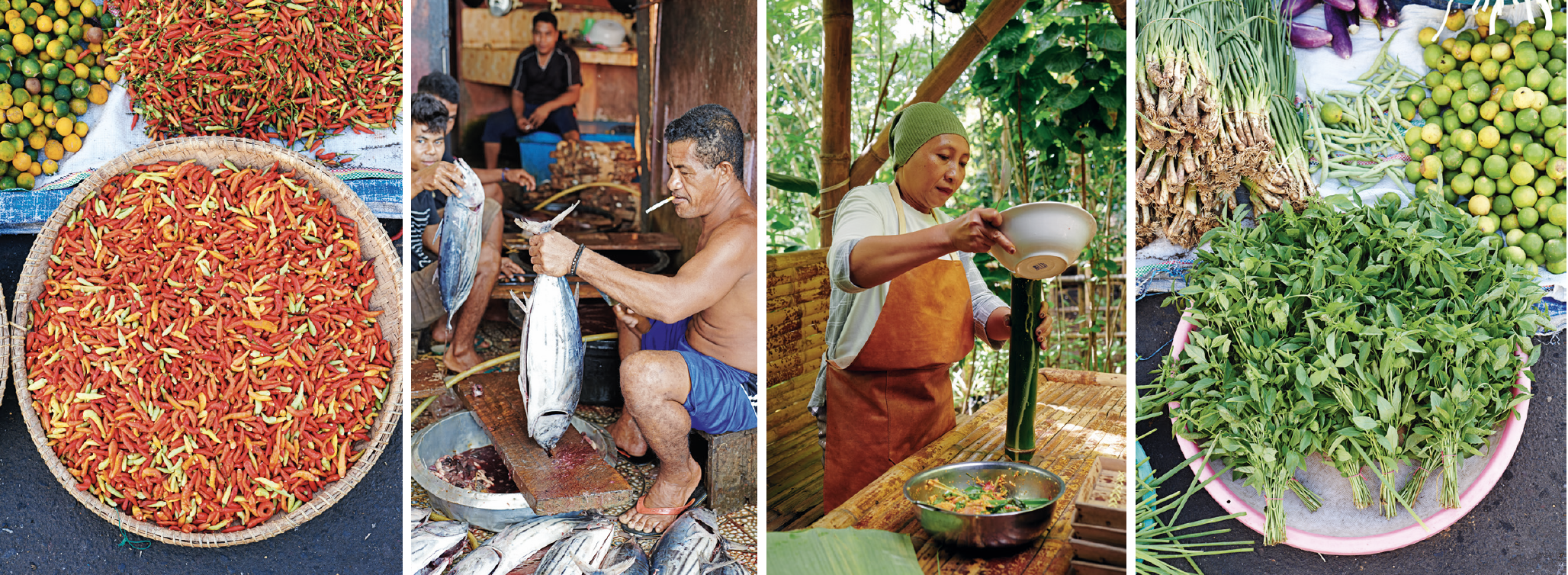
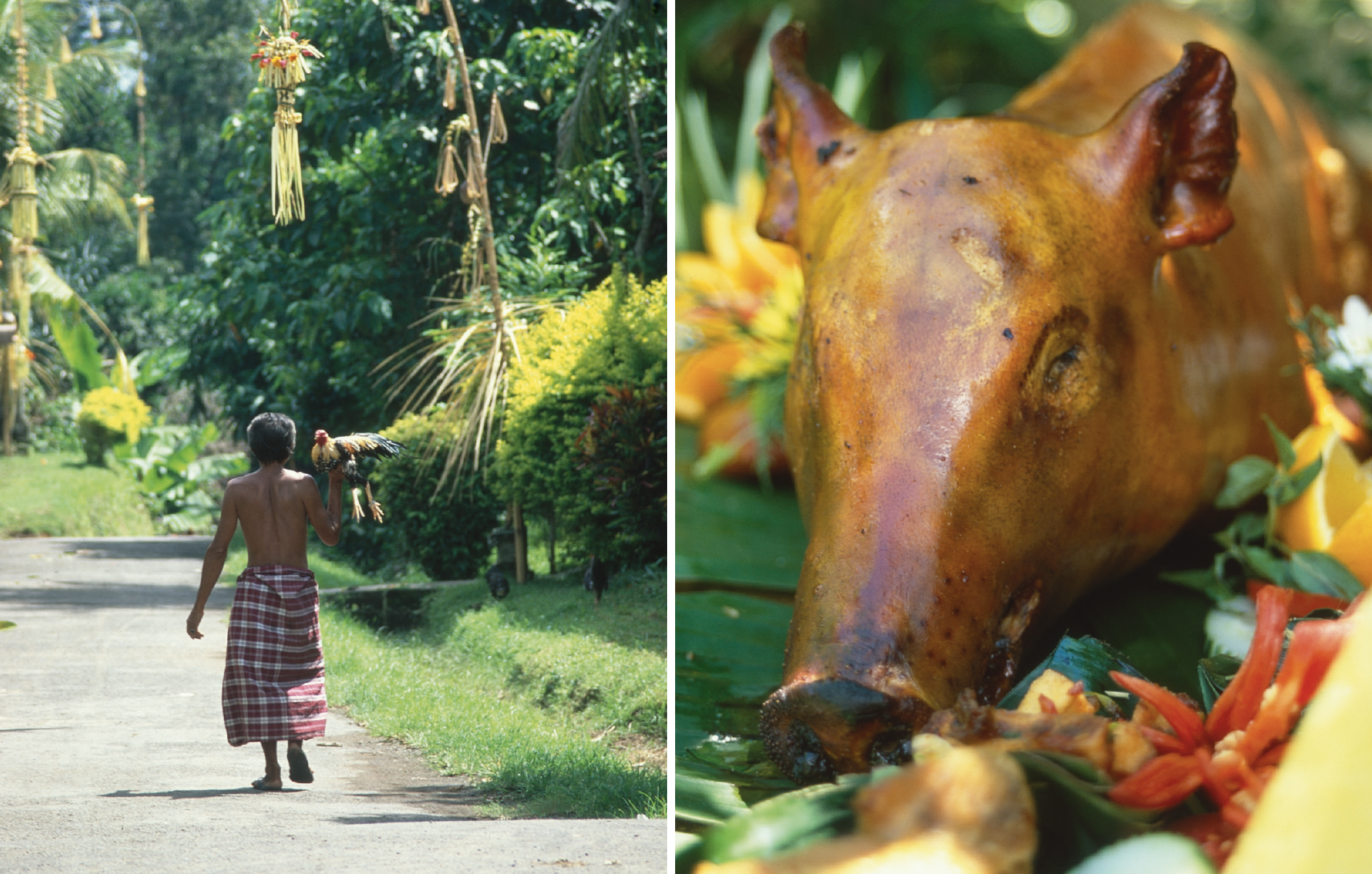
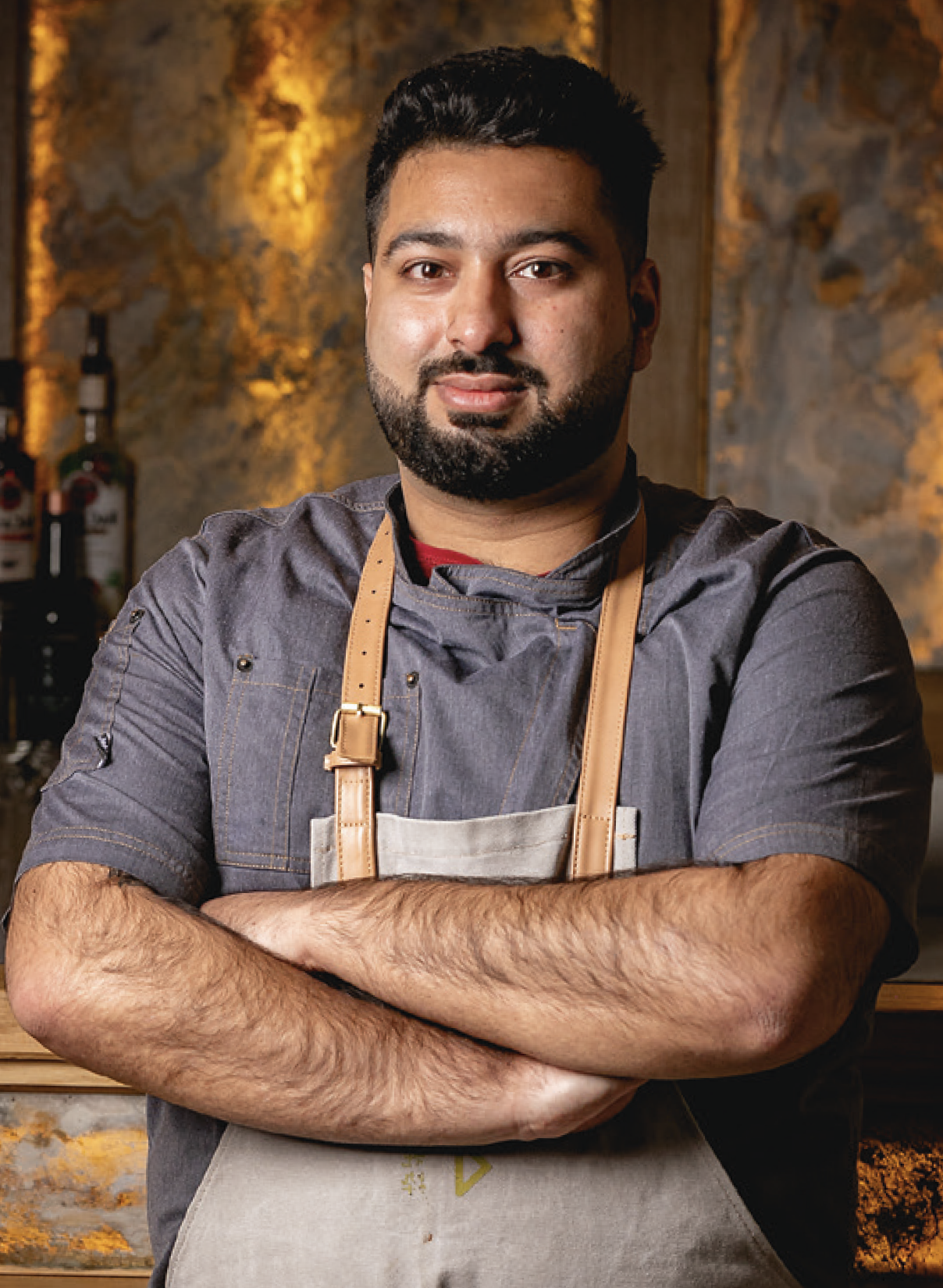
Aman Lakhiani is the head chef of Junsei, a Japanese yakitori restaurant with a site in London and another that is just about to move from his home city of Jakarta to Bali. Growing up in the Indonesian capital, Aman knows a thing or two about what it has to offer. ‘A lot of the Indonesian – ‘market bites’ – are freshly prepared at The Dharmawangsa; Nusantara’s snack wheel; roast suckling pig, a Balinese favourite; ‘casual fine-dining’ at Nusantara; The Dharmawangsa pool; Nusantara tables; village local carries a bird in Bali islands are right on the equator, so we have two types of weather: hot and hotter,’ he laughs. ‘Even though Jakarta is big city, it is a collection of islands, so you still have that island vibe, with the beach never far away. And, because of the temperate weather, and the way people are, everyone is very friendly and relaxed.
‘I was born in Jakarta, but I’m Sindhi, so we’re basically Hindu Indians from Pakistan,’ he explains. ‘My family were forced to move during the partition, so my great-grandparents came to Indonesia in the 1940s. We’ve been here for four generations now.’
Family meals were a mix of both cultures. ‘I grew up eating basically Indonesian food, but also Indian food,’ he says. ‘So we had Indian-Pakistani curries and chapati breads. But I would eat a lot of Indonesian food at home as well – coconut-milk curry, stir-fried vegetables, braised dishes with soup, and local spices like galangal, lemongrass and lime leaves. We ate a lot of tempeh, a fermented soy bean.’
While at first he was just happy doing the eating, he found inspiration, naturally, via Essex. ‘I was around 12 or 13 when I started watching a bunch of Jamie Oliver programmes on TV and I was like, “Cooking seems kind of easy…”’ he recalls.
Having eventually forced his way into the family kitchen, with his grandma showing him the ropes, his parents wanted him to experience restaurant life before committing to culinary school. ‘I guess they expected me to give up after a week or two,’ he says. ‘But I kind of just kept going.
'I worked at this place called Namaaz Dining – it was actually the first molecular Indonesian gastronomy restaurant in the country. The chef wasn’t professionally trained, but he was obsessed with modern cooking techniques. He actually gave up a career as a guitarist in a rock band to become a chef.’
Aman studied culinary arts in Rhode Island, USA – where he met current business partner Zach Farr – and did a stint in Spain, before finding his way back to Indonesia. ‘Locavore [in Bali] is one of Asia’s 50 Best Restaurants,’ he says. ‘They do fine-dining Indonesian and they also have a sister restaurant called Nusantara, where they do more local-style Indonesian food. I worked between both restaurants for about a year.
‘Bali is beautiful,’ he continues. ‘It’s got the mountains and beaches, but it’s very different from the rest of Indonesia because it’s populated by Hindus, whereas the rest of it is Muslim. And they practise a very ancient form of Hinduism. If you go to any street, shop fronts will have an offering and you’ll see prayers. Balinese people celebrate many different types of festivals – it’s beautiful. There’s nothing like going to Bali: it’s steeped in centuries-old tradition. You’ll see that in the rest of Indonesia too – ancient culture brought over by Sri Lankans and South Indians.’
While Bali is something of a home from home, especially now he’s moving Jakarta’s Junsei to the island, he also spends time in other parts of Java, the island that’s home to Jakarta. ‘We’ve got a mountain house that’s two hours away, in Bogor,’ he says. ‘It’s one of those hilltop stations – I guess it’s a bit like going to the Cotswolds, but very down to earth; it’s also very picturesque.’
If one thing brings you to Indonesia – aside from the promise of tropical paradise – Aman believes, naturally enough, it should be the food. ‘I think the food scene is more diverse than in other Asian countries,’ he says. ‘If you go to Sumatra, it’s quite similar to South India, with a lot of coconut-milk-based curries; if you come to Java, it’s heavily influenced by China, so there’s sweetness, soya, noodles, fried rice; go to the eastern side, Sulawesi, and you’ll see influence from the Philippines – vinegar and fresh herbs. The variety of cuisine is huge in Indonesia.
‘We were colonised by the Dutch,’ he continues, ‘and you can still see their influence – oxtail soup, rissoles and croquettes. We were colonised by the Japanese as well, so that also had a big impact on food.’
Can he define the cuisine? ‘I’d say it’s very similar to Thai or Malaysian,’ he says, ‘except a bit spicier. It’s more earthy, and there’s much more variety. A lot of chillies are used, and fresh rather than dried spices. We use all types of cooking: frying, stewing, braising, sautéing.
‘One of the most famous dishes, rendang, was originally made for hunters. Whereas Malaysian rendang is quite wet, in Indonesia, it’s cooked until it’s very, very dry, so it’s just the beef covered in a sort of dark, oily spice paste. Back in the day, that was kept by hunters in their backpack, so they could go out hunting for months, and they’d eat it on a daily basis.’
As for ingredients: ‘Always lemongrass, always lime leaves, always galangal,’ he says. ‘And there’s kencur, which is similar to galangal, but smaller and a bit more herbaceous. Many of the spices you see in Indian cooking, such as pepper, nutmeg and cloves, originated in Sumatra. Sweet soy sauce is a ubiquitous Indonesian seasoning,’ he concludes. ‘It’s used all over Java – it’s basically soy sauce that’s cooked down with organic palm sugar.’
Aman’s knowledge of his own cuisine is understandably exhaustive, so it’s natural that he’d want to pay tribute with a restaurant, and that’s what brought him to London in the first place, to set up an Indonesian pop-up. ‘It was called Sawah, which means rice fields,’ he says. ‘I felt the flavours were really compatible with London taste buds. We did the pop-up for about two months at the Windsor Castle pub near Regent’s Park.
We served nasi goreng – Indonesian-style fried rice – and Indonesian-style lamb curry; prawns stir-fried with stick beans [called pate in Indonesian]; stuffed and fried tofu and skewers of tempeh. We basically tried to showcase the ingredients and culinary background of Indonesia as much as we could in a pub setting.’ Covid put paid to his pop-up, forcing him to return to Indonesia. In 2021, he came back to open Junsei, which itself was inspired by the huge Japanese influences in Indonesia.
While his dream Indonesian opening in London hasn’t happened just yet, there is one slated for Bali. ‘I’m opening Junsei Bali in June,’ he says, ‘but shortly after, I’m planning to open a Sumatran Indonesian restaurant as well. It’s going to be called Lamuri, after the island that once lay between Indonesia and South India. It’s a restaurant that represents my roots and the cuisine I grew up eating,’ he says. ‘So I’ll have Indonesian as well as some Indian dishes and try to showcase where I came from.
‘I do really want to expand in London, but I just feel right now is not really the time.’ London eagerly awaits.
AMAN LAKHIANI'S HOTSPOTS
NUSANTARA, BALI
One of the best casual-fine-dining restaurants when it comes to local and authentic Indonesian food – I worked here before I moved to London. Chef Putu prepares food from across the archipelago with faultless precision yet it feels like a grandma made it for you. locavorenxt.com/family/nusantara
WARUNG BABI GULING PAK MALEN, BALI
Among the best roast suckling pig places I’ve eaten. They roast whole pigs every morning and stuff with a Balinese spice paste called basa genep. Jl Sunset Road, Seminyak
AYANA RESORT, BALI
I got married in this hotel – it’s a beautiful space with three different wings, each with its own charm. The service and hospitality are amazing. They have a bar called the Rock bar, built on a rock formation in front of the beach, with some of the best views on the island. ayana.com/bali
AROMASOP SEAFOOD, JAKAR TA
This Chinese-Indonesian seafood place specialises in live prawns, crabs and fish cooked in a variety of sauces like fiery red sambal or fried in salted egg yolk batter. The steamed fish in nyonya sauce is named after the aunties of Chinese descent who have immigrated to Indonesia since the 9th century. Jl Niaga I Jl, Muara Karang Raya No 6
BETWEEN THE SIPS, JAKAR TA
This is probably the definitive cocktail bar in Jakarta, with a great vibe and excellent cocktails focused on local ingredients and flavours. +62 819 4422 6969
THE DHARMA WANGSA, JAKAR TA
A locally operated five-star hotel with a unique, gorgeous garden in their lobby, and lovely rooms – its restaurant is also a great spot for breakfast and lunch. the-dharmawangsa.com
Words by Alex Mead.
This article first appeared in the March 2026 issue of Food and Travel. To subscribe today, click here.
Subscribe and view full print editions online... Subscribe