Get Premium access to all the latest content online
Subscribe and view full print editions online... Subscribe

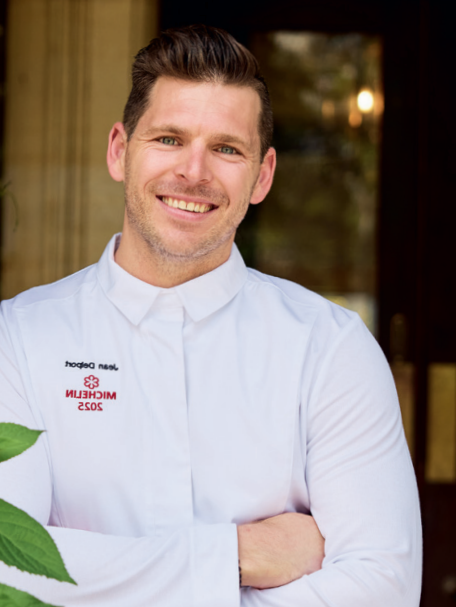
It’s long had great produce and world-class wine, but now Cape Town has a thriving restaurant scene to match, says Jean Delport, the South African chef who brought Michelin stardom to a Sussex country estate.
Words by Alex Mead.
This article was taken from the Feb 2026 issue of Food and Travel. To subscribe today, click here.
The sandy curves of Cape Town’s Blouberg Beach are so perfectly placed on the opposite side of the bay to Table Mountain, it almost looks too good to be true. It’s the perfect triumvirate for a South African postcard: sand and surf, but with epic mountain adventures right on your doorstep. ‘I grew up on that beach,’ explains Jean Delport, the Cape Town-born chef behind the Michelinstarred Interlude at Leonardslee Gardens in West Sussex. ‘Cape Town was everything I knew and Blouberg Beach was ten minutes from my house.
‘Living there was very outdoorsy,’ he continues, ‘even though you were city based, you had the beach, the mountains and we had a family farm that we’d visit a couple of times a month.’
As with many South Africans, rugby and cricket formed the basis of weekends, but the trips to the farm instilled in Jean a deep understanding of the natural world. ‘Yeah, I was quite lucky,’ he says. ‘The family farm was probably about 350 hectares; we had game, sheep, goats, vegetables – everything, really.
‘It was very special,’ he adds. ‘My earliest food memory was growing our own peas and eating them as we picked them. For me, that’s still the best, the idea of shortening the journey [the food takes] from being grown to being eaten. That’s stayed with me and I’m really passionate about it.’
Food was all around, and there was even an insight into the corporate side. ‘Dad used to run a multi-national poultry business,’ he explains. ‘They’d slaughter about 5.2 million birds a week, so I got introduced to that whole food chain at a young age.’
It was at home that he cut his culinary teeth. ‘My parents had a bad car accident,’ says Jean. ‘Mum hurt her back and had spinal collar injuries so she couldn’t move around a lot, and I took over cooking duties at home. That’s what sparked the interest – the more I cooked, the more I didn’t understand, so I read about it. I think a Jamie Oliver cookbook was the first book I ever bought for myself.’
He progressed from cheese on toast to Sunday roasts to three-course meals for his parents, and a career in food became a natural progression. Finishing school at 18, he trained at Zevenwacht Chef School, before working at the likes of Terroir and Rust en Vrede in the Cape Winelands, with stints as far afield as Namibia and Ireland. Even now, he remains envious of the relationship chefs in South Africa have with their producers. ‘In South Africa, it’s quite nice that you get to have a personal relationship with farmers, so they’re able to grow what you want for the kitchen.
‘I do miss that sunshine in South Africa,’ he adds, ‘because it means things grow for a longer period and it really ripens. There’s such a diversity of what you can get there – an abundance of choice – and there’s always something different.
‘The range here in the UK is pretty good, though,’ he says, ‘and you do get that one month when you have all this amazing fruit – a massive basket where everything is ripe – but in South Africa that would be six or seven months. And it’s everything from sunflowers to stone fruits to apples and pears, all your squashes, brown fruits… And now there are more influences from different places, such as Japan, which means you’ll get all these different types of citrus being grown.’
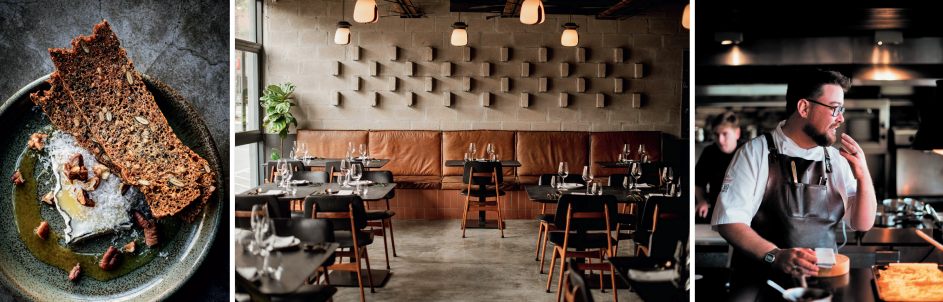
And while Jean admits finding the best restaurants in South Africa was once a challenge, now it’s all changed with Cape Town being lauded across the world for its food scene. ‘The real change was around about 2015/2016, when chefs started to get international acclaim,’ he says. ‘Chefs like Luke Dale Roberts [of The Test Kitchen and The Pot Luck Club], and George Jardine [ex-Jordan Restaurant] got a lot of traction; they’re all from the UK [Luke arriving in 2006, George first arriving in 1997, but returning for a second stint in 2006], and they brought a different aspect of food to the area, which kind of sparked everything…
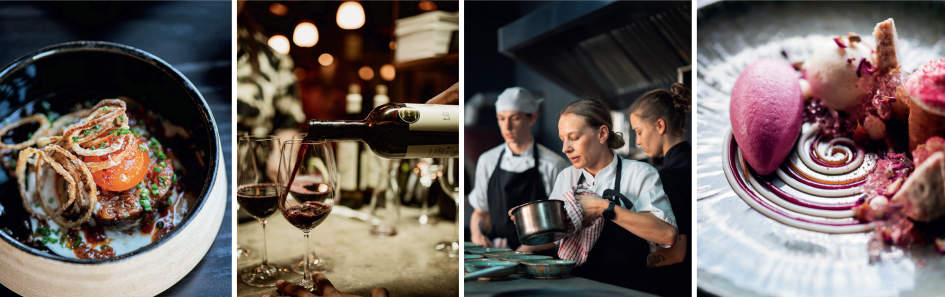
‘Cape Town is one of the food meccas now,’ he continues. ‘The multicultural side has settled down and brought in its own influence, then loads of chefs from the UK and Europe have settled in the Cape to create change.’
Even though South Africa was thriving when he left, Jean’s own ambition brought him to England. ‘One of my dreams was to have a Michelin star,’ he says, ‘and to achieve that I had to move. I’d always follow the UK food scene – I’d looked up to chefs on Great British Menu, people like Tom Kerridge, Claude Bosi, Sat Bains… These guys have a cult status. And Jamie Oliver too: I remember his TV shows, like Naked Chef, airing in South Africa and he made it look so much fun in his flat, with a food scene that was buzzing.’
Jean’s route to this country came via Zimbabwe-born entrepreneur Penny Streeter, who owned the Benguela Cove Lagoon wine estate in Hermanus. ‘When I met Penny she was looking for properties in the UK – and she found Leonardslee,’ he says.
The 19th-century Italianate country house, near Horsham, West Sussex, was part of a 97ha estate. ‘It was quite different from anything I’d ever seen,’ says Jean. ‘It was a traditional country estate with an ancient woodland garden – raw, pure Sussex countryside – but it had been left to go to rack and ruin for ten years. We tried to rejuvenate it and bring back the natural space. The mansion was Grade II listed and the gardens were Grade I listed, and it still had plants from all around the world, but we had to curate it.’
Penny purchased the estate in 2016, with Jean visiting the following year, before moving in 2018. His restaurant vision – which would come to life as Interlude – was tied to the land, as the curation and revival of the gardens would open up the ancient hedgerow and reintroduce old apple trees; all of which would help to fuel the passion for forage that shapes much of his menu. ‘It was a gradual process, every year we did more things; we still have things to do,’ he says.
It’s certainly a sight today: a world away from the overgrown, impenetrable tangled mess it was when they started. ‘We had 50 people working on it for about six months trying to get the garden back; it was almost inaccessible, and the house was in bad shape too. So we stripped everything out and put in our kitchen,’ he recalls. ‘Lately, we’ve been on the journey of trying to get the house back to what it used to be.’
The work has paid off. Aside from the gardens, with their seven idyllic, interconnected, cascading lakes, there are also 16 hectares of deer park – keeping the kitchen stocked with venison – and even vineyards. ‘That was a big thing for Penny – to get into English wine,’ says Jean, ‘so as soon as she got the estate, she planted vines.’
Success arrived quickly. ‘We opened at the back end of 2018 and won a Michelin star three months later, so it was a whirlwind,’ he says.
Following suit, the 15 hectares of vines produced the first sparkling wines in 2024, from 2020 and 2021 vintages of chardonnay, pinot noir and pinot meunier; and soon earned plaudits, including being ranked among the world’s best vineyards.
While he may have been part of the English food scene for seven years – a spell that’s included cooking two courses in the Great British Menu banquet – Jean still keeps South Africa close, especially in his food, with a passion for braai showing in his open-fire cooking, and other favourite dishes, memories and methods being spliced into his cooking. ‘England is very much home,’ he says. ‘But we also go home to Cape Town every year. My wife is from there too, so for us it’s still very special; South Africa remains very close to my heart.’
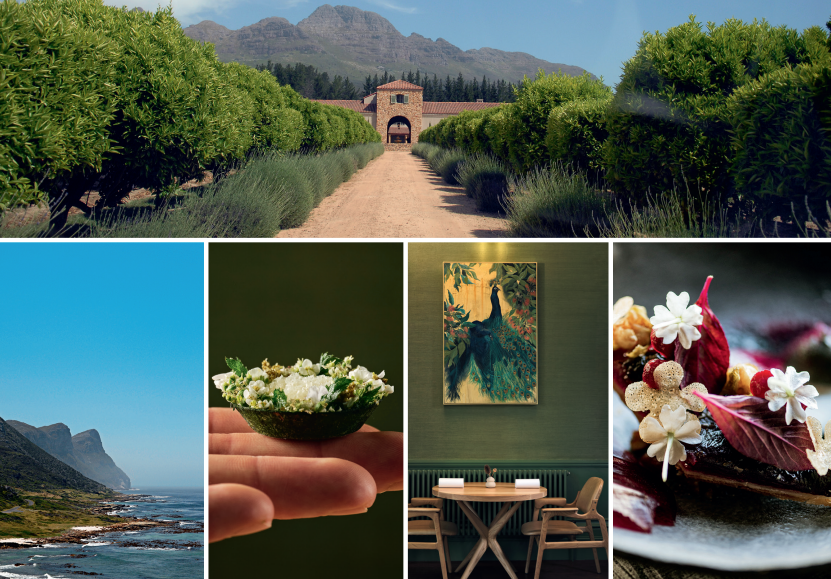
JEAN DELPORT’S HOTSPOTS
BEAU CONSTANTIA
Chef-patron Ivor Jones is one of those universally loved figures, serving exceptional food that blends Japanese and Thai influences with South African flair. The mix of small and larger plates keeps things relaxed, and the views over the winelands from the estate are absolutely stunning. beauconstantia.com
LA COLOMBE
Led by chef James Gaag, this is Cape Town’s fine-dining frontrunner – a place that showcases South African flavours through modern European techniques, with thoughtful storytelling woven into every course. lacolombe.restaurant
BELLY OF THE BEAST
Based in the city, this spot serves hearty food with an Afrikaans twist. It’s run by a friend of mine and has a relaxed, happy-go-lucky vibe – a really lovely little Cape Town eatery. bellyofthebeast.co.za
BENGUELA COVE LAGOON
Ranked among the world’s top 100 vineyards to visit (and stay), it produces outstanding wine and sits just outside Hermanus – prime whale-watching territory. The restaurant is excellent, with spectacular views. benguelacove.co.za
MOUNT NELSON
Cape Town’s hotel scene is exceptional, with no shortage of standout five-star stays. But the Mount Nelson remains the city’s icon – a grand, blush-pink landmark at the foot of Table Mountain. If you plan to stay somewhere special, this is a good choice. belmond.com
Subscribe and view full print editions online... Subscribe