Get Premium access to all the latest content online
Subscribe and view full print editions online... Subscribe

Few are better placed to lead a culinary tour of Greece than the Michelin-starred chef who brings the finest flavours of his homeland to Opso, his much-loved restaurant in London’s Marylebone
Words by Alex Mead
This article was taken from the June 2025 issue of Food and Travel. To subscribe today, click here.
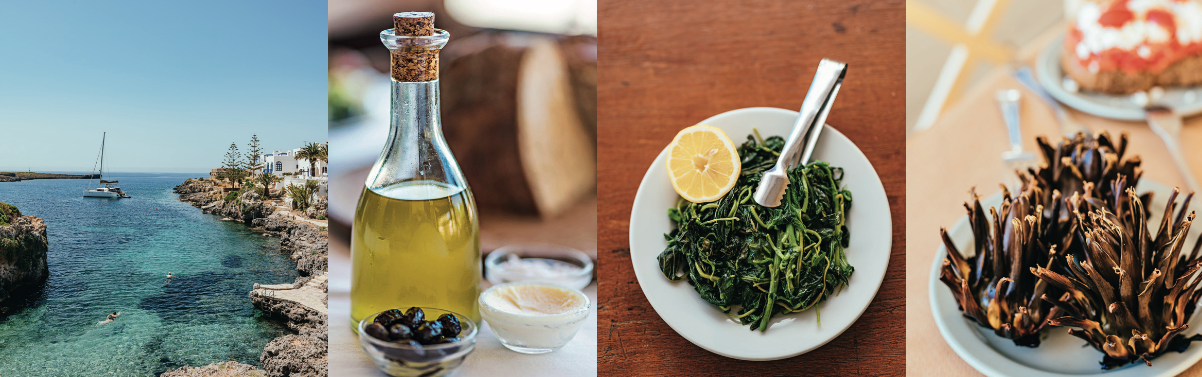
On a restaurant terrace in the early-summer sun, a carousel
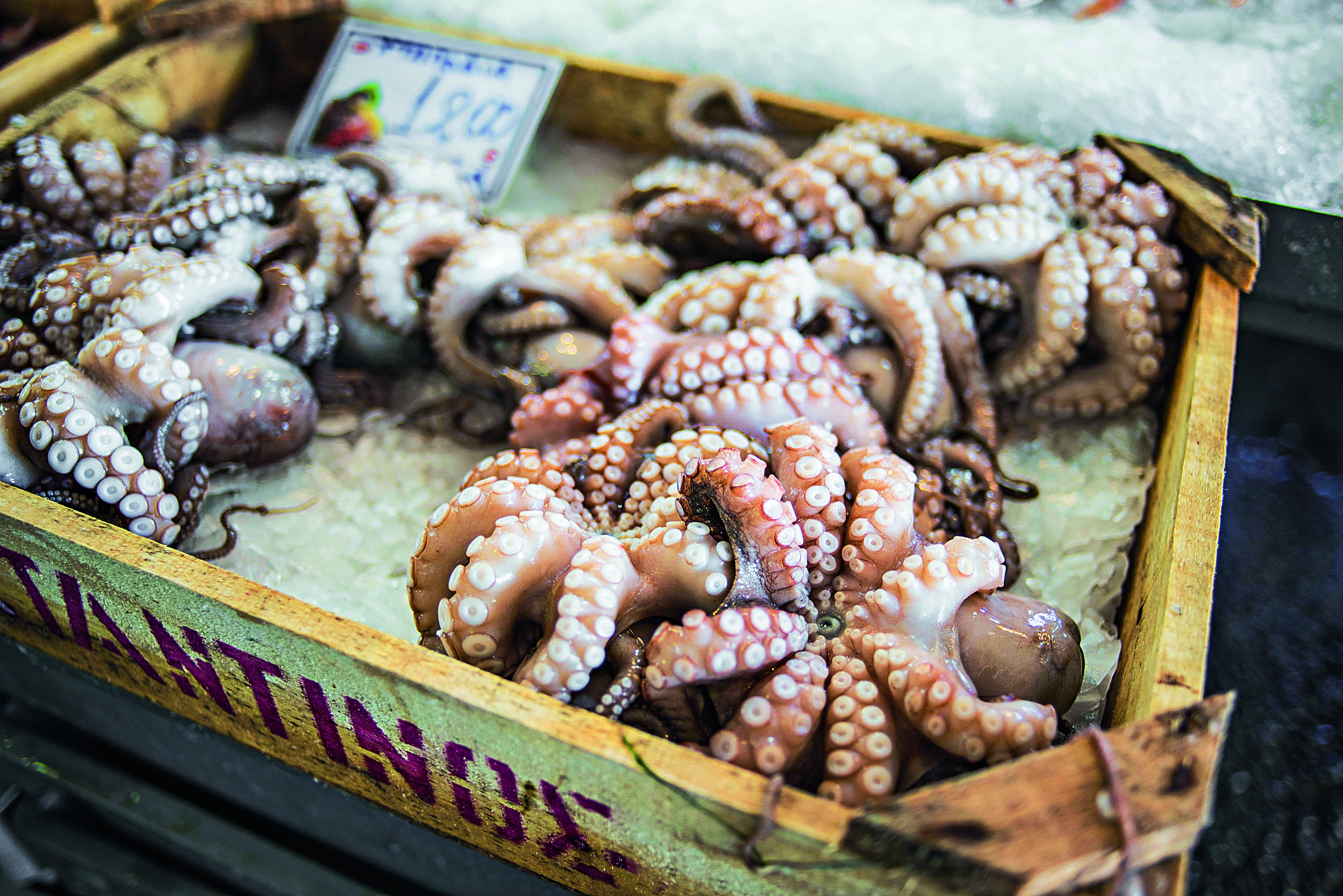
of plates with a distinct Mediterranean vibe rotate around each table, colours and flavours swirling as people share dishes across the white linen. A souvlaki kebab with yoghurt and smoked tomato is such a complex, melt-in-the- mouth experience that finishing it is as disappointing as reaching the end of a gripping box set; dakos, a Greek salad with olive-oil rusks, comes with a barrel- matured feta – draped over tomatoes, the cheese is creamy like brie, punchy like blue cheese. Big plates arrive with lamb shank, meat on the point of slipping off the bone, but not before catching thedownpour of cheese and truffle grated from on high; and then octopus, charred sweet, with caramelised onions and black-eyed peas.
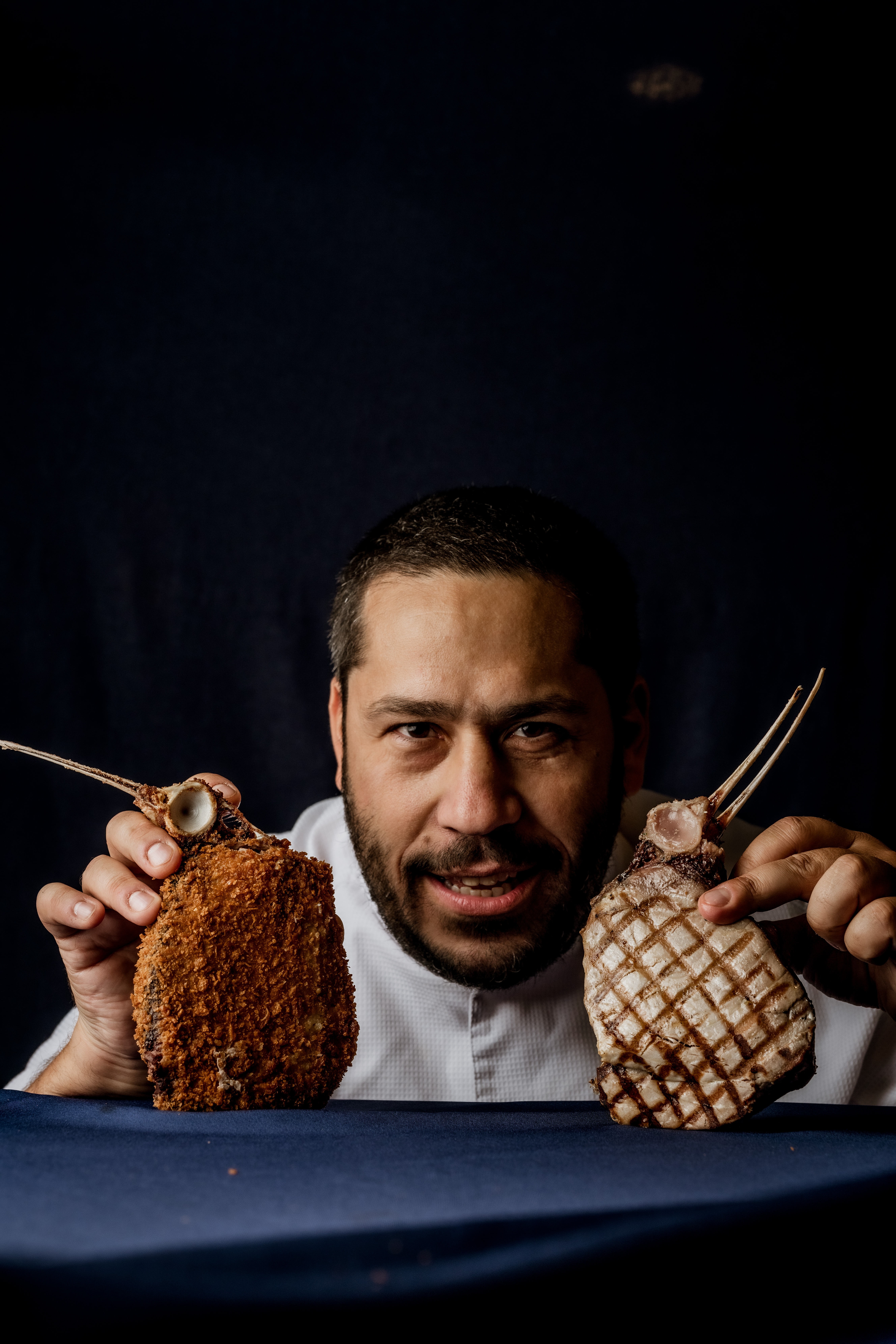
Everything is managing to be both hearty, delicate and decadent all at once; this is the food you hope to get in Greece, but often miss out onunless you know the right people. And chef Nikos Roussos, the man behind this food, served not on the Med, but at Opso in Marylebone, knows all the right people. ‘I grew up in Athens, so food was a big thing,’ he says. ‘My grandfather was a chef; he worked in some fancy restaurants and traditional ones too, and he was always preparing things for us. ‘The Sunday roast was the thing,’ he says of early memories. ‘We’d have roast chicken, and potatoes, sliced flat and baked with lemon and oregano, always with a plain Greek salad – lettuce, spring onion, dill and red wine vinegar. ‘That’s always on the menu here,’ he says. ‘It’s one of our bestsellers.’
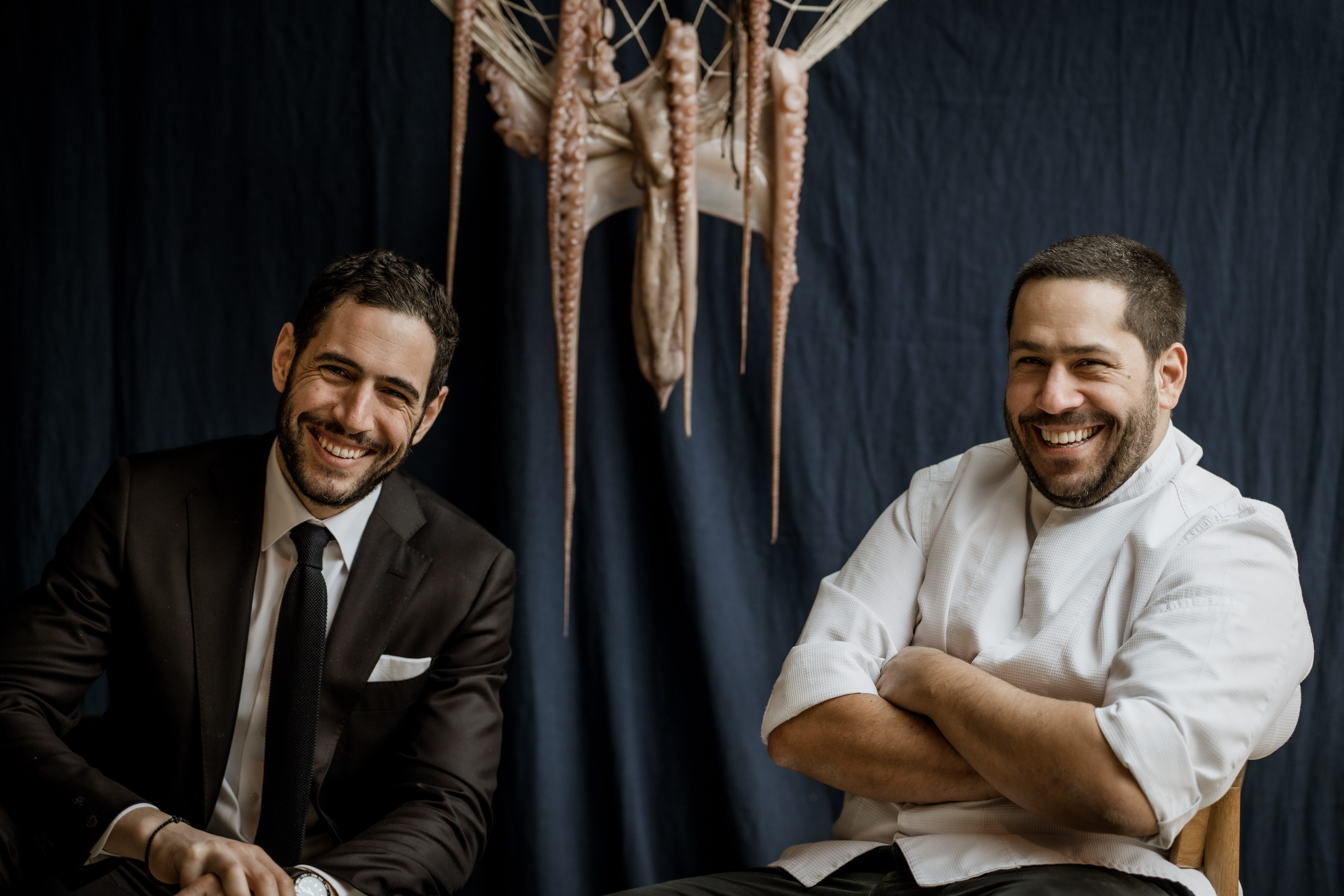
Originally destined to go into the family silverware business when he finished his national service with the Greek army, Nikos had a change of heart. ‘I left Athens, went to New York and studied culinary arts in Manhattan,’ he says. He went on to work in Manhattan and the Bronx, then returned to Greece, before heading to Amsterdam. With each move he was picking up more experience, sampling different cuisines, different flavours, different produce. ‘But I always wanted to have my own place,’ he says. ‘So I went back to Athens and opened my own restaurant [Funky Gourmet] in 2009. I got my first Michelin star in 2012 and in 2014 I got my second. ‘It was a time of big menus – tasting menus of 15 dishes,’ he explains. ‘We used a lot of techniques, a lot of illusions – we might be giving you a white granita, but it would taste 100 per cent like you were eating a Greek salad!’ Together with business partner Andreas Labridis, he opened Opso just over a decade ago (fish restaurant Kima followed in 2023).‘We wanted to bring the Greek flavours in the modern way, while keeping the real taste,’ he explains. ‘We didn’t have a specific part of Greece to showcase; we wanted to take all the flavours and all the good ingredients we could find.’
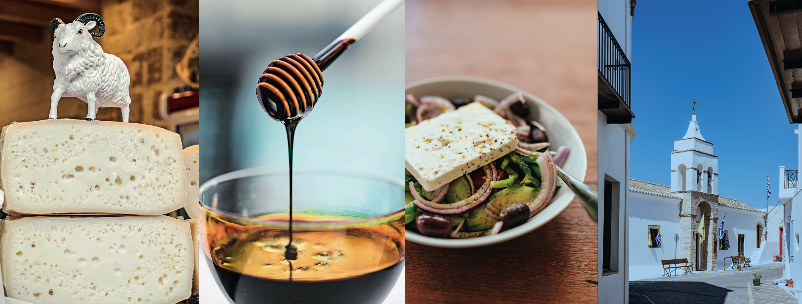
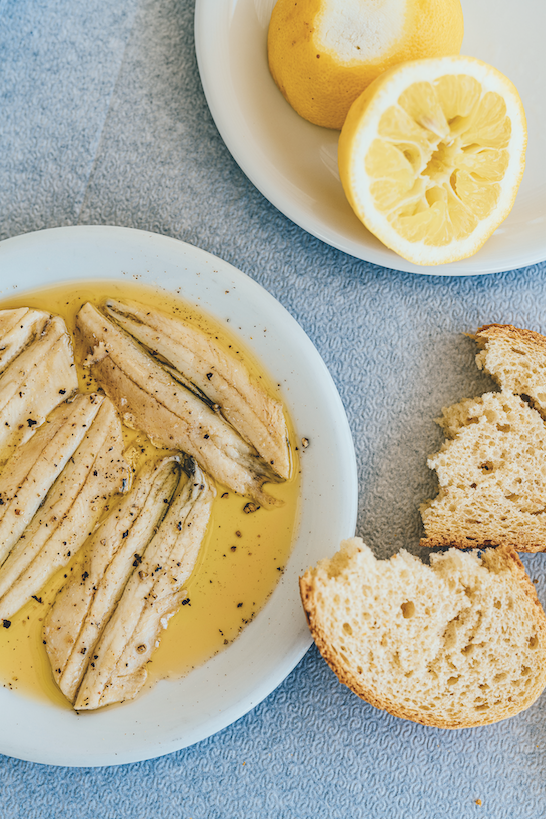
As if to prove the point, he picks up a menu and starts drawing a culinary map. ‘We source the olive-oil flatbread from Rhodes, and the bottarga comes from a good friend at [the prime producer] Trikalinos,’ he says. ‘All the people I get produce from are friends, because I’ve been doing this a long time now,’ he adds. ‘The olive-oil rusks,’ he continues, getting back to his map, ‘come from a friend in Kythira. He has a bakery that was once his great- grandfather’s – there’s so much history there – and he kept it as it should be. We also get the sea salt from Kythira, where they hand-pick it from the rocks. It’s special: you put it in your mouth, you break the crystal, then boom!’
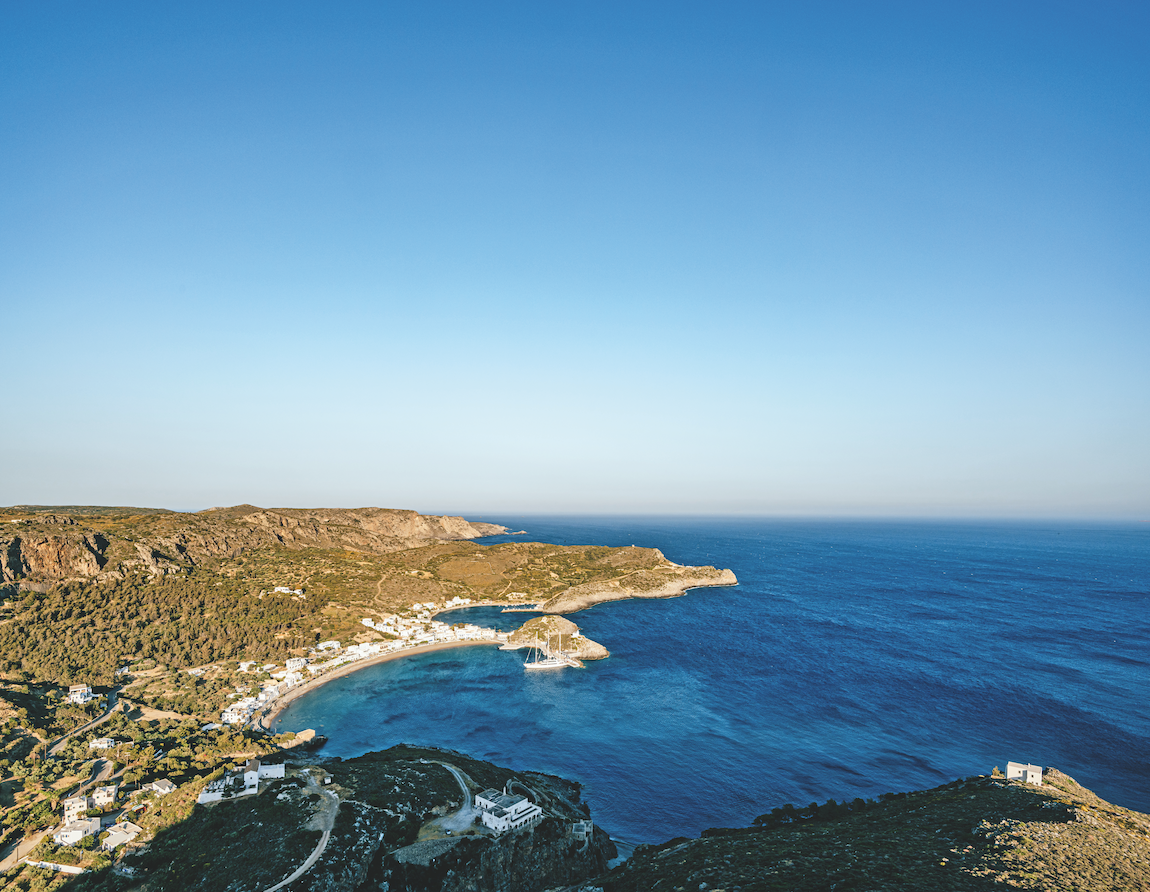
He moves on to wine. ‘Our assyrtiko comes from Santorini – there are good assyrtikos from other places, but this is special because it’s unique, like the island. It has the characteristics that come from the volcanic soil and saltiness from the sea hitting the vines.’ Nikos is clearly well placed to guide us around the best of the Greek islands. ‘There are a lot of great chefs in the big cities,’ he says, ‘but now a lot of them have restaurants in the islands,’ he says. And, perhaps inspired by the olive-oil rusks previously occupying the empty plates in front of us, he begins in Kythira. ‘It’s a very quiet island – a bit alternative – where people love the arts; there are painters and sculptors living there. As soon as you step on to the island you can tell it has an aura,’ he says. ‘I don’t know if I can explain, but it’s as if you go back in time and in style.’
And the food? ‘Really good,’ he says. ‘There are old classic tavernas serving simple salads of tomatoes, olive oil and rusks; and the seafood and meat is good. The new generation have created some nice spots. For instance, in the capital, Chora, there’s a small pizzeria that is really, really good. It’s not Greek, but when you’re on holiday you don’t want lamb every day.’ He name-checks other places on the island: Skandeia Restaurant, located in an old vineyard; Maria’s Pastry Shop in Livadi; and Astikon in Potamos for late-night drinks.
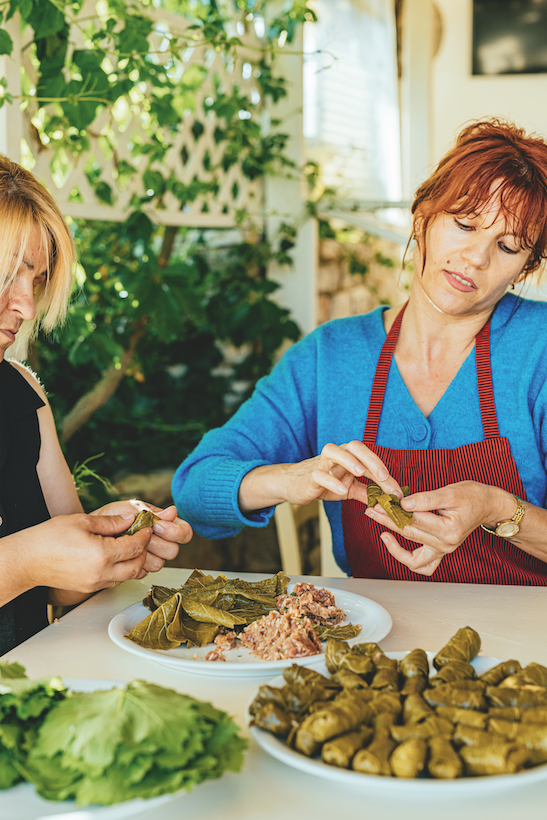
From Kythira, Nikos takes us north-east to the island of Evia, and the seaside town of Karystos. ‘I’ve been going there since I was a baby – my grandmother was from there,’ he explains. ‘It’s only about two hours from Athens but it feels as if you’re a world away. It’s a place close to my heart. It’s for families, it’s not fancy, but it has this harbour with a pier, a lighthouse and lots of small fishing boats – we fishthere a lot. There’s a castle and a big square where all the kids play, with cafés all around it selling souvlaki, seafood, wine, ouzo, or doughnuts with thyme honey and cinnamon. It’s great for hiking or cycling – there are mountains and lots of small villages, such as Aetos, Myloi and Grabias, which are great for food.’
‘As soon as you step on to the island of Kythira, you can tell it has an aura. It’s as if you go back in time and in style’
Another list of suggestions: Platanos Taverna (for lamb), Honi (meat on the spit), Tzimis (for those doughnuts) and Panourgias (for pork gyros). But, again, one dish has to be ordered: ‘Baby lamb – close to one year old – which is cooked for many hours so it’s melting,’ he says. ‘They serve it with a tomato or lemon sauce, with kourkoubines, which is a kind of handmade Greek pasta that’s very close to gnocchi, although there’s no potato in it. It’s a classic of the area, topped off with a nice salty cheese they also make there.’
Nikos really should give island tours... Next, he takes us to Agios Nikolaos, in Crete, where he’s a consultant chef for the InterContinental. ‘I’d go to the beach at Kolokytha (meaning’ pumpkin’, named after the shape of the rocks) in Elounda, then I’d go up the mountains to the Miliaras Tavern for traditional Cretan food. They make good cured pork and eat a lot of snails too, cooked with lots of vinegar and rosemary.’
He could go on. Name an island, or even a city, town or village on the mainland, and he’ll have a recommendation or a friend doing something special with food, wine or spirits. For him, everything goes back to Greece, just as he has decided to when it comes to cooking. ‘I respect French food and French techniques a lot and we use them here,’ he says. ‘But I have been to many restaurants and travelled a lot in my life, and I have always returned home to cook Greek food. It’s just what feels right to me.’
Greek Island Hotspots
PLATANOS TAVERNA, KARYSTOS
The owner does everything himself, from slow-cooking meats to fishing for his daily catch from his own boat. On the road towards Aetos
PANOURGIAS, KARYSTOS
This place on the main harbour road serves gyros as traditional as they come – a rarity in Greece, where few still make their own from scratch. Kriezotou 84
TZIMIS, KARYSTOS
They’ve been making the local speciality – doughnuts drizzled with thyme honey – by the beach since my grandmother’s time. +30 2224 022550
MIHALIS TAVERN, KYTHIRA
Mitata is a small village perched above a dramatic canyon. At this special spot in the main square they grill exceptional lamb patties wrapped in caul fat. +30 2736 033626
TOXOTIS TAVERN, KYTHIRA
The pasta at Opso comes from the woman who owns this restaurant – it’s the best, and her family’s been making it for over four decades. toxotis.menumou.eu
MONTOFOLI WINE ESTATE, KARYSTOS
They produce some of the finest sweet wines, and you can stay in 19th-century villas nestled between the vines. montofoliwineestate.com
OAXIS VILLAS, KYTHIRA
A hidden retreat of three restored villas in a once- abandoned village. oxalisvillas.gr
Subscribe and view full print editions online... Subscribe