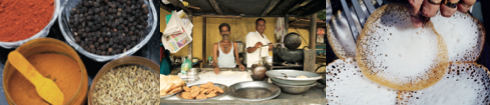
A land of lush backwaters, spice-laden history and warm, soulful hospitality, Kerala is where India slows down to a dreamlike pace. By Lucie Grace. This article was taken from the April 2025 issue of Food and Travel. Header image: Guarav Kumar
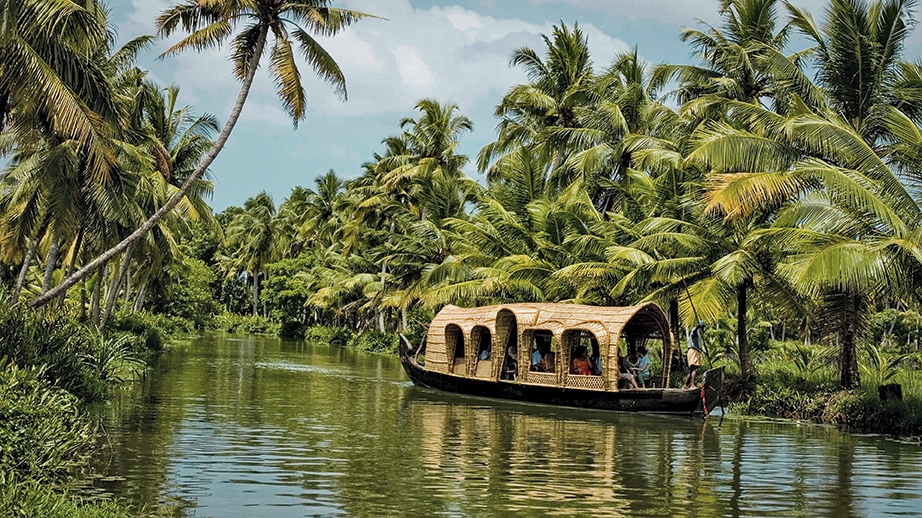
Lovingly known as ‘God’s Own Country’, Kerala more than earns its moniker. From the emerald tea plantations of Munnar to the golden sands of Varkala and the tranquil backwaters of Kollam and Alappuzha (Alleppey), this southern Indian state is a lush, slow-paced escape. Hugging the western coastline, its tropical climate lingers year-round – although the hill stations offer a cooler retreat. Even Kerala’s cities feel unhurried, with the vibrant port city of Kochi standing out for its laid-back charm.
In recent years, Kochi (formerly Cochin) has emerged as one of India’s creative hubs. The city – split between historic, timeworn Fort Kochi and modern mainland Ernakulam – is currently preparing for the sixth edition of the Kochi-Muziris Biennale, running from 12 December 2025 to 31 March 2026. While the art scene leans contemporary, the cuisine stays rooted in tradition. Kerala’s famed seafood – grilled, baked, or simmered in coconut milk and fragrant spices, often served in banana leaves – is a must-try, but there’s plenty more to savour.
What to do
THE HISTORY Spices first drew traders from the Phoenician, Roman and Arab worlds, turning the region into a flourishing hub of learning, culture and commerce under the powerful Zamorins of Calicut and the rulers of Travancore and Cochin. The prosperity caught the attention of European empires, making Kerala the only Indian state to have endured three consecutive colonisers.
Vasco da Gama’s arrival in 1498 marked the start of Portuguese dominance, exporting Kerala’s prized spices to the world. A century later, the Dutch East India Company took control, only to be replaced by the British by the late 18th century. The imprint of these colonial powers lingers in Kerala’s architecture and cuisine.
Yet throughout, the region remained a crucible of intellectual movements, with social reformers challenging caste hierarchies and pioneering education. In 1956, Kerala unified as a single state, gaining global recognition for its literacy rates, healthcare and progressive politics.
Where to stay
WHERE TO STAY
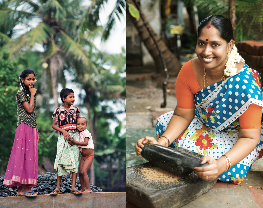
Kerala’s accommodation scene is as heartfelt and wholesome as the warmth of its people. Homestays are a defining feature, typically offering three or four guest rooms within a family home, where visitors are welcomed with genuine hospitality – and often an invitation to share home-cooked meals.
In Kochi, high-end hotels are mostly found in the mainland district of Ernakulam, but the true gems lie in Fort Kochi, where heritage properties have been lovingly restored into elegant boutique stays. These repurposed 18th- and 19th-century warehouses, factories and traders’ homes retain their wide courtyards and airy, social layouts. ‘The moment you walk in, you feel you are experiencing history,’ says Jude Vibin, manager of Old Harbour Hotel, the oldest and most refined stay in Fort Kochi. ‘Kerala doesn’t have any laws that protect old buildings. It is purely by passion that the hotel was renovated and restored.’ With its leafy gardens and a top-tier in-house restaurant, it provides a serene retreat from the bustling lanes outside. oldharbourhotel.com
Other beautifully restored stays include Raintree Lodge, Malabar House and Forte Kochi, all centuries-old and magnificently preserved. malabarhouse.comfortekochi.in
For a more immersive experience, homestays elsewhere in Kerala include Rosegardens in Munnar, an eco-conscious retreat powered by solar energy, with an organic allotment supplying homegrown produce. Further north in Wayanad, Varnam Homestay, set on a working spice farm, is the perfect base for those venturing into the wilderness of Wayanad Wildlife Sanctuary. rosegardensmunnar.com varnamhomestay.com
Where to eat and drink
WHERE TO EAT AND DRINK
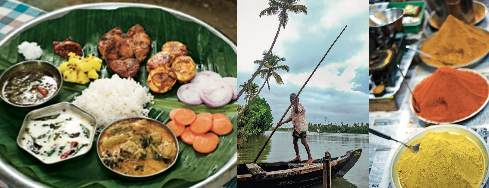
Keralan cuisine is shaped by the region’s coastal-meets- jungle landscape, where an abundance of freshly caught seafood, locally grown matta rice and tropical ingredients form the backbone of its rich, spice-laden dishes. Coconut infusions – whether in milk, oil or grated form – lend signature depth.
The best introduction to local food is through Kerala’s famed seafood restaurants. Fort Kochi has a cluster of no- frills but excellent fish joints, with Maples Sea Food, on the beach walkway, standing out. A must-order is the meen pollichathu – a whole fish marinated in spices, wrapped in banana leaves and roasted to perfection. Just steps away, the cheena vala (Chinese fishing nets) cast silhouettes over the water, a reminder of the foreign influences that have long shaped the region’s food offering.
Across the water in Ernakulam, Restaurant Chef Pillai Kochi, tucked within Le Méridien Kochi, is worth a reservation for its indulgent mud crab malli curry and exquisitely grilled tiger prawns. chefpillai.com
As Praveen Paul, founder of Fort Kochi’s sumptuous art café Lila Curated Experiences, puts it: ‘Kerala’s food culture is a true melting pot – centuries of foreign influence have refined its ingredients and cooking techniques, making Fort Kochi’s cuisine distinct. One of the most striking examples of this cultural fusion is mussadath – a fermented mustard infused with spices, vinegar, garlic and moringa bark. The use of vinegar and garlic, which are not traditionally prominent in Kerala’s native cuisine, underscores the lasting influence of Portuguese culinary traditions.’
At Lila, the set menus are not to be missed. Each is meticulously crafted to tell a story. ‘Our dishes are curated to narrate cultural and historical events through food,’ says Praveen. ‘For instance, the Perunal Oonu set menu recounts the feast of St Sebastian, celebrated at a church built in 1001AD in the hamlet of Kanjoor.’ A meal here is clearly as much an education as it is an experience. lilahc.com
Time running out?
Map
Travel Information
Travel Information
Getting There
Resources
Average daily temperatures and rainfall
Jan
Feb
Mar
Apr
May
Jun
Jul
Aug
Sep
Oct
Nov
Dec
Min Temp
Max Temp
mm
Get Premium access to all the latest content online
Subscribe and view full print editions online... Subscribe