Montevideo, Uruguay - Uruguay
Bustling markets, historic neighbourhoods and serene seaside promenades combine to create a welcoming South American city. By Marcela Baruch Mangino
Travel Time 1hrs 10min
Bustling markets, historic neighbourhoods and serene seaside promenades combine to create a welcoming South American city. By Marcela Baruch Mangino
Travel Time 1hrs 10minUruguay’s greatest writers often portray Montevideo as a city where time strolls rather than rushes. A place whose people sit in silence on the edge of a river with the soul of an ocean – the Río de la Plata – gazing towards the horizon, mate in hand. This infusion of yerba mate, first prepared by the Guaraní people, became a powerful cultural marker across Paraguay, Argentina, southern Brazil and Uruguay, and remains deeply woven into daily life.
Montevideo is an atypical capital: a quiet oasis between the two Latin American giants of Buenos Aires and São Paulo. Those of us who call it home tend to think of it as a nostalgic city, perhaps shaped by the words of writers such as Mario Benedetti and Eduardo Galeano, who captured it as a place defined by ordinary lives, lingering café encounters and passionate conversations about football.
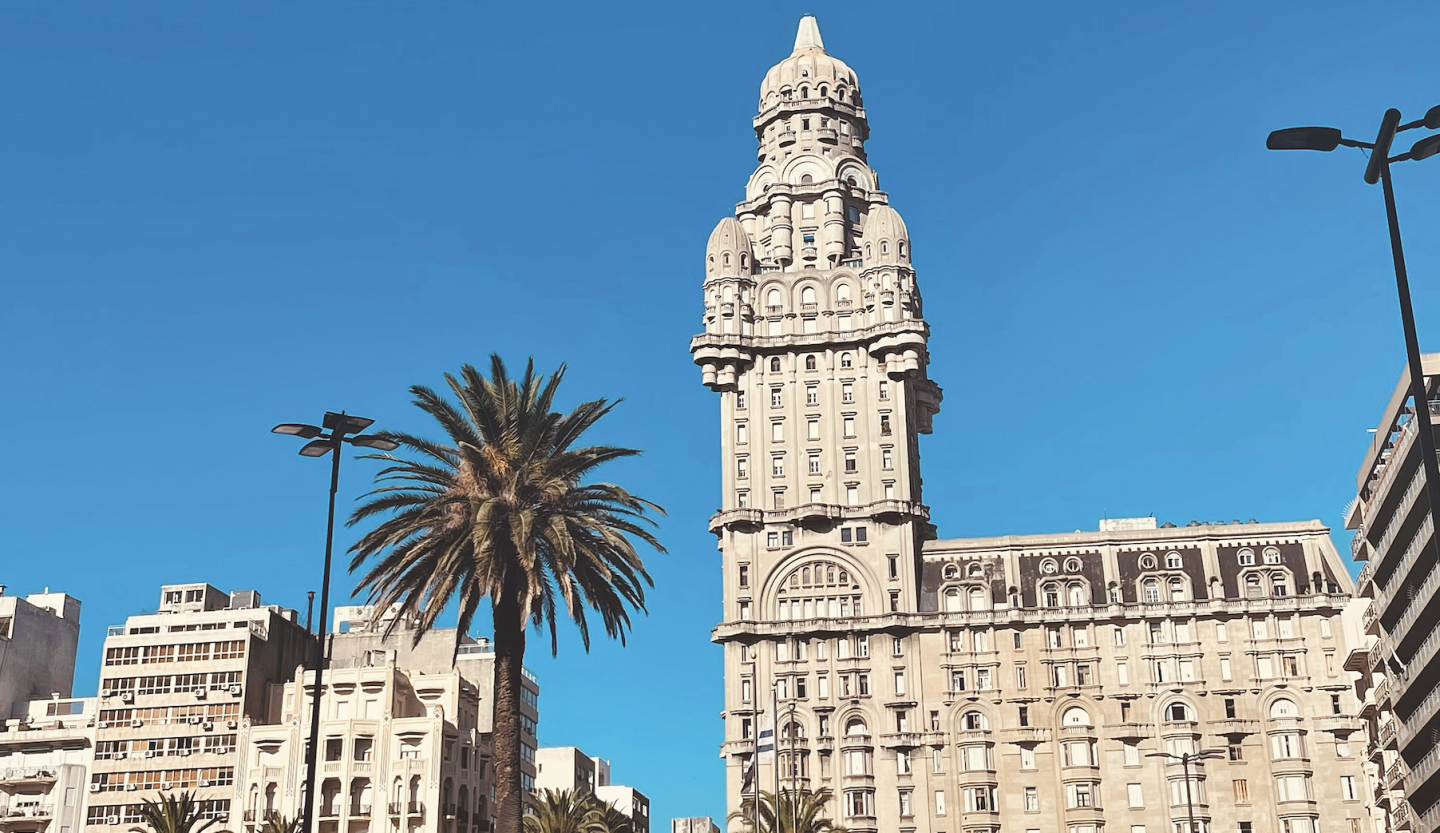
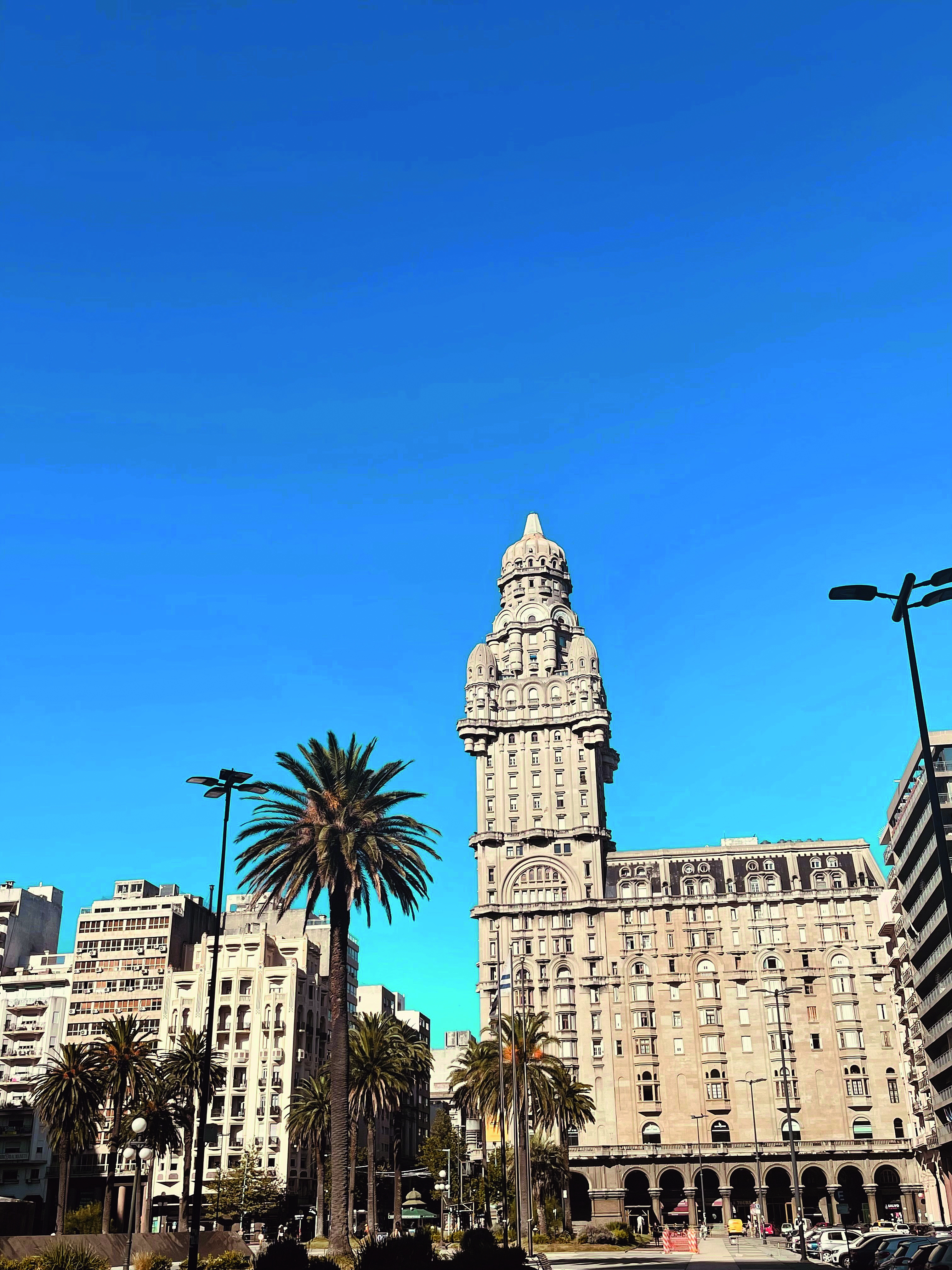
With just 1.3 million inhabitants, Montevideo offers visitors something increasingly rare: personal space. Uruguay, in general, and Montevideo, in particular, gives its guests time to wander between art museums, theatres and cultural centres. Its architecture reflects this layered rhythm: early 20th-century art deco buildings stand alongside colonial remnants and striking modern interventions by architects such as Eduardo Viñoly and Carlos Ott. In recent years, a new wave of migration has reshaped the city’s streets with cultural diversity and youthful energy. Political stability and an open migration policy have made Montevideo a chosen home for Europeans, Latin Americans and North Americans alike, many of whom first arrived as tourists.
Founded in 1724 as a strategic Spanish outpost to counter Portuguese expansion along the Río de la Plata, Montevideo was sparsely inhabited by Charrúa, Chaná and Guaraní peoples. Soon it was settled by immigrants from Buenos Aires – of Italian, French and Spanish origin – and the Canary Islands. According to the 2023 census, the population today is predominantly of European descent, with 10 per cent Afro-Uruguayan and 6.4 per cent Indigenous ancestry. From its earliest days, the city grew with a clear spatial logic: a green belt of farmers and winemakers to the west; industrial and residential neighbourhoods facing the river in Ciudad Vieja, Centro, Cordón, Palermo and Parque Rodó; and, to the east, the seaside districts of Punta Carretas and Pocitos, later followed by Buceo, Malvín, Punta Gorda and Carrasco.
Over time, Montevideo’ssecular, democratic and cosmopolitan character fostered a remarkable intellectual and artistic life. Combined with economic resilience and a system of free, compulsory education that has narrowed social gaps, the city consistently ranks among the safest in the region.
The food culture mirrors this sense of ease. Dining in Montevideo is casual and informal, shaped by love of meat, seasonal produce and respect for tradition. Polished formality is less important than atmosphere and warmth, often delivered by the owners themselves. Wine is the national drink, and most wineries are located either within or close to the city. Tannat, the country’s flagship red, sauvignon blanc and albariño are essential tastings.
‘A restaurant with rooms’ is how the elegant 1925 mansion Alquimista defines itself, set among the tree-lined streets and quiet avenues of Carrasco’s residential district. Eclectic in style, it pairs excellent food with a luxurious yet relaxed atmosphere, overseen by a discreet, attentive team. In the kitchen, the focus is on slow-cooked, country-style dishes, including a beer-braised meat pie scented with rosemary and bay and baked for four hours. A refined afternoon tea nods to British traditions once rooted along the River Plate. Design, art and a cellar of Uruguayan wines frame six rooms overlooking a garden of jasmine and fruit trees – ideal for those seeking calm away from the city’s bustle. A final curiosity: the largest suite, furnished in 1920s style, features a bed that was once owned by a Uruguayan president. alquimistamontevideo.com
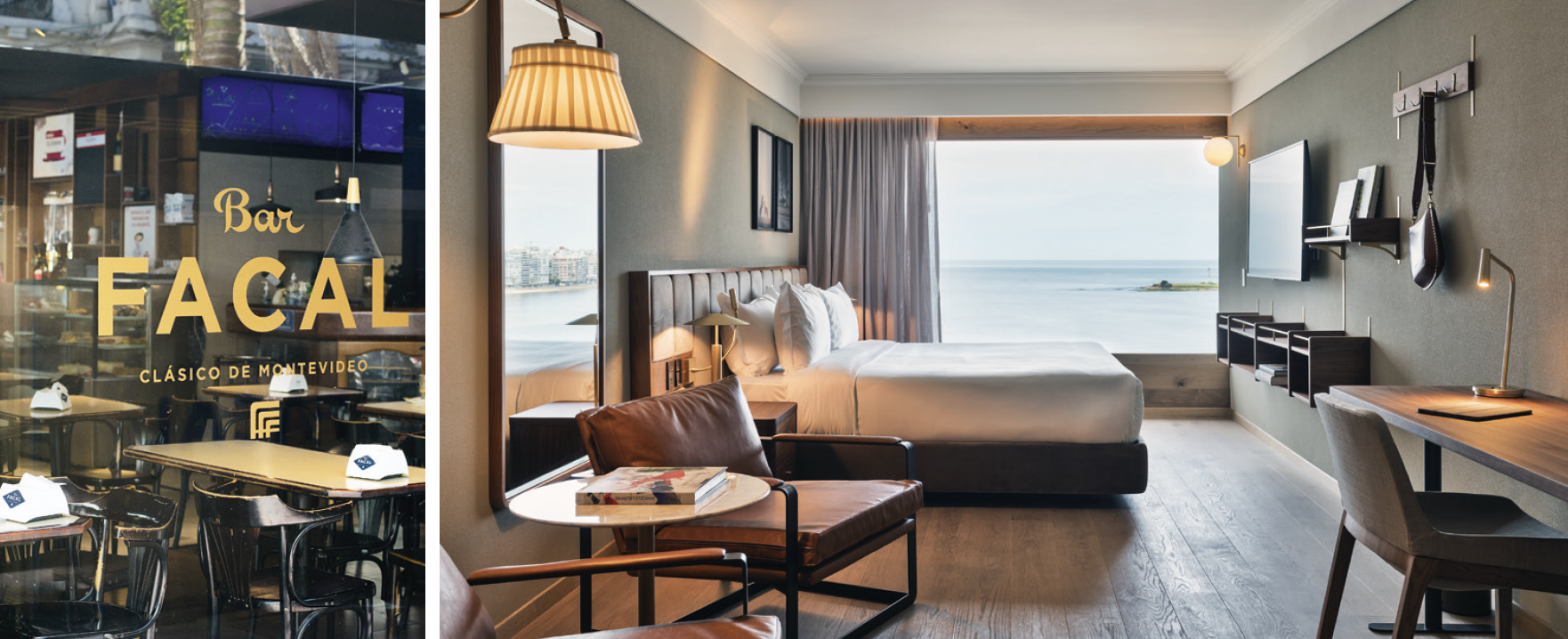
For something more contemporary, Hotel Costanero MGallery Montevideo is a boutique property designed to frame views of Pocitos Bay. Centrally located, it makes an easy base for exploring the city. Wind down at Cauce Bar with the signature Bahía de Pocitos cocktail – blending grappamiel, a Uruguayan liqueur of grappa and honey, with lime juice and Tannat wine, finished with a bay leaf, before settling in for plates of fish ceviche or steak with chimichurri sauce at the restaurant. costanero.uy
Another reliable, if somewhat business-like, option for those set on ocean views – and unwilling to compromise on a state-of-the-art fitness studio or indoor pool – is the contemporary Hyatt Centric Montevideo, with easy access to Pocitos Beach and the waterfront jogging trails. hyatt.com
The chivito is Uruguay’s defining fast-food sandwich. Although it originated in Punta del Este in the 1940s, its popularity quickly spread nationwide. Served in soft bread, it is filled with tenderloin steak, ham, cheese, bacon, tomato, lettuce, hard-boiled egg and mayonnaise. Anthony Bourdain famously called it ‘the best sandwich in the world’.
To try it, head to Bar Arocena, Bar Facal (a good spot for mate too) or Trouville. Another bar essential is fainá, derived from Genoese farinata: a thin batter of chickpea flour and water baked with generous olive oil in a wood-fired oven at over 300C. For a modern take on the sandwich tradition, Sanguche, opened less than a year ago, has already become a gathering point for younger crowds, just steps from the Sunday antiques market at Tristán Narvaja. bararocena.com facal.com.uy trouville.uy
Beef lies at the heart of the Uruguayan diet. Consumption exceeds 90kg per person per year, and the preferred method is slow-cooked over wood embers on the parrilla. While the asador tends the fire, the ritual begins with cheeses and cured meats, often accompanied by mate and whisky. Sweetbreads, chorizo, sweet blood sausage (a uniquely Uruguayan version made with sugar and dried fruit), melted provolone and roasted peppers follow. Then come the cuts of beef, served with salad: bonein short ribs, outside skirt, picanha and pulpón.
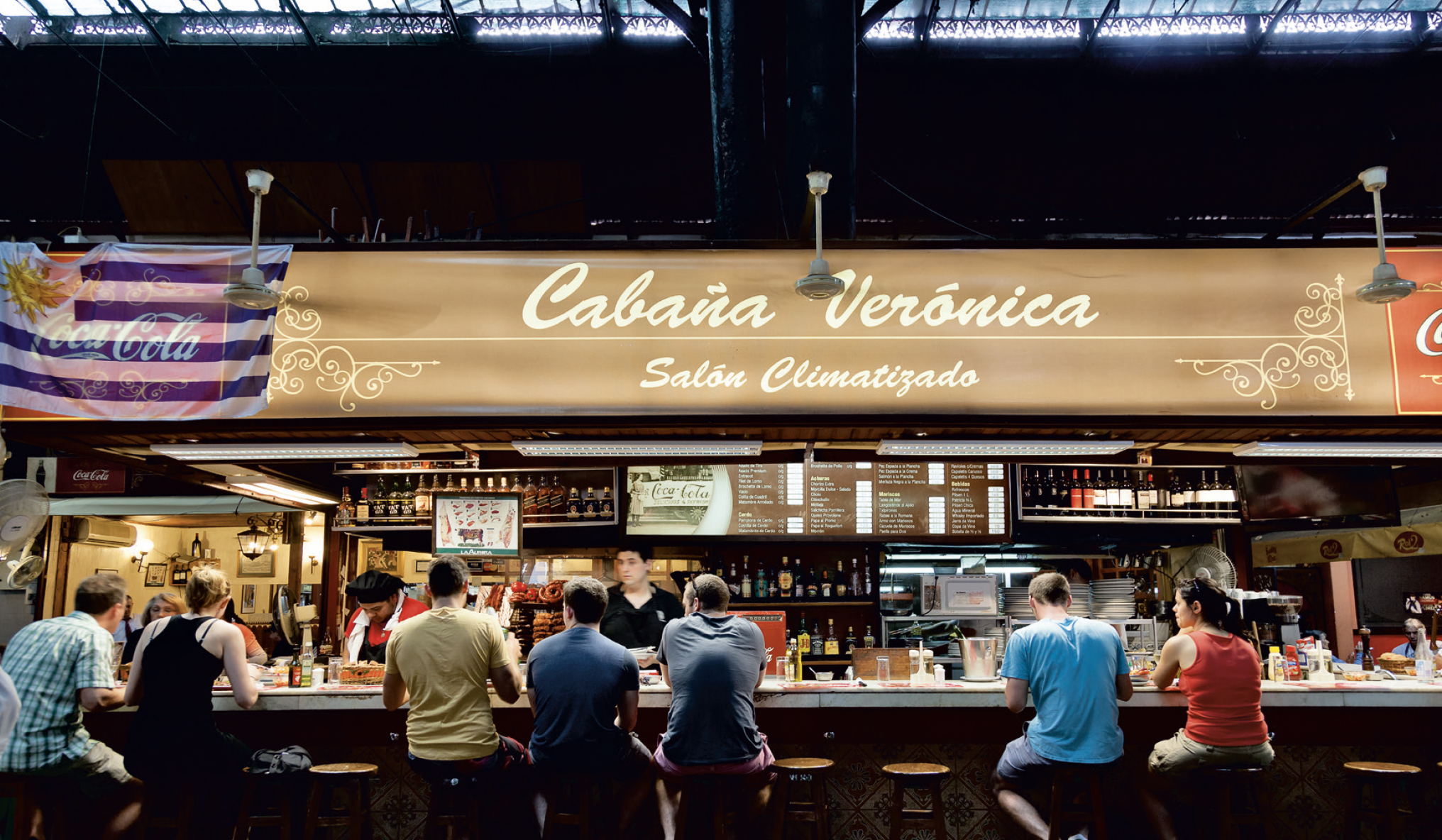
This ritual extends beyond the home into restaurants, in the form of parrillas. Among the most refined, with consistently highquality meat, are García and El Palenque at the Mercado del Puerto. The 19th-century iron structure, originally intended as a train station with links to Argentina, stands by the port. Once a produce market, today it’s the definitive place to understand the social and cultural importance of the grill in Montevideo. garcia.com.uy elpalenque.com.uy
For more contemporary, chef-driven expressions of local cuisine shaped by seasonality, restaurants such as Savarin (+598 2707 4578), Pomelo, Café Misterio, Jacinto and Manzanar (+598 95 121925) stand out. All are led by men and women pushing Uruguayan cooking confidently into the future. pomelo.meitre.com cafemisterio.com.uy jacinto.com.uy
Coffee bars are part of Uruguay’s social DNA. The emblematic Café Brasilero, once a meeting place for intellectual circles, remains a landmark, but a new wave of speciality cafés has swept the city: Seis Montes and Escaramuza café-bookshop are highlights. Café Paraíso has become a favourite for younger crowds, alongside Santé Postres y Afines. For something sweet, ideally featuring the local obsession with dulce de leche, Santé and Camomila (on Brito del Pino) are rendezvous points. cafebrasilero.uy seismontes.com escaramuza.com.uy santepostresyafines.com
Montevideo’s nightlife is generally low-key, but cocktail lovers will find excellent options. Baker’s Bar (Dr Pablo de María, Cordón), Asencio (Av Alfredo Arocena, Carrasco) and wine bar Viti Bar de Vinos (Ciudad Vieja) are convivial spots in three very different neighbourhoods. bakers.uy vitibardevinos.uy
| Jan | Feb | Mar | Apr | May | Jun | Jul | Aug | Sep | Oct | Nov | Dec | |
|---|---|---|---|---|---|---|---|---|---|---|---|---|
| Min Temp | ||||||||||||
| Max Temp | ||||||||||||
| mm |
Subscribe and view full print editions online... Subscribe