Reykjavik, Iceland
Native ingredients meet global methods in this exciting city – be sure to linger long enough to savour self-assured menus reflecting late-summer abundance. By James Taylor
Travel Time 1hrs 10minNative ingredients meet global methods in this exciting city – be sure to linger long enough to savour self-assured menus reflecting late-summer abundance. By James Taylor
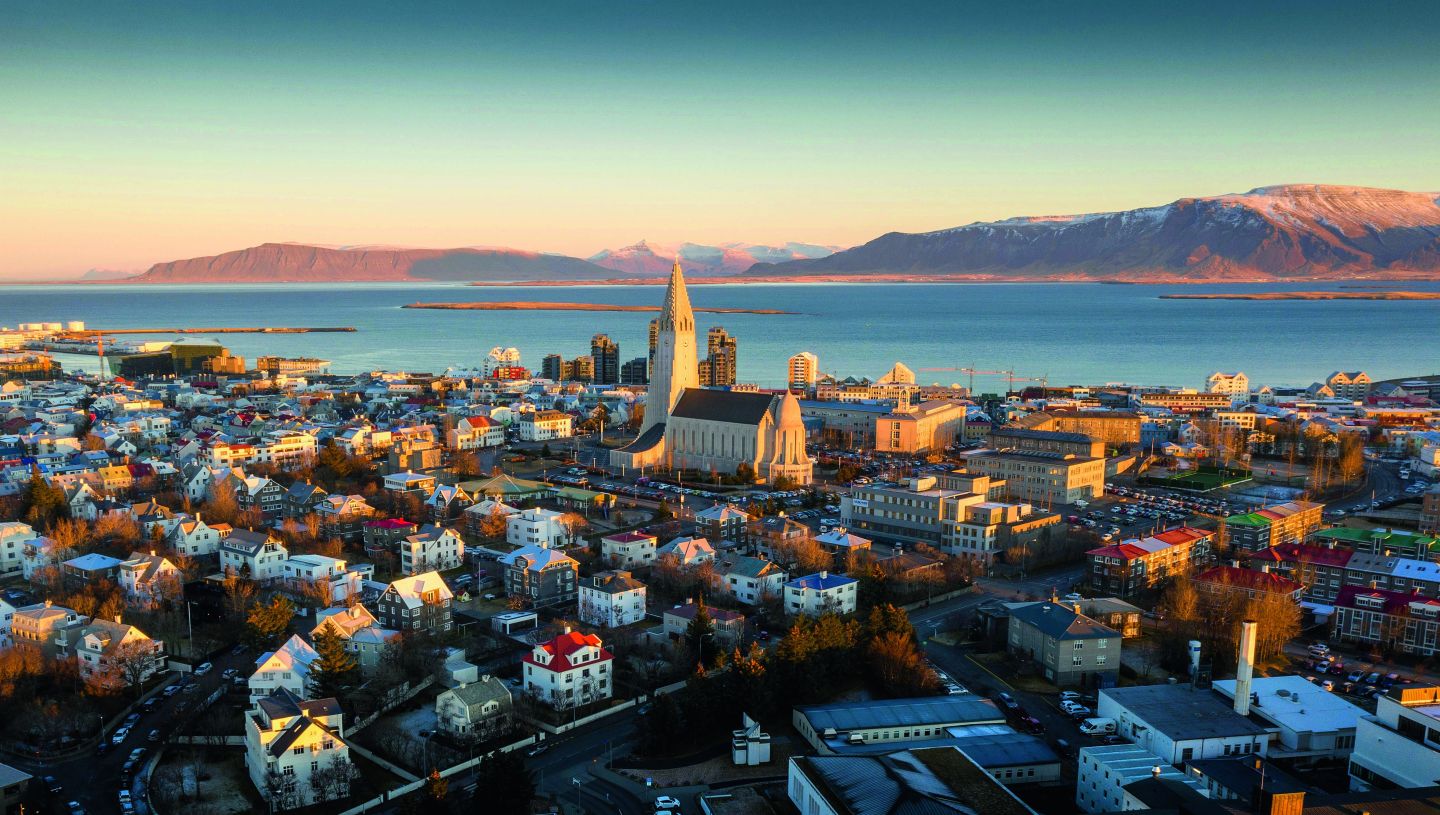
Travel Time 1hrs 10minReykjavik is where most Icelandic adventures begin, a compact, colourful city where cosmopolitan creativity meets the raw, powerful landscapes of the far north. Located in the country’s relatively mild south-west corner, it’s the perfect launchpad for road trips into Iceland’s cinematic landscapes – silver-threaded waterfalls, groaning glaciers and steaming lava plains that stretch towards the horizon – but deserves far more than a cursory overnight stay. This is a capital that leads with quiet assurance, rich in culture and grounded in design. Come August and September, the days are still long, the light golden and the city does all it can to capture the last of the summer. Galleries hum, performances spill into the streets and restaurants turn late-summer produce into bold, seasonal menus.
Once little more than a fishing village, Reykjavik has reinvented itself over the past century. Settled by Norsemen in the 9th century, the island’s early residents endured long winters, harsh terrain and, eventually, Danish colonial rule. Tough volcanic soils, the country’s isolation and trade restrictions imposed by the Danes forced Icelanders to be resourceful; for generations, their diet was dominated by all things pickled, salted, cured and fermented. But following independence in 1944 and a wave of post-war prosperity, Iceland opened up. As the inhabitants began to travel abroad, they returned with new flavours, ideas and a hunger to innovate.
Since then, Reykjavik has quietly evolved into one of Europe’s most exciting culinary cities. Chefs here draw on native ingredients – wild herbs, Arctic fish, foraged berries – but aren’t afraid to experiment with global methods. Think dishes like langoustine with fermented rhubarb or smoked lamb with miso. Reykjavik’s dining scene mirrors the outlook of Icelanders: a strong commitment to traditions but open to the world.

For a capital city, Reykjavik does small-scale hospitality remarkably well. Boutique hotels, stylish hostels and homegrown guesthouses dominate the scene, offering personal touches, strong design and calm comfort after a day spent braving Iceland’s elements.
‘We wanted to reflect that sense of refuge,’ says Alma, co-owner of Local 101, a quietly elegant stay tucked into a street in the city’s west end with a small restaurant and bar called Litli Barinn. ‘Whatever the weather throws at you – snow, wind or sunshine – you’ll come home to a warm bed, a cold beer and great food,’ she promises. local101.is
Downtown, Exeter Hotel occupies a former warehouse by the Old Harbour, where the interiors lean heavily on a mix of Nordic minimalism and industrial cool; exposed concrete, charcoal steel and hardwood floors, softened by modern art and subtle pops of colour. It’s also home to Le Kock, a buzzy burger joint and gastropub. Across town, Kex Hostel brings a similar gritty but cool energy to a former biscuit factory, with both dorms and plenty of private rooms, plus a restaurant and bar that draws locals for live music. exeterhotel.is kexhostel.is
For a design-forward stay, Hotel Von brings a self-assured contemporary style to Laugavegur, the main shopping street. Inside, rooms are simple but thoughtfully designed – a quiet retreat from the city buzz. Downstairs, the recently opened Bon Restaurant adds a dose of Parisian charm, with a French-inspired menu built on seasonal Icelandic produce, rich sauces and confident, butter-forward cooking. hotelvon.is
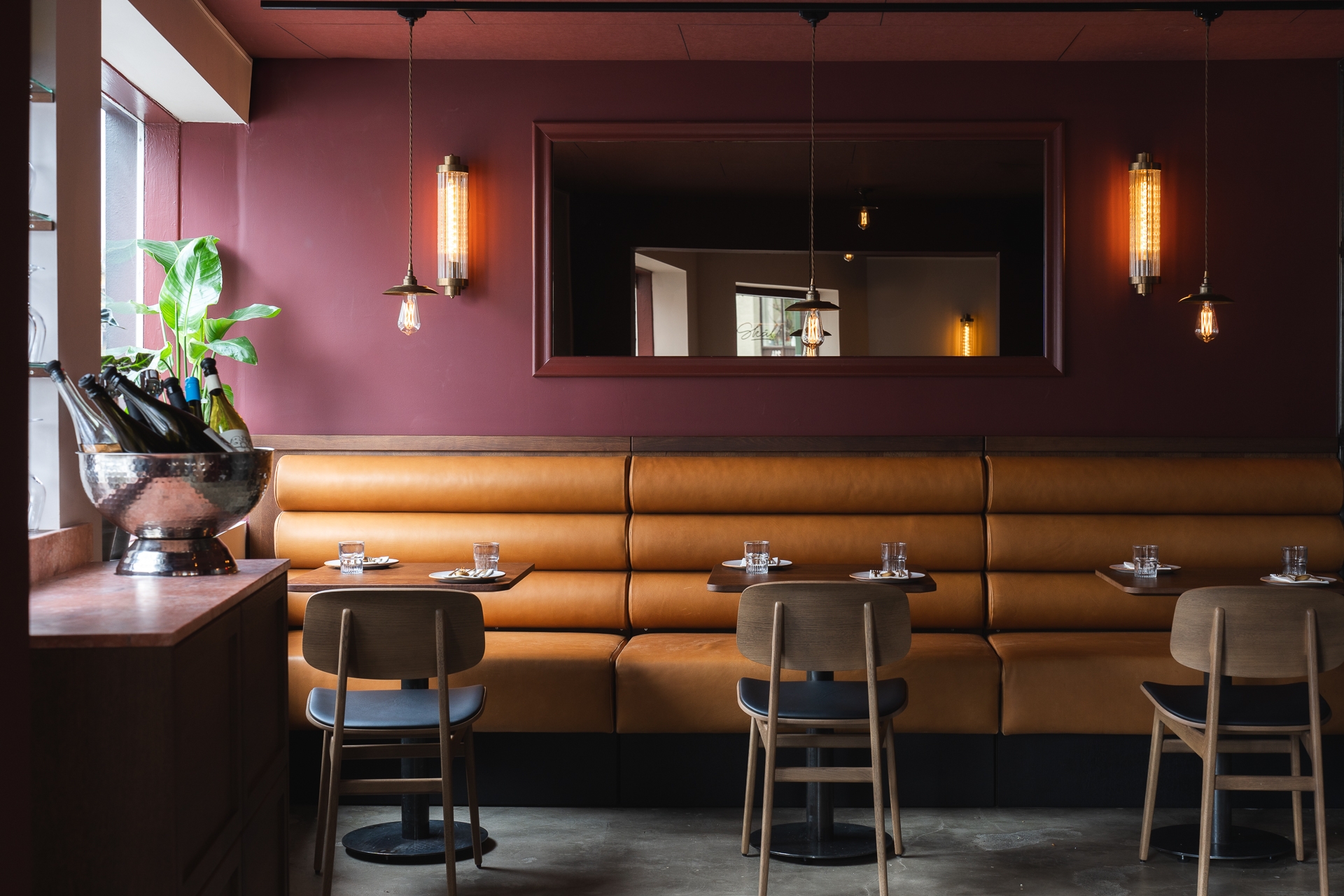
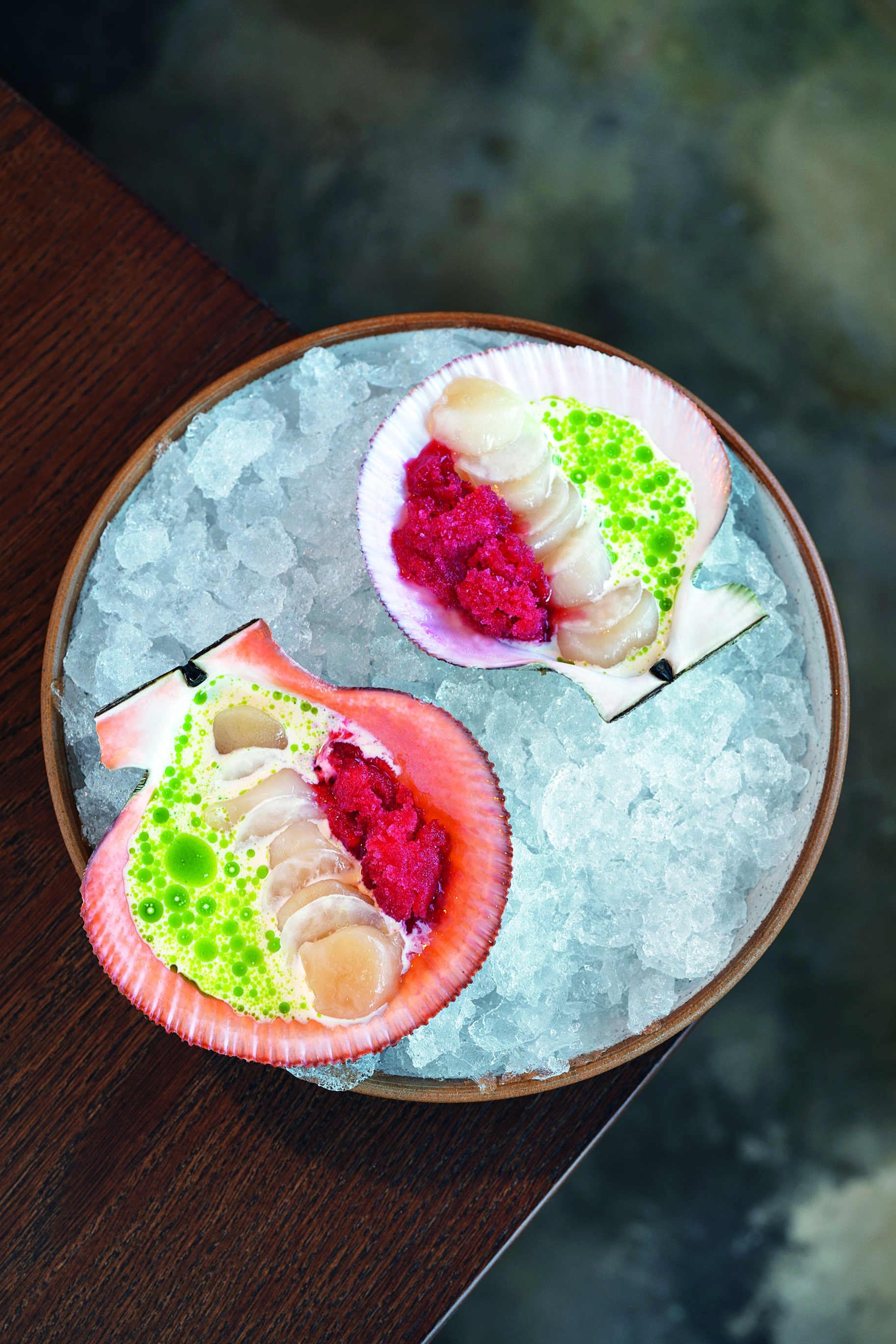
Reykjavik’s food scene is playful, curious and deeply tied to the country’s natural environment. Start with Skál!, the breakout star of the city’s first food hall, Hlemmur Mathöll. Now in its own bricks-andmortar home, the restaurant retains its signature blend of fine-dining flair and foraged ingredients. Chef Thomas Lorentzen builds menus around birch syrup, native berries, greenhouse-grown microgreens and silky Icelandic skyr. skalrvk.com
Candlelight flickers across stone walls and timber beams at Matarkjallarinn, beneath one of Reykjavik’s oldest buildings, setting the tone for European cuisine that’s indulgent but finely balanced; expect truffled beef carpaccio and updated takes on Icelandic staples like glazed lamb fillet and Arctic char with goat’s cheese. The vibe is somewhere between supper club and speakeasy, with live piano most nights and a cocktail list that leans into Nordic botanicals. matarkjallarinn.is
At Sumac, in the heart of the busy Laugavegur, Icelandic produce meets spice-laced North African cooking by chef Thráinn Freyr Vigfússon. The lamb is among the country’s best, but don’t miss the signature charred cauliflower drizzled with tahini yoghurt. If budget allows, book a spot at the chef’s other venture, the Michelin-starred ÓX; it’s an intimate counter-dining experience with a set tasting menu cooked in his grandfather’s original countryside kitchen, transplanted into the heart of the restaurant. sumac.is ox.restaurant
Moss Restaurant is the designforward culinary showpiece of The Retreat at Blue Lagoon, helmed by Aggi Sverrisson of London’s Michelin-starred Texture Restaurant, looking out over ancient lava fields. Dine on lightly cured Arctic char, hillside herbs and root vegetables slow-cooked in geothermal steam. bluelagoon.com

| Jan | Feb | Mar | Apr | May | Jun | Jul | Aug | Sep | Oct | Nov | Dec | |
|---|---|---|---|---|---|---|---|---|---|---|---|---|
| Min Temp | ||||||||||||
| Max Temp | ||||||||||||
| mm |
Subscribe and view full print editions online... Subscribe