This riverside district fills up on maple taffy, gravy-drenched poutine and boreal cuisine. Think: Canada with a heavy French accent, says Estella Shardlow. This article was taken from the June/July 2024 issue of Food and Travel.
Take Gallic gastronomy,
Francophone citizens and
cobbled squares, stir in North
American vistas and Revolutionary
War battlegrounds, and what do
you get? The alluring fusion that
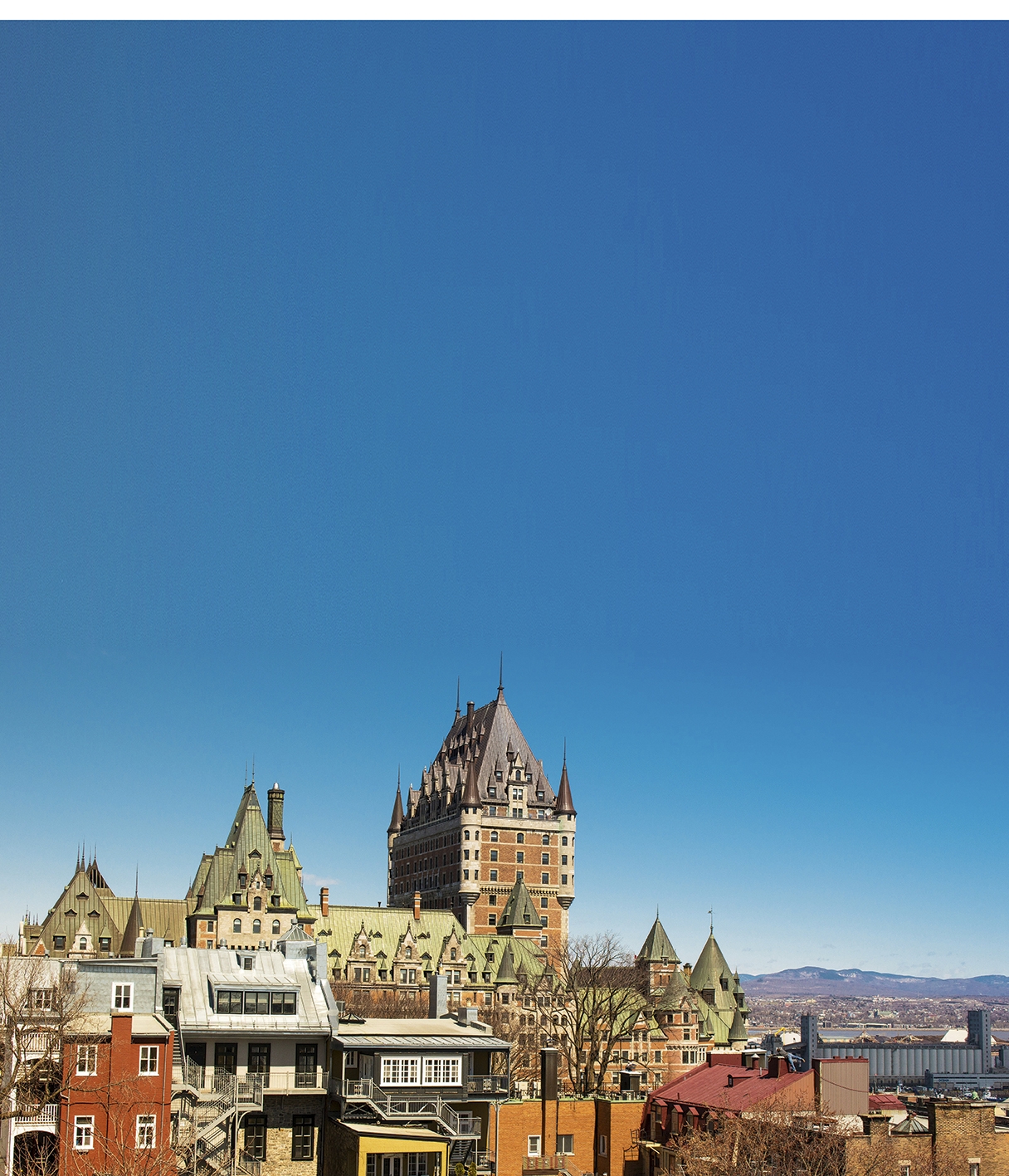
is Vieux-Québec. The old quarter
is crowned by the Fairmont Le
Château Frontenac, its turreted
silhouette iconic enough to
appear in Canadian passports.
Narrow lanes unfurl down
bracingly steep hillsides –
thankfully, there’s a funicular –
towards wharfs and docks.
In this World Heritage Site,
cathedral, convents and
fortifications rub shoulders with
wine bars, épiceries (gourmet
food stores) and art galleries.
Signature dish poutine slathers
chips in curd cheese and gravy
while tourtière (meat pie) and
fèves au lard (bean-bacon stew)
help to offset the Canadian
winter chill, but this is a city for
all seasons. Come spring, sugar
shacks boil maple tree sap to
pour on lingering heaps of snow
and form thick, chewy taffy. By
summer, Vieux-Québec’s hilltop
Battlefields Park is alive with
sports and open-air concerts,
reaching a crescendo with July’s
Festival d’Été de Québec.
What to do
THE HISTORY
The city’s 400-year-old story isn’t
always as sweet as its famous
maple candies; canon-lined
bastions, barracks and defensive
gates speak to decades of
clashes between colonial forces.
Samuel de Champlain made
land in 1608 and built Québec to be the capital of New France.
But the British were soon vying for dominance of this
important east coast trading
post, coming to a head in 1759,
when General Wolfe’s troops
defeated the garrison of Marquis
de Montcalm. The French
unsuccessfully tried to reconquer
the city one year later, followed
by a failed attack by American
Revolutionary forces in 1775.
Clue up on military tactics at The Musée de la Civilisation – as well as learning about the Indigenous cultures that predate all this – before rambling along the well-preserved fortified walls, imagining the musket fire andclash of swords. Walled citiesmay be ten-a-penny in Europe,but over in the New World,Québec is the only survivingexample north of Mexico.
Where to stay
Occupying a peaceful side-
street in Québec’s Old Port, the
fire-lit lobby-bar, sumptuous
suites (some featuring roof
terraces) and Finnish sauna belie
Auberge Saint-Antoine’s former
function as a canon battery. Look
closer, however, and you’ll spot
displays of colonial-era artefacts
unearthed during the building’s
restoration. Part of Relais &
Châteaux’s prestigious hotel
portfolio, this family-run hotel
also leads the way in sustainable
gastronomy. Organic produce
from the hotel’s nearby island-
farm forms some 70 per cent of
Chez Muffy’s menu, right down
to syrup from its own maple
groves. saint-antoine.com
Another property taking on a new lease of life is convent-
hospital Le Monastère des
Augustines, which now offers
soul-soothing city breaks in its 17th-century cloisters. Airy,
whitewashed rooms are simply
yet stylishly kitted out with
patchwork quilts and fluffy
robes. Leaning into the wellness
theme, mindful silence is
encouraged during mealtimes,
while massage treatments, yoga
classes and guided garden
walks are all on offer. An on-site
museum pays tribute to the
trailblazing nurse-nuns who
settled here and, continuing the
philanthropic bent, subsidised
stays are offered for carers. ‘Get thee to a nunnery’ has
never been such an appealing
prospect. monastere.ca
Where to eat and drink
It’s a tale of regional tradition and local
ingredients in these parts. A day might start with
the aroma of freshly roasted coffee at esteemed
coffee roastery Brûlerie de Café de Québec or
perhaps Paillard, a boulangerie cherished by
locals for its pastries, artisan bread and gourmet
sandwiches – both in rue Saint-Jean.
Come evening, step back in time to sample classic French cuisine at Québec’s
oldest gourmet restaurant, Restaurant Le
Continental, while over at Restaurant Légende
contemporary ambience sets the scene for
innovative tasting menus – see venison tartare
and seared foie gras – and expertly curated
wine pairings. restaurantlecontinental.comrestaurantlegende.com
Farm-to-table fare is best sampled at Bistro
Hortus, which turns seasonal foods into creative
dishes bursting with flavour. Or try seasonal
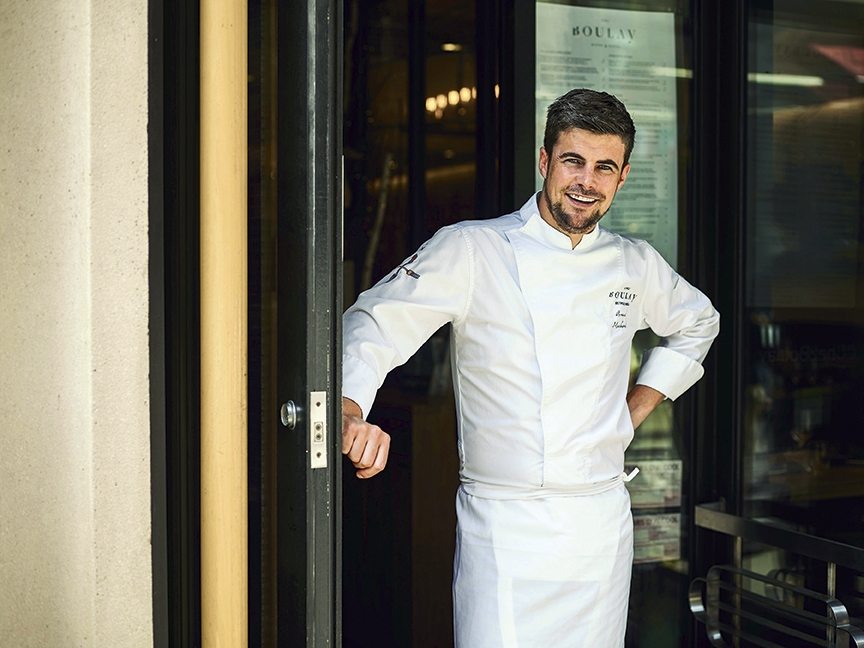
Nordic flavours at Chez Boulay Bistro Boréal, where locally sourced ingredients take centre stage. hortus.cachezboulay.com
Tucked away in a rustic 18th-century stone
house, much loved Le Lapin Sauté delivers
an innovative take on classic rabbit dishes
like rabbit poutine and braised rabbit leg,
all to be enjoyed in a picturesque courtyard
setting. lapinsaute.com
Le Chic Shack, is the place for
quintessential Québecois comfort food – it’s renowned for its mouthwatering
poutines – while charming sugar shack La Petite Cabane à Sucre de Québec
showcases the sweet side of the region's
culinary heritage: maple syrup flows freely
and traditional delicacies abound. And at La Buche, every dish pays homage to
the region’s food ways, from tourtière to
maple-infused desserts. lechicshack.carestolabuche.comrestolabuche.com
For a sophisticated selection of
wines and artisanal cheeses – and
panoramic views of the cityscape
– take a seat at Le Chateau
Frontenac’s 1608 Bar. fairmont.
com/frontenac-quebec
Time running out?
Map
Travel Information
Travel Information
Getting There
Resources
Average daily temperatures and rainfall
Jan
Feb
Mar
Apr
May
Jun
Jul
Aug
Sep
Oct
Nov
Dec
Min Temp
-14
-13
-7
1
8
13
16
15
11
5
-2
-9
Max Temp
-6
-5
1
9
17
23
25
24
19
12
4
-3
mm
17.0
14.5
29.1
63.1
77.8
92.4
96.3
84.4
90.3
85.8
62.8
28.9
Get Premium access to all the latest content online
Subscribe and view full print editions online... Subscribe