
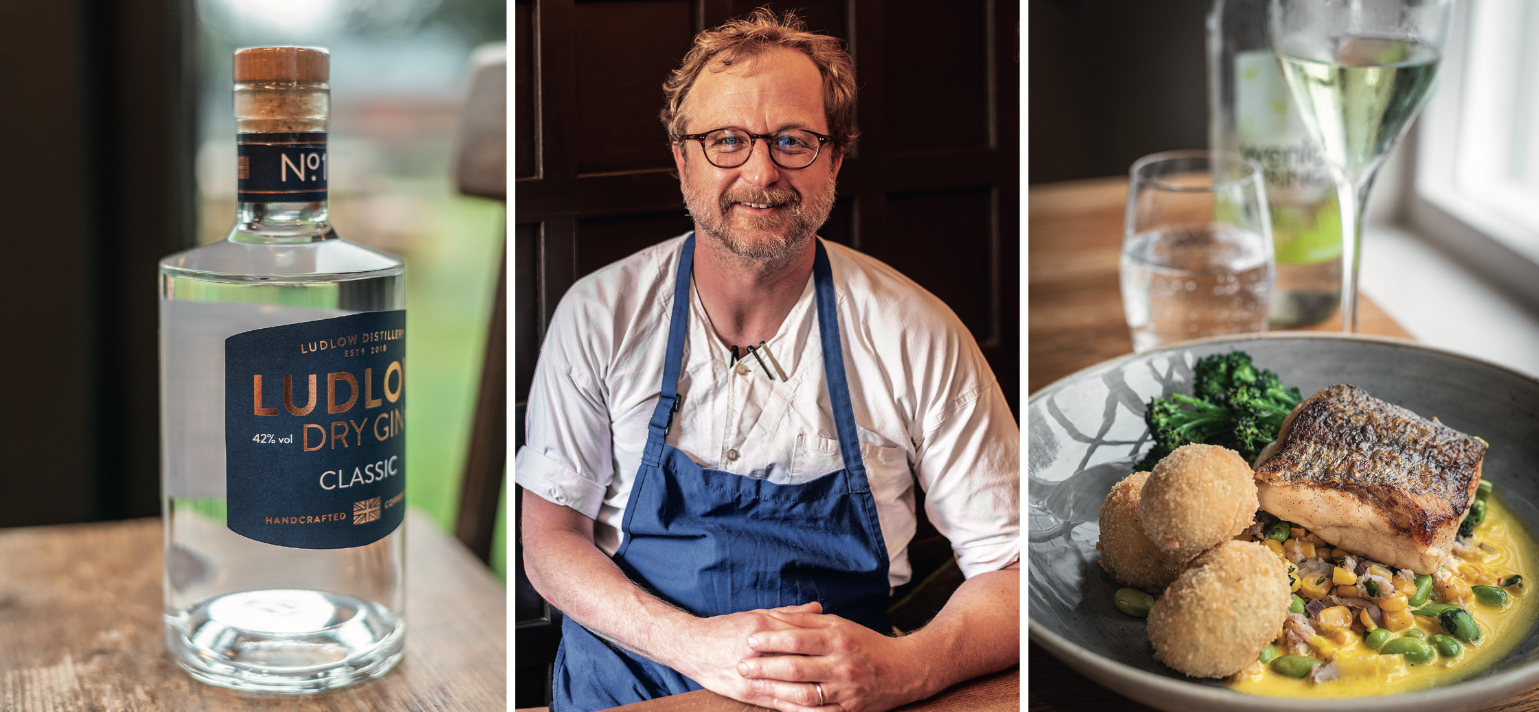
In Ludlow’s handsome, 19th-century Assembly Rooms on Castle Square, chef Bill Sewell explains why he loves life here: ‘Ludlow rings very happily in the food world. We have so many independent food shops and restaurants and a thriving farmers’ market.’ Bill is no stranger to good food. In 1989, he opened The Place Below in the Norman crypt of St Mary-le-Bow church in the City of London. His ground-breaking vegetarian menu included a quiche that, 40 years ago, a respected London magazine declared the best in town. He’s made no changes to the still-popular dish, made with spinach, farm eggs and Caerphilly cheese, except to now make it with fine Shropshire-grown ingredients. ‘Twenty years ago, there were three Michelin-starred chefs working in Ludlow, including the estimable Shaun Hill, now in Abergavenny. They paved the way for us all. Today, our eateries are more egalitarian; I work with many talented young people and I have hope for our food future. We’re spoilt for choice here.’
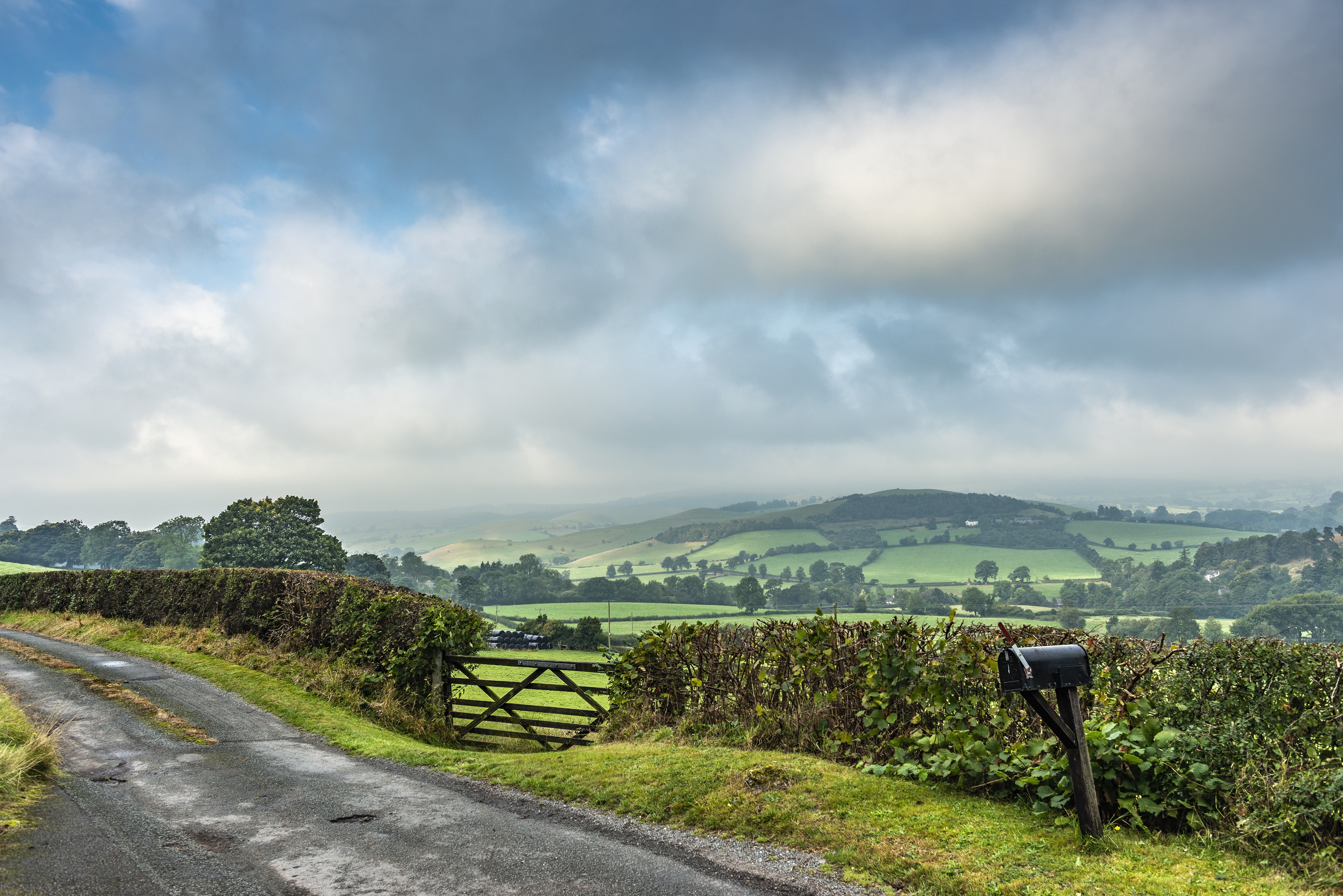
Ludlow lies on the narrow, fast-flowing River Teme in a sheltered spot in the Shropshire Hills, close to the border of England and Wales. Its topography has remained unchanged since early medieval times, with the magnificent, 11th-century castle as its centrepiece. Over the centuries, Ludlow prospered as a trade centre for wool and cloth, and was home to many medieval guilds; today, its traditional reputation as a centre for skilled artisans and producers lives on in the world of food.
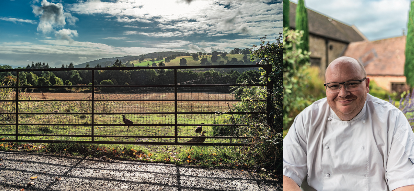
Fifteen minutes’ drive south, in the village of Richards Castle, farmer Chris Tudge lives in a heritage-listed, 17th-century farmhouse. ‘Fifty years ago, my dad delivered milk to Ludlow with his horse and cart,’ he says. ‘He met Shaun Hill by chance and began to supply his restaurant there. He still supplies him in Abergavenny. But farming is different today; I now practise what I’d call modern “traditional mixed-farming” – arable, hay, sheep – and I cure rare-breed pork.’
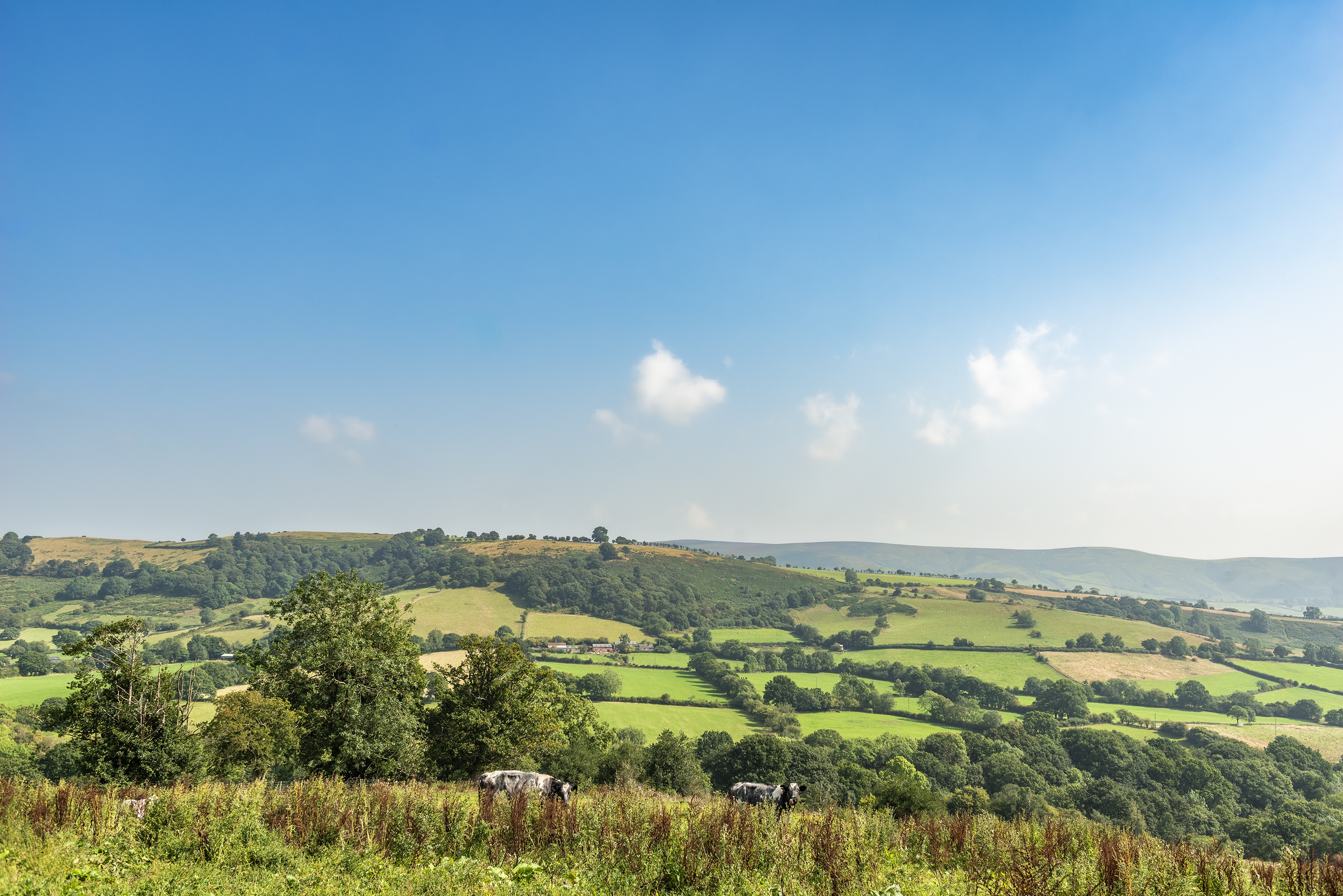
Chris buys young pigs – Berkshires, Oxford Sandy and Blacks, Middle Whites – from local farmers he trusts, and keeps them outside in large open pens; in bad weather, he brings them inside into hay shelter. He moves the pens around as otherwise the pigs devour too much natural foliage – grass, docks, thistles and nettles, which are home to butterflies, bees and insects – and checks on their feed and health every day since he doesn’t use antibiotics.
Chris cures the pork in a salt/sugar mixture for a week, then dries and smokes it over oak-wood chippings from a local furniture- maker in his quirky, on-site smokehouse. ‘For the past ten years I’ve also prepared wild venison from Mortimer Forest and it’s become very popular. An ex-soldier who uses lead-free shot supplies me. And the Welsh hill sheep over there belong to a lady who brings them every year from the Abergavenny hills to winter here,’ he says.
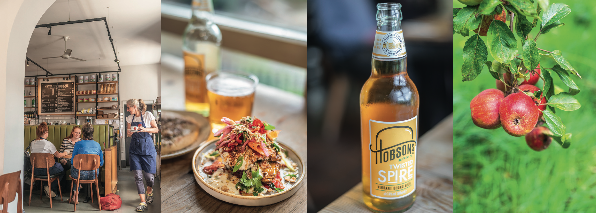
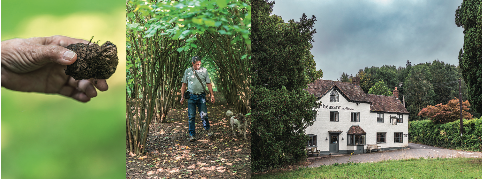
A similar ingenuity is practised by fruit-farmer Billy Auger, in Hopton Wafers, 14km east of Ludlow on the southern slopes of the Clee Hills. ‘I grow apples – James Grieve, Discovery – Beurré Hardy pears, Marjorie’s Seedling plums, greengages, cherries, 16th-century Shropshire prune damsons, and two varietals of cob nuts, a type of hazelnut: Kent Cob (late 16th-century) and 19th-century Lang Tidling. These older varietals were popular in the past as food needed to be taken on ships for long voyages, and they don’t go off; now, once again, they’re much sought after,’ he says.
‘There’s a micro-climate here; we have very good autumns with temperatures like those in the Massif Central in France. So I grow walnuts – they were brought here by the Romans – but they don’t like to get their feet wet; as this has been a wet year they’re not happy.’
Like Chris, Billy works closely with Ludlow chefs and sells his produce in farmers’ markets across the Marches, the area close to the Welsh/English border. These markets are an essential outlet for small producers, and Ludlow holds a robust Local Produce Market twice a month in historic Castle Square. Juice company AppleTeme’s fruit-presser Tish Dockerty explains why it has become an important centre: ‘Shropshire has so many fine products. Some have gained international recognition through the Slow Food movement. Our apples (Tupstones, May Queen, Newland Sack), pears (Worcester Black, Pitmaston Duchess) and small, deep-purple Shropshire prune damsons are packed with flavour. And we make traditional perry with the huge variety of pears still growing here.’
Tish forages too for elderflowers, greengages and sharp, scarlet mulberries, popular in medieval and Victorian times. ‘I love experimenting with blends of old-fashioned, fruits,’ she says. ‘I’m delighted when someone tells me they haven’t tasted a particular flavour since their grandmother’s homemade jam or tart.’
The market is also home to an abundance of lovely vegetables, leaf greens and herbs from Dick’s Market Garden, run by Rich Griffiths, a few km north of Ludlow: ‘We’re no-dig here, but not big enough to make a living out of vegetables,’ sighs Rich, walking beneath his long pergola covered in cascading runner-beans. So Rich bakes slow-raised bread, made with his own starter, to sell in the market too. ‘I source my flours – strong white, wholemeal, malted – from Bacheldre Watermill, near the Welsh border. They use a local wheat and traditional production methods; stone-grinding prevents wheat germ over-heating and preserves flavour and nutrients,’ he says.
He delivers his breads to Ludlow delis and restaurants and country kitchens such as The Bridges Pub, 40 minutes’ drive north in the beautiful heath and moorland plateau of the Long Mynd, an Area of Outstanding Natural Beauty. Reuben Crouch, manager of CSONS at The Green Café, on the eastern banks of the River Teme, is a problem-solver. ‘It can be a tough world for an artisan producer, so we do what we can to help,’ he says. ‘We’ve developed a network of chefs and cooks to make distribution more reliable, for we want to stay local and support these skilled people. Ludlow was never just about Michelin stars. Those chefs were attracted here in the first place by the fine produce and artisanal products local people had always taken for granted.’
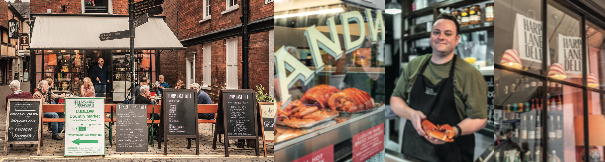
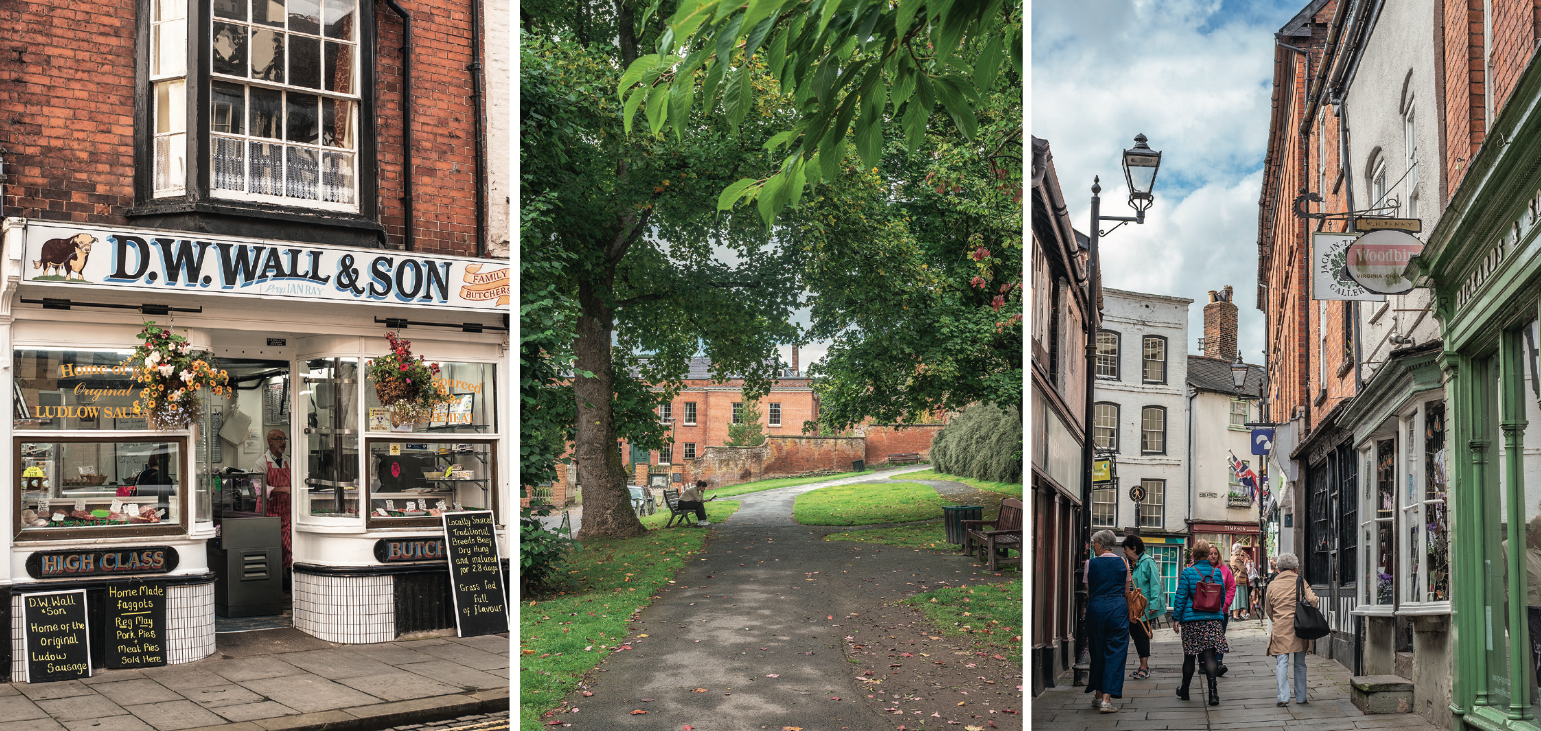
Strolling around Ludlow’s compact, attractive town centre, with its half-timbered, Tudor-period buildings and elegant, 18th-century Georgian houses still in use, it’s easy to forget this is a working market town, not an interactive museum. Small food shops, antiques stores and bookshops occupy some of the nearly 500 listed buildings. Pause at Harp Lane Deli at the corner of Castle Square, for a miniature pork and sage raised pie or hearty sausage roll made with meats sourced from butcher DW Wall & Sons, a few metres away. Here, everything – sausages, homemade burgers, minted lamb – is fresh each day as this little shop has no storage space. They know all the farmers who supply them. So too does butcher AH Griffiths, down the hill on Bull Ring; try their Ludlow Food Festival prize-winning pork, hawthorn-berry and ginger sausages.
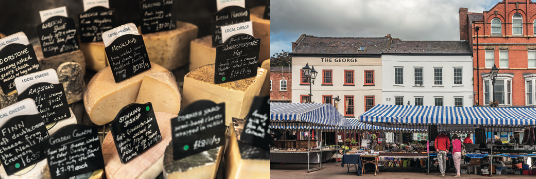
Around the corner, Broad Bean deli stocks Rich’s breads and a selection of Welsh cheeses; or order an award-winning, hot roast- pork sandwich and seasonal salad from tiny Vaughans Sandwich Bar on King Street. Across the road, the ashes of Alfred Edward Housman (1859-1936), author of The Shropshire Lad poems rejoicing in nature and the dignity of those working the land, lie beneath a cherry tree in the graveyard of 11th-century St Laurence’s church. On nearby Church Street, Claire Knowles displays an impressive array of cheese: try handmade Wrekin White and Wrekin Blue, sold only in this area.
Around 13km west, a single-track lane leads to 18th-century Old Downton Lodge, where head chef Nick Bennett enjoys making his own fine, creamy butter and fresh goats’ cheese. ‘I use cream from Friesians, and goats’ milk from the same supplier as a local goats’ cheese maker. Everything here is on the doorstep – venison and wild garlic from the woods, fruit from the many orchards, seasonal vegetables and quality artisanal products.’
One fine food that has recently become ‘local’ is truffles, thanks to the work of Mike Collison and his truffle hound, Oscar, in a wildflower-filled oak and hazel grove on the northern edge of the Long Mynd. The truffle’s wonderful, earthy taste is a delicious addition to Ludlow’s long, eventful gastronomic story. Nearby, Will Macken, owner of Shropshire Salumi, includes truffle in one of his flavourful salamis made from locally sourced organic pork. He understands what a region’s food scene needs. ‘We local producers have a spiritual home in Ludlow,’ he affirms.
Food and Travel travelled to Ludlow courtesy of Visit Shropshire visitshropshire.co.uk
This article first appeared in the May 2025 issue of Food and Travel magazine. To subscribe today, click here.
Where to stay
The Charlton Arms A large, stylish pub on the south side of Ludford Bridge, a short walk from the castle. Of the 12 rooms, three are riverside suites with large balconies. Lyon-born proprietor Cedric Bosi has had years of experience running traditional pubs and kitchens in London as well as the Marches and Ludlow. Breakfast on local sausages, cured bacon or smoked salmon with farm eggs. Seasonal dinner dishes include starters of fish soup or cheese soufflé, mains of dressed crab and mixed leaf salad or rack of lamb, peas, girolles and fondant potatoes. Doubles from £100, including breakfast. Ludford Bridge, Ludlow, 01584 872 813, thecharltonarms.co.uk
Dinham Weir HouseFlower-filled courtyards surround this singular, historic house on the riverbank beneath the imposing castle walls. A professional kitchen, bar and light-filled dining room serve six ensuite bedrooms, five with sitting rooms. Private chef Harry Bullock is on hand to prepare fine-dining meals to order, a breakfast for delivery or a welcome hamper. The suppliers of high-quality ingredients are all listed: shellfish from a Welsh regenerative farm, vegetables from Linley Hall Garden, and meats, including rare-breed beef, from DW Wall. Couples can also enjoy an overnight stay at separate The Mill House, including a bespoke dinner at the chef’s table. Three nights at Dinham Weir House from £2,500 (sleeps 12-14). Double at The Mill House £500, including sparkling wine, a surprise dinner and breakfast. Dinham Bridge, Ludlow, 07796 876715, dinhamweirhouse.co.uk
Old Downton Lodge A cluster of atmospheric medieval and Georgian buildings set in lovely countryside. Wake up in one of nine rooms, all of different sizes and character, then spend down-time in a timbered sitting- room, bar, dining room or whisky library. The seasonal tasting menu or fine- dining à la carte dishes may include cured grey mullet with gooseberry and elderflower; Welsh lamb gyro with houmous; or gilt-head bream, Jerusalem artichoke and sea fennel. Doubles from £225 including breakfast. Two-course á la carte dinner £55; six-course tasting menu £95 excluding drinks. Downton on the Rock, 01568 771826, olddowntonlodge.com
Kin Rooms Four spacious, self-catering apartments in a historic listed building on Old Street in Ludlow town centre. A mature rear garden with pots of ferns, greenhouses for chillies and tomatoes and raised beds growing kale, beetroot, leeks and gooseberries is available to residents during the evening. Dine or breakfast in the popular ground-floor Kin Kitchen café. Doubles from £110. 5 Old Street, Ludlow, 01584 879 888, kinludlowrooms.co.uk
Travel Information
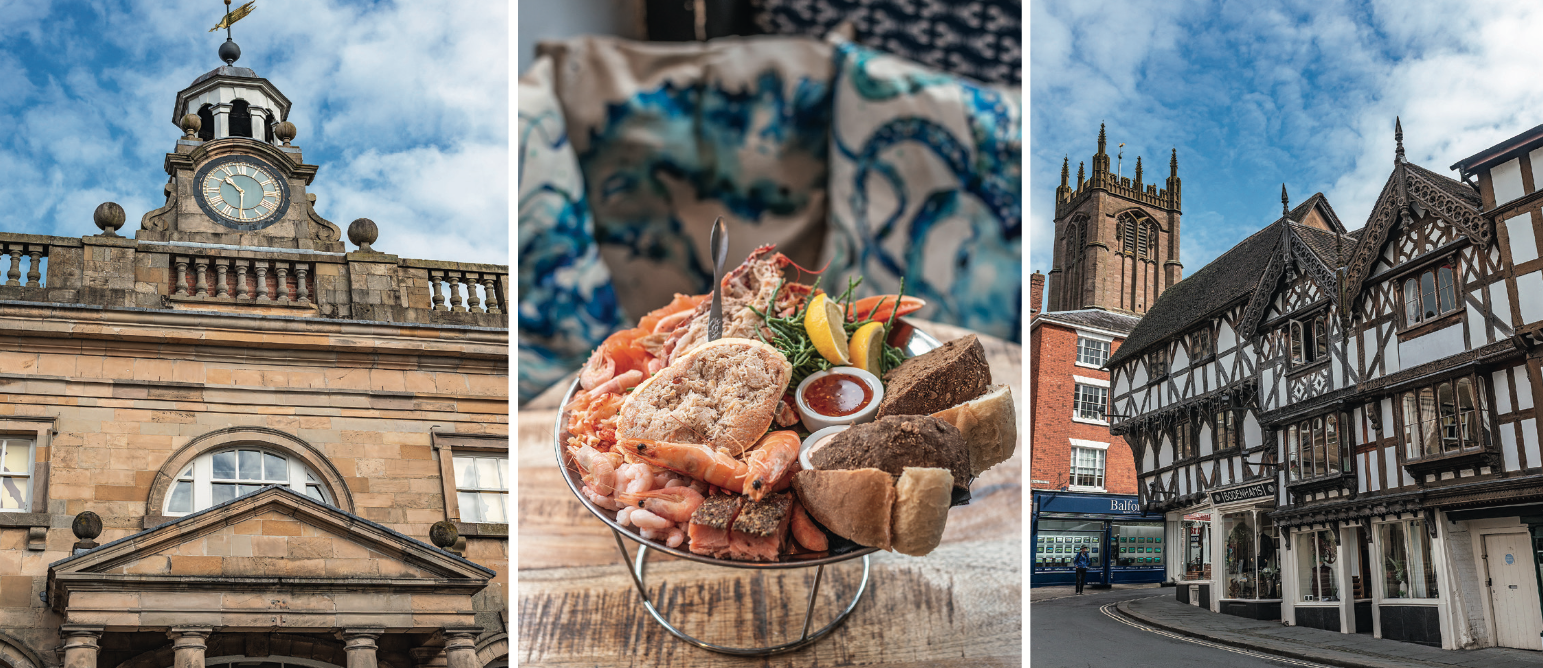
Situated approximately halfway between Shrewsbury and Hereford, Ludlow is a medieval, walled town founded on the banks of the River Teme in Shropshire. Its name derives from an Old English phrase meaning ‘a place on a hill by the loud waters’, for there used to be rapids on the river here, until weirs were built to tame the flowing water. It’s also the administrative centre for the Marches, an area that lies along the border of England with Wales.
GETTING THERE
By car Ludlow lies just off the A49. From the West Midlands, leave the M5 at Junction 3 and head west on the A456 through Kidderminster and Tenbury Wells to join the A49.
By train The regular mainline Manchester to Cardiff service stops at Ludlow. There are good connections at Crewe and Manchester from the north, at Shrewsbury from Birmingham and the Midlands, and at Hereford and Newport in South Wales from London. nationalrail.co.uk
GETTING AROUND
On foot Ludlow has narrow, sometimes cobbled, streets, making walking the easiest way to explore.
By bus Local buses operated by Minsterley Motors run around Ludlow and connect with nearby towns. minsterleymotors.co.uk
RESOURCES
The Ludlow Website For details of all places of interest. ludlow.org.uk Visit Shropshire For information on the countryside. visitshropshire.co.uk Ludlow Marches Food & Drink For everything you need to know about the annual food festival in Ludlow Castle. foodfestival.co.uk
Where to eat
Prices are for two courses and a glass of wine, unless otherwise stated.
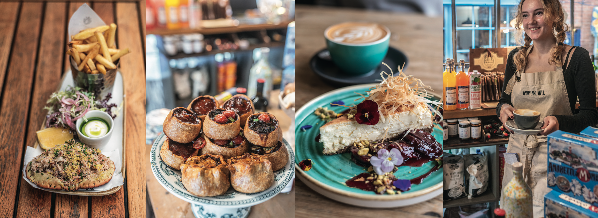
Bill’s Kitchen An enjoyable canteen in a spacious, light-filled, high- ceilinged dining room on the corner of a historic square. Order from the counter: for breakfast, try Chris Tudge’s sausages and bacon, scrambled eggs and organic coffee from Hundred House Coffee, a local speciality coffee roaster. Lunch choices change each day and may include quiche, jerk chicken with coconut rice, fish pie, or celeriac and potato gratin. Leave room for a fine seasonal tart of Shropshire prunes soaked in cider, or carrot and walnut cake. From £22. Ludlow Assembly Rooms, 1 Mill Street, Ludlow, 01584 877956, billskitchen.uk
The Bridges Pub Take the scenic drive from Ludlow north to the Long Mynd, to enjoy chef David Fogelman’s good cooking in this classic country pub with rooms, set in a tangle of country lanes. He grows his own vegetables and herbs or sources them from nearby Linley Hall Garden, with its splendid Georgian-era kitchen garden, espaliered fruit trees and antique greenhouses. His experience includes butchery, and working in the kitchens of the renowned St John restaurant in London. From £30. Ratlinghope, 01588 650260, thebridgespub.co.uk
The Clive Arms Set in an attractive Georgian building, a minute’s walk from Ludlow Farmshop (see Don’t Miss). Seasonal starters include woodpigeon breast with plum ketchup, blue cheese pâté with toasted walnuts, and cured salmon, beetroot and caperberries; mains might be pork fillet with sage and onion mashed potato, beer-battered haddock and chips or a steak from the grill. From £34. Bromfield, 01584 856565, theclive.co.uk
CSONS at The Green Café Popular café-restaurant run by four brothers on the banks of the River Teme, overlooking the weir and Dinham Bridge. Menus of well-prepared dishes with fine, seasonal ingredients change daily. Lunch dishes include the likes of Cornish mackerel and anchovy with salsa verde, or duck leg with cherries, chipotle and rhubarb, with classics including smoked salmon with mustard yoghurt, capers and dill; chicken shawarma with pickles; or choose from a variety of interesting snacks and burgers. Open for breakfast, lunch and afternoon tea plus supper on Fridays. Small plates from £10. Booking recommended. Linney, Mill on the Green, 01584 879872, thegreencafe.co.uk
The Fish House More than half of the small shop and café in this attractive, Tudor-era building is taken up by a resplendent display of the freshest fish, delivered daily to owner James Stanton: there might be Cornish tuna, mackerel and plaice; Manx kippers; Welsh and Cornish mussels; Whitby oysters; anchovies and jellied eels from Billingsgate. Lunch is served on Fridays and Saturdays. Seafood platter for two and bottle of wine £49.99. Tolsey House, 51 Bullring, Ludlow, 01584 879790
Ludlow Brewing Co This spacious renovated goods shed, built for steam trains, is now home to a popular brewery and taproom. The station is a minute’s walk away and regular trains and special-event steam trains still pass by just metres from the second-floor wooden deck. Half a dozen cask ales are brewed onsite: flagship Ludlow Gold (4.2%), Blonde (4%), award- winning Red Dawn (4.5%), a classic ale, stout and premium ale. Pint of beer from £4.50; tour and tasting £10 (booking recommended). The Railway Shed, Station Drive, Ludlow, 01584 873 291, ludlowbrewery.co.uk
The Pheasant at Neenton In this community-restored, 18th-century country inn and orchard, manager Sarah Cowley and chef Mark Harris train young locals in the skills needed in the hospitality world. Pub classics include Welsh lamb rump with potato terrine, Bridgnorth rump steak and watercress purée, a cheeseboard of house-smoked Welsh cheddar, Perl Wen and Perl Las. Or try seasonal small plates of grilled Cornish mackerel or wild mushroom, garlic, pea and herb tagliatelle, and leave room for dulce de leche crème brûlée or a chocolate brownie with salted-caramel ice cream. From £28. Neenton, Bridgnorth, 01746 787 955, pheasantatneenton.co.uk
Sourced Pizza Enjoy a pizza made with quality, seasonal ingredients in this courtyard café. Try the Salumi, made with Shropshire salami, house-made tomato sauce and mozzarella from Brue Valley farm, or the Lahmacun, made with Perrywood farm lamb, mint yoghurt, harissa and sumac onions. Starters include bruschetta of Worcestershire heritage tomatoes, basil oil and sourdough bread, and desserts are equally more-ish: Wye Valley raspberries with honeycomb, baked labneh cheesecake with Augernik farm plums (see Don’t miss), or Shropshire ice cream. Red, white, rosé and ‘bubbles’ house wines, local beers and cider, soft drinks, including local fruit juices, and a selection of coffees and teas are on offer. Pizza from £9.50. Booking recommended. 2 Quality Square, Ludlow, 01584 879 450, sourcedpizza.co.uk
Food Glossary
- Fidgety (or fidget) pie
- Hearty pie made with pastry or as a raised pie (see below), layered with gammon (or bacon), cooking apples, onions, potatoes and cheese, originally a portable lunch for agricultural labourers
- Gingerbread biscuits
- Appreciated everywhere, but especially popular in Shropshire where they’re said to be made with rum traditionally
- Ludlow sausages
- Made particularly well here, with local pork and a huge variety of flavourings; sausages are a major feature at Ludlow Food Festival (see Don’t Miss)
- Perry
- Local, traditional, alcoholic drink, similar to cider, made with fermented pears
- Raised game pie
- These fine British pies are made country-wide with a variety of fillings, but venison or pork and apple are preferred Shropshire flavours
- Salopian beers
- Locally made brews, Salopian meaning ‘of Shropshire’
- Shrewsbury biscuits
- Thin, sweet, crisp biscuits flavoured with rosewater, cinnamon, nutmeg and/or orange peel
- Shrewsbury simnel cake
- Light, saffron-infused fruit cake that is boiled before baking, with a centre-layer of marzipan and topped with decorative marzipan balls; traditionally made in spring for Mothering Sunday, it is now more often associated with Easter
- Shropshire pudding
- Bread pudding flavoured with nutmeg, brandy and jam (preferably homemade from local fruits)
Get Premium access to all the latest content online
Subscribe and view full print editions online... Subscribe