
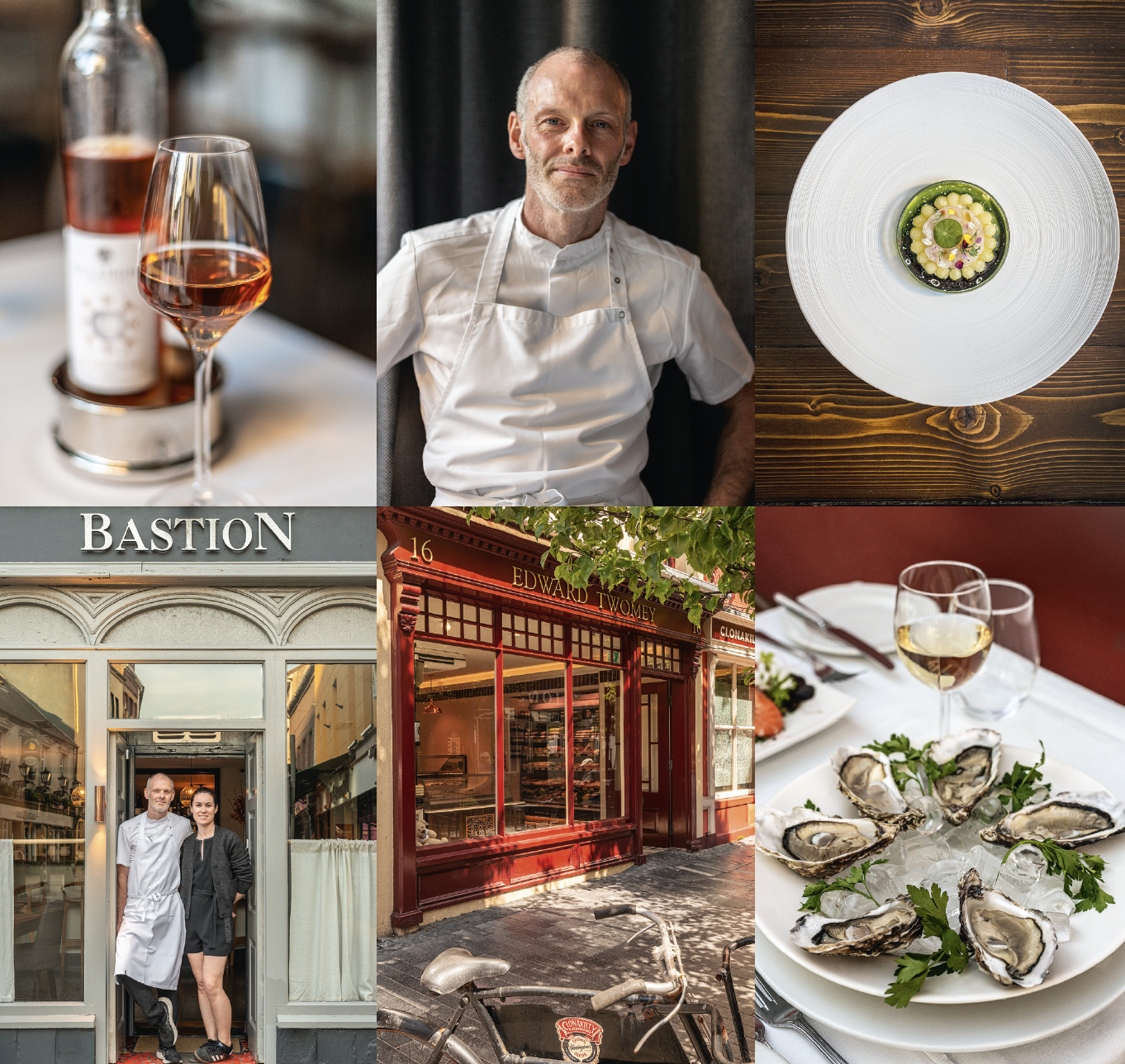
Amid the chartreuse, cherry and satsuma house fronts of colourful Kinsale, the restaurant’s discreet sage feels hushed, hallowed. The first stop on West Cork’s Michelin-starred pilgrimage – which may seem surprising given its size, but its reputation as a heavyweight in food circles is firmly established – Bastion’s heavy white doors shut out the lively street of tables, plates and natter. It’s the restaurant’s day off – as far as the public is concerned, at least – and the quiet only amplifies the reverence. Outside, the tell-tale red plaque catches the evening sun.
After romancing around restaurants both in Ireland and abroad, Helen Noonan and Paul McDonald plumped for Kinsale, a halfhour hop south from Cork city, where they set up Bastion. Five years later, a Michelin star cometed into their kitchen.
Today, the grand doors are opened by Helen, a Limerick-born lass with a ready smile and generous pour, who is both sommelier and front of house. The chef, Helen’s husband Paul, is in the slimline kitchen assembling dishes for an off-the-clock dinner party. The first is a Tate-worthy artwork: cured Rockall langoustine with horseradish and buttermilk set cream, puddled in a vibrant green dill-buttermilk dressing and fenced by perfect spheres of Pernod-soaked apple. It’s inspired; the silken meat, slick cream and anise-laced apples are, together, astonishing – a sign of the greatness achieved by a chef that started out as a pot-washer in Glasgow. The langoustine is the in-demand dish they can’t take off the menu. For, despite their stardom, the couple are all about their clientele.
‘The star is amazing to get,’ says Helen, ‘but if the customers aren’t enjoying themselves, the star only takes you so far.’
It feels impossible not to enjoy yourself at Bastion. You never once have to reach to find the brilliance in Paul’s dishes and Helen’s pairings: every bite is an eye-widening mouthful. His wagyu, sourced from Cork farmer Michael Twomey, is outstanding. Although, the chef freely admits, it wasn’t in his initial plan. ‘If you’d asked me last year, I’d have said I’ll never put beef on the menu,’ says Paul. ‘It’s just… beef. And you get beef anywhere. But then Michael got me with his wagyu.’
The pinked beef is tongue-soft and sensational, finished with brown butter and served with local asparagus. But the pot sitting alongside is magic: salty and sweet beef shin under a duvet of heady smoked potato. Then comes the finale – ‘I think Paul’s skill lies in his dessert,’ smiles Helen – called Biscuit and Honey. Tokaji dessert wine, white chocolate ganache and a liquid shortbread that’s deeply nostalgic despite its novelty is tempered and tamed by an earthy, delicate truffle ice cream. It’s an evening awash with superlatives and synonyms.
It’s easier to understand how this bohemian town on the Cork coast with a Burano-meets-Totnes feel landed a Michelin star when you consider it’s a place where chefs patronise local butchers and markets, and get fish straight off the boat. Then there’s its long and complex food history. Although WestCork was crippled by the potato famine in themid-1800s, Kinsale went on to become one of the busiest trading ports in Europe in the 1900s. The town relied on its massive fishing industry, its streets former canals that allowed the 300-400 daily boats to deliver direct to the market. Hundreds of women would line the waters, gutting the catch as gulls fought over entrails. And it was the town’s twinning with Antibes in 1990 that brought an unexpected flood of French chefs into Kinsale, which cemented its reputation as a centre for good food.
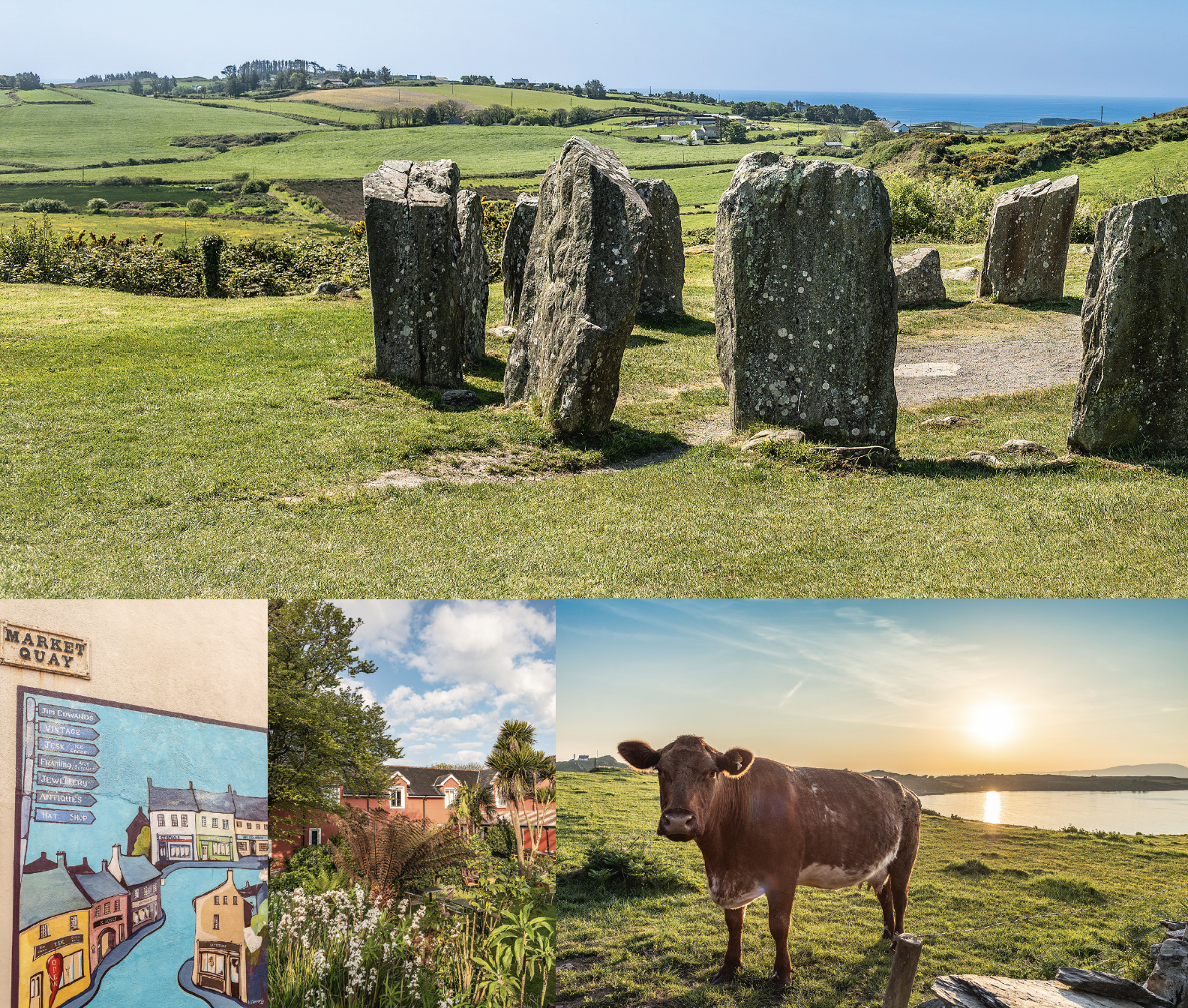
Now reclaimed from the brine, Kinsale’s streets are a gourmet labyrinth. Take a tour with Suzanne Burns of Kinsale Food Tours and you might devour locally made, moreish chocolates at Koko;The Flying Poet’s gargantuan breakfasts; JESK’s artisanal ice cream made with dairy from their own cows; deli nibbles from Gourmet Pantry; and The White House’s excellent, locally sourced monkfish and seafood crêpes. As you wander, it’s clear Suzanne is inundated with food recommendations and good-natured ribbing from shop owners, passing patrons, and even a chef obligingly toting a market-bought box of spring onions. Anonymity is defunct here. Prim’s Bookshop is perhaps the epitome of Kinsale establishments. The old shop of gilt-and-cotton-bound books, dark wood and hand-written section signs becomes a Spanish wine and sherry bar in the evenings.
‘People here are creative about their businesses,’ explains Suzanne. ‘There are five or six places in town that have started doing things in addition to their original business.’ This creativity is largely born of necessity. It may be a Michelin enclave, but West Cork is no stranger to diversification – or the dying professions that often necessitate it. For all its gentle greenness, the wind-tousled farmland and pressure-folded coastline, the region resounds with financial pressures: a result of failing fishing grounds that were once the backbone of these communities. The word ‘decimated’ repeats like a funereal bell.
On the outskirts of market town Skibbereen sits Woodcock Smokery, where Sally Barnes awaits. She cuts an unpretentious figure with a mussed silver-and-blonde bob, weathered jersey and a smile that curls with merry misbehaviour. ‘I’m a professional and recreational smoker,’ she grins, lighting up in the homely barn where she conducts cooking and curing classes.
If there’s one name etched into this landscape, it’s Sally’s. Over five days in West Cork, every chef, every producer, every local mentions her. You could be fooled into thinking, ‘Have you spoken to Sally Barnes yet?’ is the motto of West Cork’s tourist board. A former fisherman’s wife, Sally taught herself to smoke wild fish – mostly salmon – in the 1970s. In the decades since, she has become an Irish artisan food legend, ocean activist, university mentor, slow-food advocate and lauded UN speaker.
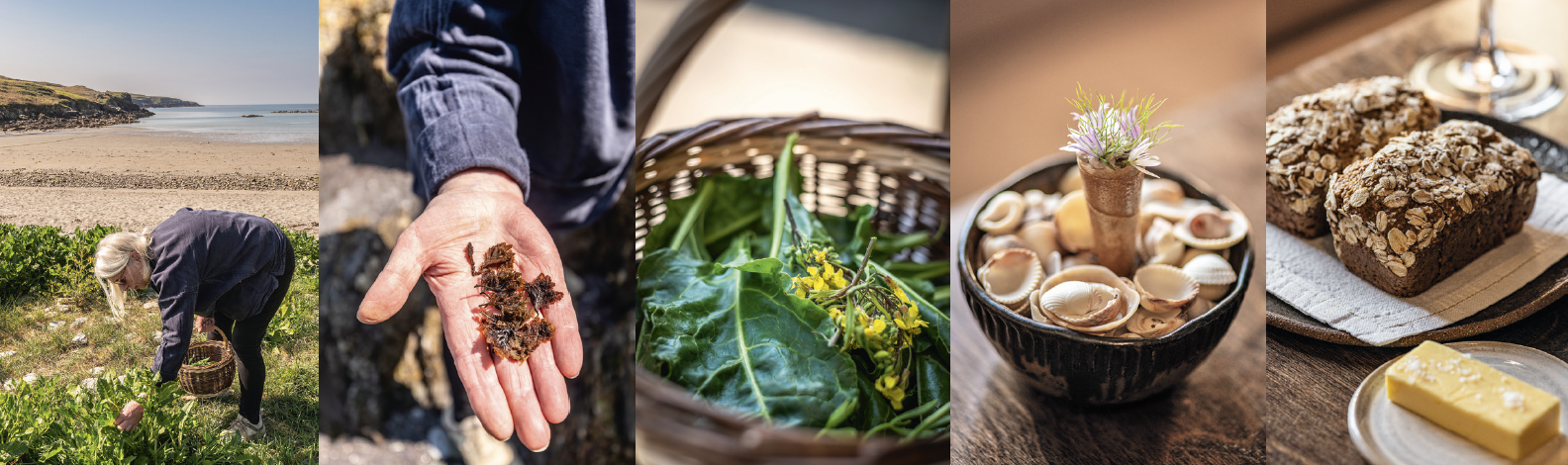
She’s also a prolific forager. On Tráigh Liceach beach, Sally speaks like an encyclopaedia. She’s an expert on foraging for gull eggs, lists the traditional uses of leafy good King Henry and judges the health of the beach by its cockles. She winkles mussels from their hidey-holes, shears mugwort from sand dunes, presses sea spinach into her listeners’ hands and mouths and plucks sea truffle from ocean-dashed rocks. At one point, she wanders into the overgrown cemetery at Castlehaven to pick ribwort plantain – a weed renowned among children as an excellent catapulted missile. Who knew the heads taste like mushroom?
Over a stunningly curated lunch of sea spinach and rock samphire risotto, local cheeses, chutneys, foraged salads and (of course) soft, salt-and-smoke salmon, Sally explains the sorry state of fishing. ‘Last year the fish were so scarce, I got 172 from the men on the Blackwater [river] and that was it. That made me cry. They’re not even making butter money.’
The hurdles Cork fishermen face make for an exhausting list. There are the effects of Brexit to contend with (Sally no longer ships to UK clients like Neal’s Yard after customs issues meant fish arrived late and rotten), problems with organic certification (her wild salmon can’t be labelled ‘organic’ as their food source ‘can’t be verified’), and then there are EU fishing regulations. ‘There’s no in-shore fleet left,’ she says. ‘They’re the ones that go out in the morning and come back at night, so the fish is really fresh. There used to be loads.’
Former fishermen, like her ex-husband, turned to whale and dolphin watching tours but these are now threatened too. Huge trawlers have been allowed to fish sprat in West Cork’s bays during breeding season, eradicating this invaluable marine food source. In painful irony, the sprats are then sold to factories to become food pellets for ‘sustainably-farmed organic salmon’. Sally’s ire and care is indefatigable; you can see why her name is spoken like a saint’s from Kinsale to Baltimore.
Travelling through West Cork, the raggedy, oyster-shell coastline is your constant companion. Baltimore sits where the land fritters away into a wealth of islands, a blink-and-miss-it blip on a map. Yet among its handful of restaurants is an iridescent, culinary pearl: Dede, a two-Michelin-starred restaurant at the boutique Customs House hotel. Headed by eponymous chef Ahmet Dede, the menu combines his Turkish heritage with his chosen home’s local produce. Ahmet originally came to Baltimore to work at The Mews, a former Michelin-starred restaurant once run by Bastion’s Helen and Paul. Now he’s back and settled with a young family and a fame that’s been somewhat thrust upon him, thanks to his appearance on Masterchef: The Professionals.
The sunlit, glass and brick outdoor dining room is awash with voices. Inside, diners chat to each other and the circulating chef himself about the TV appearance that brought them to Ahmet’s two-star table. Outside, you can hear the garrulous cries of local kids playing in the adjoining back garden. It’s a mix entirely Dede – supremely local, undeniably international.
The tasting courses arrive without a menu, delivered in a boundless whirl of wait staff bringing earthen ceramics, single bites, perfect circles of breads, butter, mousse, toppings of petals, reductions, spume. There isn’t a herb out of place, the majority of which are sourced from the chef’s own garden, and the Turkish splashes are a welcome punch of flavour and fun in a heavily localised cuisine. West Cork’s ingredients blossom in spiced, elegant mouthfuls of lahmacun meat-topped flatbreads, ciğ köfte meatballs, and soğan dolma stuffed onions.
To select standouts feels like picking a favourite child. The adana kebabi and sweet potato gnocchi sings of the Mediterranean, with tangy, thick yayla çorbasi yoghurt soup and barbecued spicy lamb headlining. Yet delicate individual notes are ingeniously peppered throughout. Atop five pearls of parsley emulsion sit mint filaments and slivers of salted lemon. No bigger than a pin, they find your palate, the flavours morphing with each mouthful.
The highlight, however, might just be the main dessert – a lattice-topped tahini parfait with walnut sponge, tahini-hazelnut sauce, vanilla sea-salt ice cream and pumpkin seed oil with brown butter. It’s a brilliant amalgam of nutty, sweet and savoury.
Dede’s success is very much Baltimore’s. With the loss of the town’s boatyards, and a population that hovers around a mere 400, the tourism Michelin brings is invaluable to the community. The same can be said of Ballydehob. If Baltimore is small, the single-road town of Ballydehob is miniscule. If Kinsale is boho, Ballydehob is wholly hippie. The whimsical name matches its character: the town is ridiculously charming, with a wealth of cool spots packed into a seriously wee space. Here, everything is simply next door or across the way.
There’s the exceptional Levis Corner House, a multi-generational pub and music venue that’s time-frozen in its grandmotherly decor.
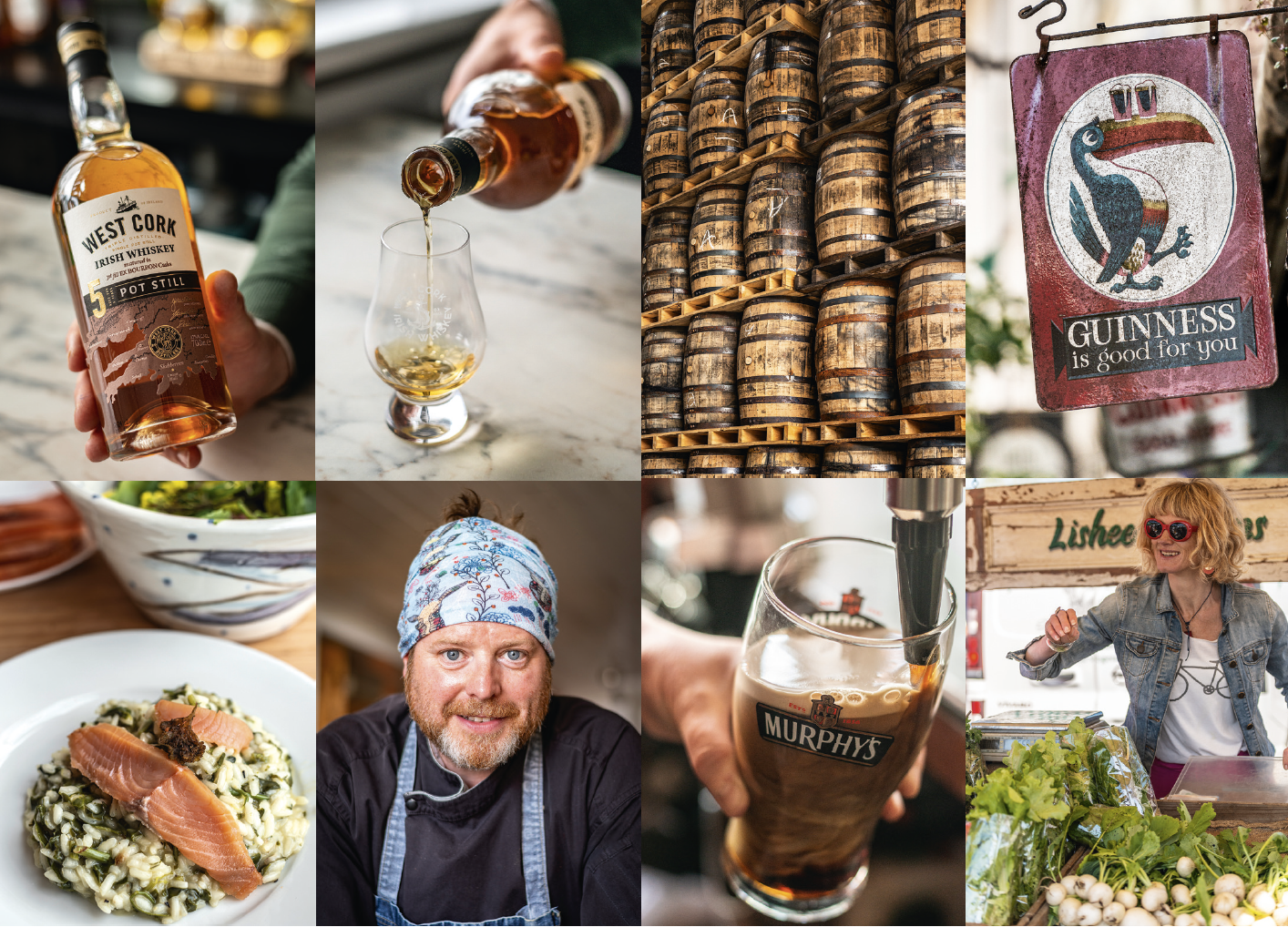
Frequented by the likes of Saoirse Ronan and Paul Mescal, Levis gig days see people pour from the main bar into a back sitting room bedecked in old photos and tchotchkes. Across the road is old-world pub Rosie’s, where intrigued locals quickly warm to you over a few pints of Murphy’s, and next door is the immensely popular lunch spot Budds.
‘My ethos was always to support local,’ explains Jamie Budd, the café’s owner and chef. ‘One of the great things about West Cork is we have an abundance of fantastic growers and amazing produce. But you’d be surprised how few people are using it.’
Jamie too speaks of the days when fishermen were prolific, actually coming to the restaurant to sell their stock. Today, regulations mean a lot of catch goes through Castletownbere, an hour’s drive away. Fish is two days old when it arrives at Ballydehob, a five minutes’ walk from the sea. Then, after the requisite Sally Barnes recommendation, talk turns to the restaurant across the street. Run by local chef Rob Krawczyk and wife Elaine Fleming (‘the lads’, as Jamie calls them), Chestnut is West Cork’s final Michelin star.
In keeping with Ballydehob’s warm, off-beat welcome, Chestnut doesn’t feel typically Michelin. The former pub-turned-restaurant is immensely approachable, a soothing home with deep-hued interiors and the old Murphy’s Stout signs still painted on the windows. His mum does the flowers. It’s entirely reflective of the couple’s gentle personalities.
‘I think people are intimidated at the start and perhaps it blocks them a little at the door,’ says the genial Rob. ‘But once they come in, we see people’s shoulders relax and go, “Oh. This is great!” Now people come here in t-shirts and jeans, and that’s what it should be about. We’re in Ballydehob – there’s no point in going full tablecloths. It’s just it’s not us.’
It may not scream Michelin, but Chestnut is one of the fastest restaurants to get a star, awarded just five months after opening. Rob started cheffing at 30, but was somewhat born to it – his parents operated a pop-up of seasonal food at their house in nearby Schull, where his dad taught him charcuterie.
Rob’s cooking is delightfully unaffected, stripped back to let local ingredients shine. He sources the majority from a few producer friends and Schull market, where he and Elaine are to be found the next morning, vegetables and herbs in hand. Dinner is a short menu, a fresh, blissful break from tasting feasts, and begins with the welcome sight of soda bread and cultured butter.
Light buffalo yoghurt and crunchy green asparagus, both local, add tang and mild bitterness to the rich in-house smoked mackerel.The black sole with langoustine is satiny, like it’s still stealing through the bay, and the accompanying potatoes have bite with a touch of seaweed salt. Dessert is again triumphal: a rhubarb sorbet with clove that is delicate and not overly sweet, and a bayleaf sorbet that’s downright gorgeous. It feels like the most Irish of meals; classic, local ingredients delivered with flair, appreciation and conscious restraint.
‘When I was younger, I tried to put a lot on the plate: you feel you have to prove yourself to people,’ Rob says, leaning back on the dining room’s dark wood bench. ‘But now we cook for ourselves. We want to keep things natural and just use really good ingredients. And the produce in West Cork is incredible – it always has been.’
Food and Travel travelled courtesy of Tourism Ireland. ireland.com
This article first appeared in the August/September 2025 issue of Food and Travel Magazine. To subscribe, click here.
Where to stay
Liss Ard Estate A stunning estate, recently taken over by Relais & Chateaux, that sits in extensive grounds overlooking Skibbereen. Luxury suites are spread across the stables and main house, where you’ll find the lounges, a cocktail bar and reading room. Downstairs, the restaurant serves classic local dishes with elegant, moreish twists. The gardens with lake-facing spa and gym are topped off with a unique James Turrell Sky Garden installation. Doubles from £189. Castletownsend Road, Russagh, Skibbereen, +353 28 40000, lissardestate.ie
Perryville House This 30-room period townhouse overlooking Kinsale’s harbour offers a boutique stay that combines old-fashioned charm with luxury touches. Replete with antiques, wood-fired lounges, gardens, gigantic bathrooms and spacious suites, Perryville is a perfect country stay. Doubles from £276. Long Quay, Kinsale, +353 21 477 2731, perryvillehouse.com
Rolfs Country House This family-run hilltop house in Baltimore feels far from it all, with lush sub-tropical gardens and charmingly furnished rooms and cottages, including a generous sprinkle of thoughtful touches. The sibling team of Friederike and chef Johannes, who serves up delicious locally sourced meals, make this a friendly stay in a beautiful setting that’s hard to beat. Doubles from £151. The Hill, Baltimore, +353 282 0289, rolfscountryhouse.com
Travel Information
Considered to be the culinary capital of Ireland, Cork is the country’s second-largest city, situated on the southern coast and known for rainbow coloured houses and lush natural landscapes. Average flight time from London is 1 hour and 25 minutes. Time is GMT and currency is the Euro.
GETTING THERE
Aer Lingus and British Airways both operate direct flights from London Heathrow to Cork. aerlingus.com britishairways.com
GETTING AROUND
Car rental Most restaurants are within walking distance of hotels, but you’ll need a car to explore the coastline. hertz.co.uk europcar.co.uk
RESOURCES
Pure Cork is the official tourism website, full of information. purecork.ie
Tourism Ireland can help you plan your trip to Cork and beyond. ireland.com
Where to eat
Bastion Kinsale’s Michelin-starred contemporary restaurant, run by the witty Paul and Helen, prioritises local ingredients and seafood. Both short and long tasting menus are effortlessly innovative, the dining room elegant without affectation, and wine pairing superb. Four-course tasting menu £69. Main Street, Kinsale, +353 21 47 09696, bastionkinsale.com
Budds Restaurant This vegan-and-vegetarian-focused café in Ballydehob spotlights local produce in hearty brunch and lunch menus featuring quiches, frittatas, curries and burgers. Lunch mains from £15. Main Street, Ballydehob, +353 28 25842, budds.ie
Dede Baltimore’s shining two-Michelin-starred restaurant pairs Turkish and Irish cuisines in a tasting menu that’s immensely fun and full of surprises and spice. Ahmet Dede and co-owner Maria Archer’s team are, unsurprisingly, faultless. 12-course lunch tasting menu £86. Customs House, Baltimore, +353 28 48248, customshousebaltimore.com
Restaurant Chestnut Rob and Elaine focus on regional produce and local growers. Simple, sensational and entirely unfussy, Chestnut is a homely, haute-cuisine delight. Four-course tasting menu £65. Staball Hill, Ballydehob, +353 28 25766, restaurantchestnutwestcork.ie
Woodcock Smokery Sally Barnes offers foraging trips around the West Cork coast, where you bring your finds back to the smokery for a lunchtime feast. Five-hour foraging course with lunch £129. Gortbrack, Skibbereen, +353 28 36232, woodcocksmokery.com
Food Glossary
- Adana kebabi
- A long Turkish mincemeat skewer grilled over charcoal
- Ciğ köfte
- A meatball that usually includes bulghur wheat
- Good King Henry
- A spinach-like vegetable also known as poor man's asparagus
- Lahmacun
- Turkish flatbread usually topped with minced meat, herbs and vegetables
- Mugwort
- Earthy, aromatic herb often used in traditional medicine
- Ribwort plantain
- Common flowering grassland plant used in traditional medicines
- Rock samphire
- Succulent seaside plant with notes of salt, fennel and - some say - petrol
- Sea spinach
- Wild coastline plant related to beetroot and chard
- Sea truffle
- Fronded seaweed with an intense, truffle-like flavour
- Soğan dolma
- Turkish stuffed onions
- Yayla çorbasi
- Turkish yoghurt soup flavoured with herbs
Get Premium access to all the latest content online
Subscribe and view full print editions online... Subscribe