
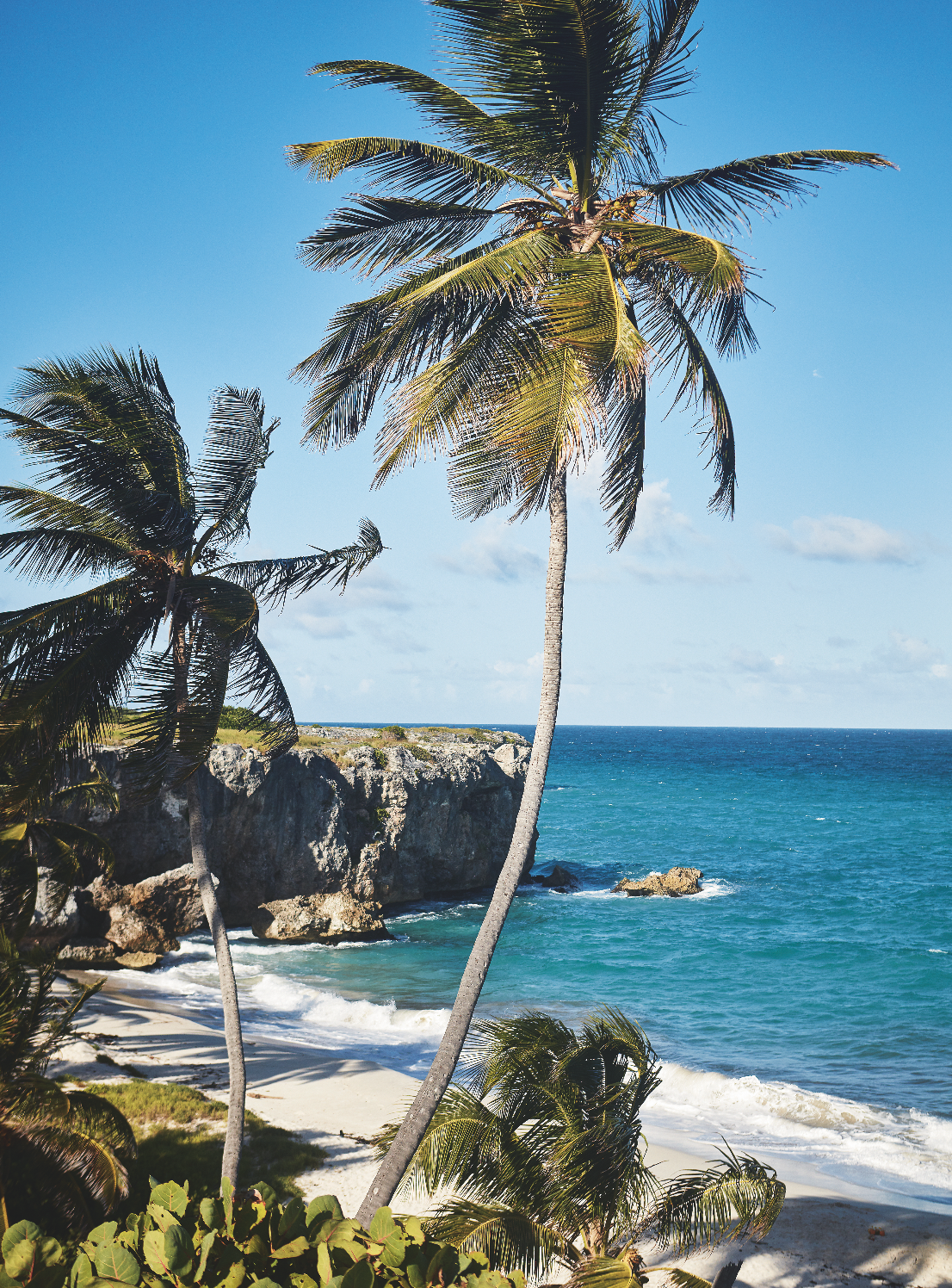
'Cheeeeeese-an-bread! Wuh gine on?’ So rings out one of the exclamations commonly heard in the island of Barbados. The sing-song rhythm of Bajan dialect, playful and quick-witted, can leave even the sharpest visitor a little dizzy. It’s a language rich in metaphor and mischief (the ‘cheese-an-bread’ euphemism for ‘Jesus Christ’ being particularly useful, it seems),shaped by African and British influences and born of the island’s complex colonial history. But what might at first sound impenetrableto the uninitiated is, in fact, a kind of poetry – succinct, spirited and always brimming with humour.
That vibrancy carries through every facet of Barbadian life: in its music and religion, its food-ways layered with spice and invention, and in the island’s famously warm welcome. The national flag captures the spirit with clarity – the deep blue of sea and sky, the gold of sun and sand and the broken trident, a striking emblem of independence. While cricket, afternoon tea and driving on the left are among the more enduring and benign legacies of empire, the defining shade in today’s version of paradise is a different one: green. At its heart is a community of chefs, farmers and producers who have turned away from the clichés of mid-20th-century tourism, when Concorde-borne jet setters demanded starched tablecloths and silver service.
The most compelling image of high-end hotel life remains the super-luxurious Sandy Lane resort, indelibly linked with the late, napkin-waving Michael Winner. It is, however, just one of many glitzy resorts and fabulous villas that line the sought-after west ‘Platinum’ coast and its limpid Caribbean Sea. To the south, broad beaches are packed with mid-market hotels, apartments and rum-fuelled hotspots. Friday nights at Oistins Market Fish Fry are still a riot of fun, where you can dance the night away and tuck into a delicious array of spicy island favourites.
But there’s another side too. In the rural north, between the Caribbean and Atlantic coasts, the scene is dotted with brightly hued chattel houses, cane fields and gracious plantation mansions – and it’s here that the food focus has shifted.
The vibe may be laid-back, but there’s no shortage of style. At Walkers Reserve, in a region dubbed ‘Scotland’ by British settlers for its gloriously wild, rugged terrain – all foaming breakers, moody skies and salty winds – new ecological models of climate resilience, biodiversity and land stewardship are being tested. Their tree-planting drive carries the slogan ‘One Tree for Every Bajan’, emblematic of a broader movement. On Green Barbados, sustainability and conservation are the watchwords, with food as the weathervane. It’s about pride in heritage as much as practical solutions – and a way of showing the world there’s far more here than Rihanna, rum punch and banana bread.
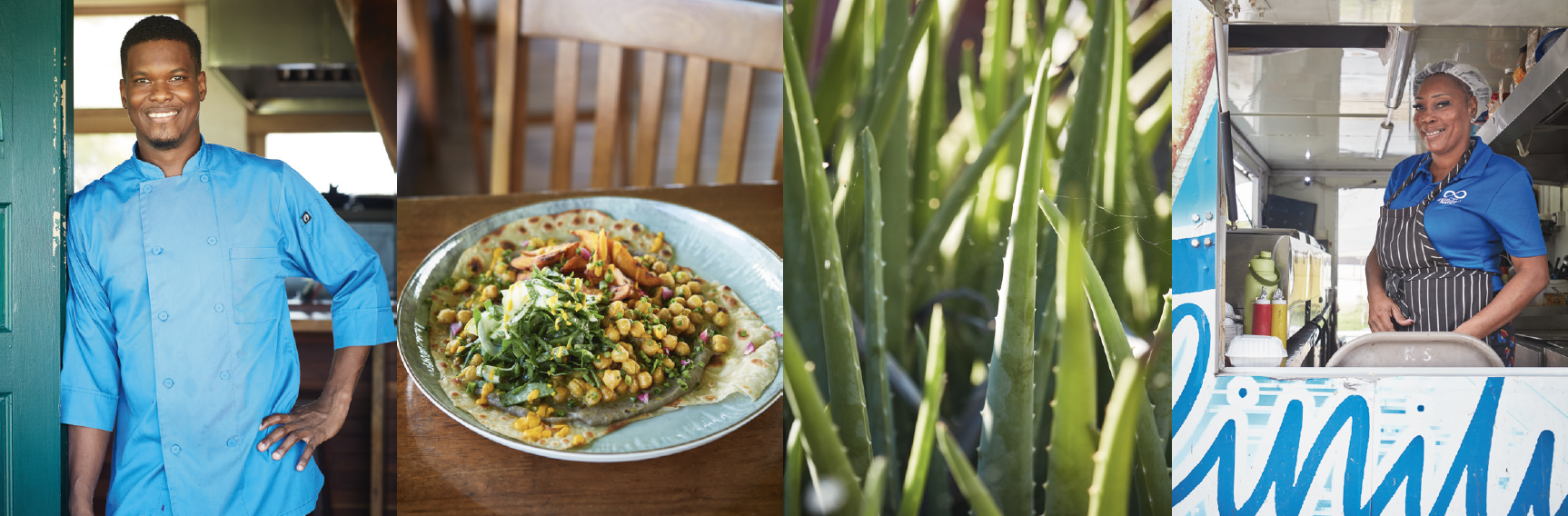
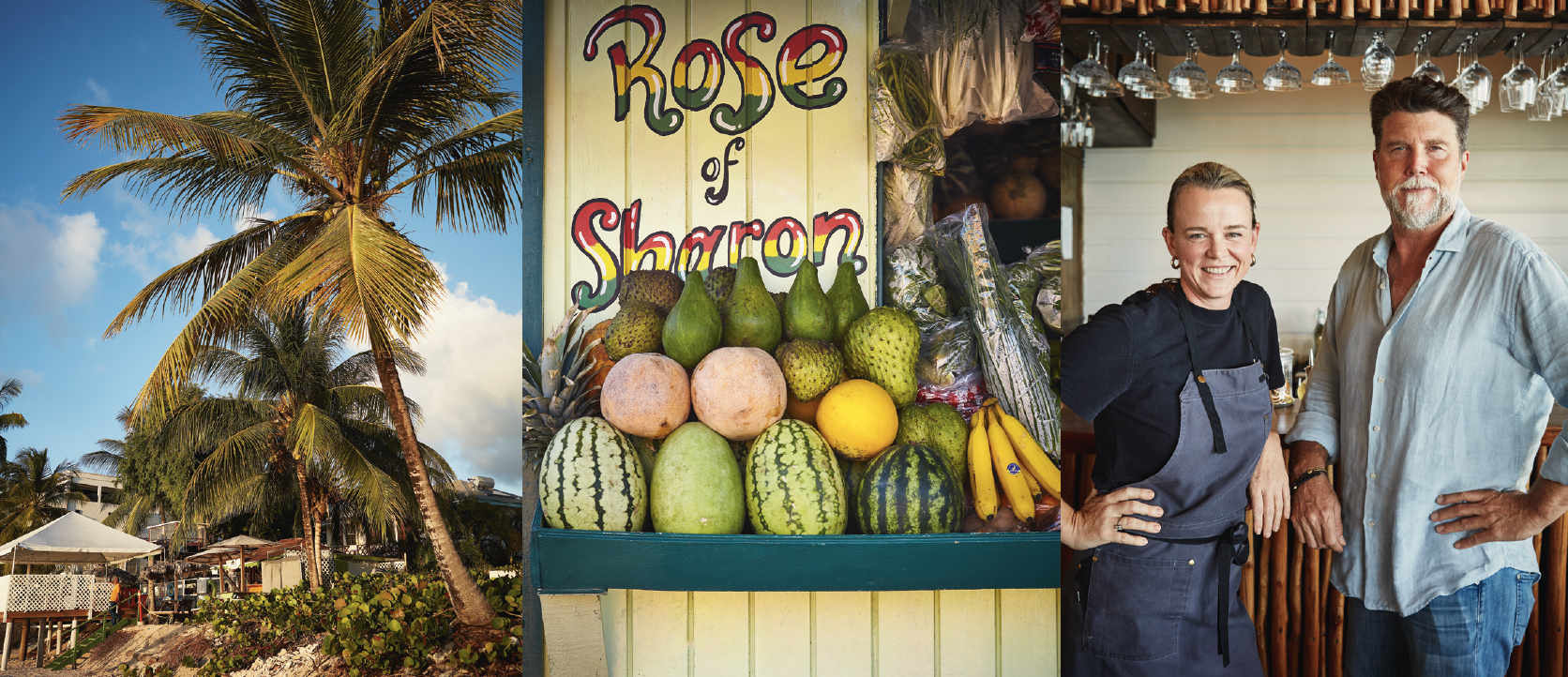
There is a growing recognition across the island that even the most blissful coconut grove can’t insulate Barbados from global climate and geopolitical upheavals. Sophie Michell, the dynamic co-owner of the low-key, chic Local & Co in Speightstown, puts it plainly: ‘There’s been a seismic change. When I moved here five years ago, I was shocked by how much food was imported. The general feeling was that there was no alternative – but my business partner, environmentalist Ian McNeel, and I knew there was another way. Now we source almost everything locally, operate as sustainably as possible, recycle and avoid waste. It also means we support farmers and strengthen the local economy.’
There is no fear of leaden, self-consciously worthy plant food here. Michell’s cooking is inventive, brilliantly coloured and intensely flavoured, using fresh and foraged ingredients in ways as complex as they are joyful – dishes that burst like reggae riffs on the palate: think lemongrass and turmeric coconut vegetable curry with pickled Scotch bonnets, or line-caught tuna tartare with pickled sea purslane.
She’s also a champion of artisan producers, among them Andrea Power of Hatchman’s, a self-taught cheesemaker who has represented Barbados at the World Cheese Awards and recently supplied Local & Co with its first all-Bajan cow and goat’s cheese board. Andrea’s creations are as bold as they are original: one develops a natural blue streak, others are laced with fiery pepper sauce, infused with rosemary or wrapped in banana leaves steeped in rum. Strong and indefatigable, like many Bajan women, her ambitions extend further.
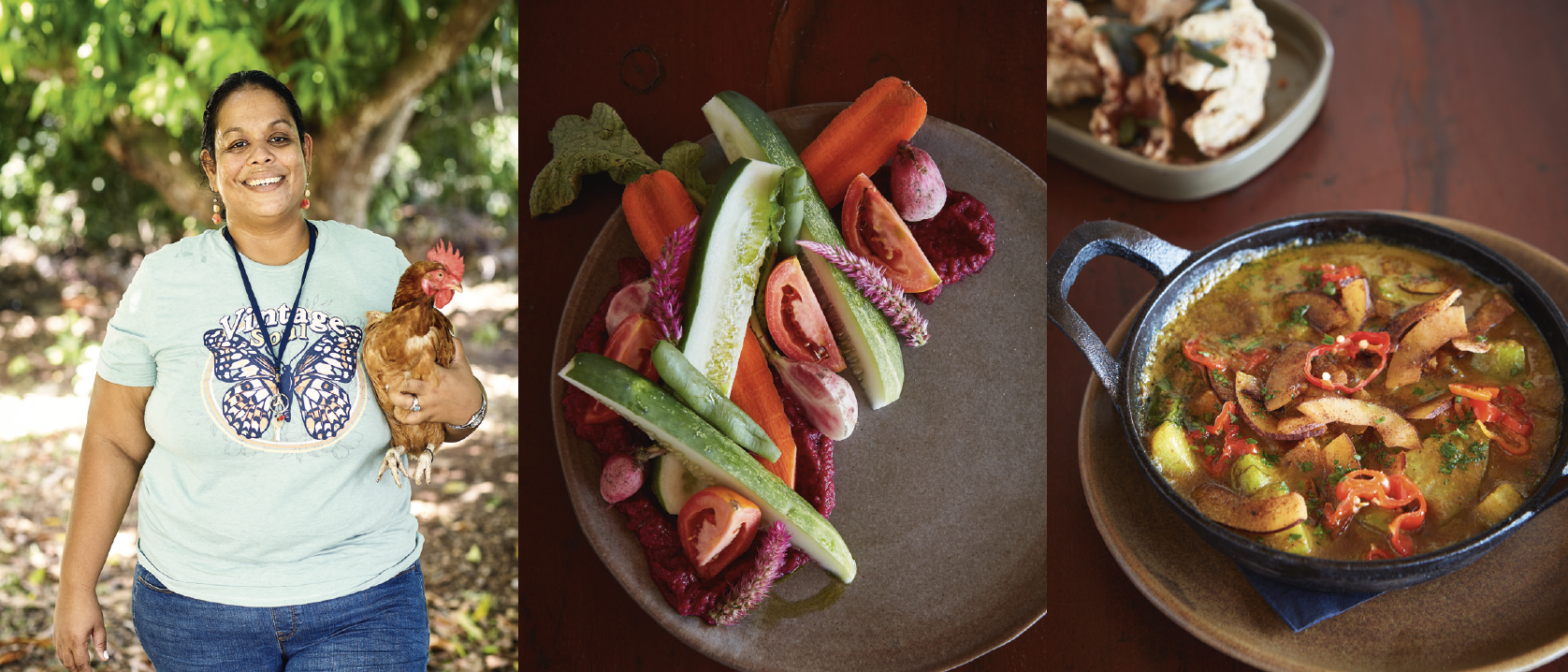
She has trained in the UK with a view to launching a line of charcuterie and is working towards producing ewe’s milk cheese from the island’s Black Belly sheep – though, as she wryly concedes, ‘Getting farmers to milk them is still a work in progress.’
The island’s historic Black Belly sheep are easily spotted in the northern hills and pastures. Bambi-like and almost too sweet, with perky ears and their distinctive dark undercarriage, they are as hardy as they are endearing – and they also make for excellent eating. At Local & Co, the meat might be marinated in a 12-hour sugar cane sauce before being shredded and served with a pumpkin seed and herb crust or transformed into curried croquettes with tamarind ketchup and cucumber pickle.
Despite being surrounded by sea, it still comes as a surprise – even a shock – to learn that about 90 per cent of the island’s fish is imported. Kristina Adams of Adams Aquafarm explains, ‘Regional overfishing has been very damaging. Then there’s the loss of coral reefs, pollution, climate change, rising sea temperatures. Covid made a huge impact too: when supply chains shut down, we realised our vulnerability. So aquaponic farming of tilapia has been very positive: they’re well suited to this climate, have a marketable red colour, are hardy and easy to raise. Even KFC now serves filet o’ tilapia.’
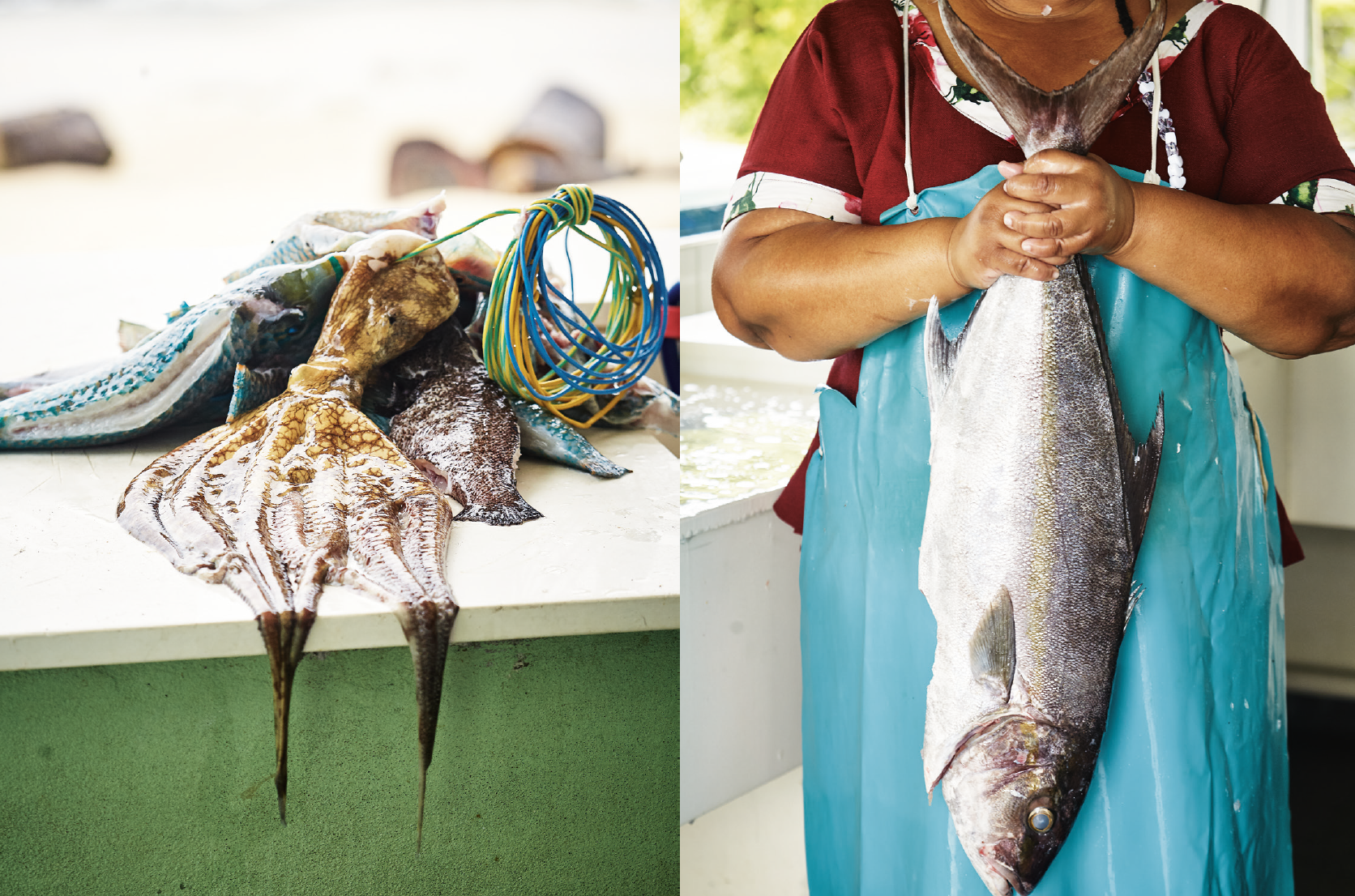
Snapper, mahi mahi, barracuda, kingfish and tuna are all staples on Bajan tables, but flying fish remains the island’s most iconic catch. A Disney-esque creature with delicate wings, it vibrates its tail to launch itself at more than 30mph – and makes especially sweet eating in a ‘cutter’ bread bun. The fish takes some skill to fillet, though at Payne’s Bay Fish Market the queenly Melissa Taitt makes it look as effortless as slicing a coconut pie. One of seven siblings, she learnt her craft from her formidable mother Gad, who still presides regally over her own stall in Bridgetown.
The truth, however, is less cheerful. Flying fish are becoming both scarcer and smaller. An ongoing dispute between Barbados and Trinidad over fishing practices clouds the picture, while no one can say with certainty whether the decline is driven more by overfishing or climate change. Gad has her own explanation, pointing to hurricane-damaged boats that have yet to be replaced. Still, she remains sanguine: ‘There’s enough fish to go round – but we still haven’t replaced all the boats to catch them.’
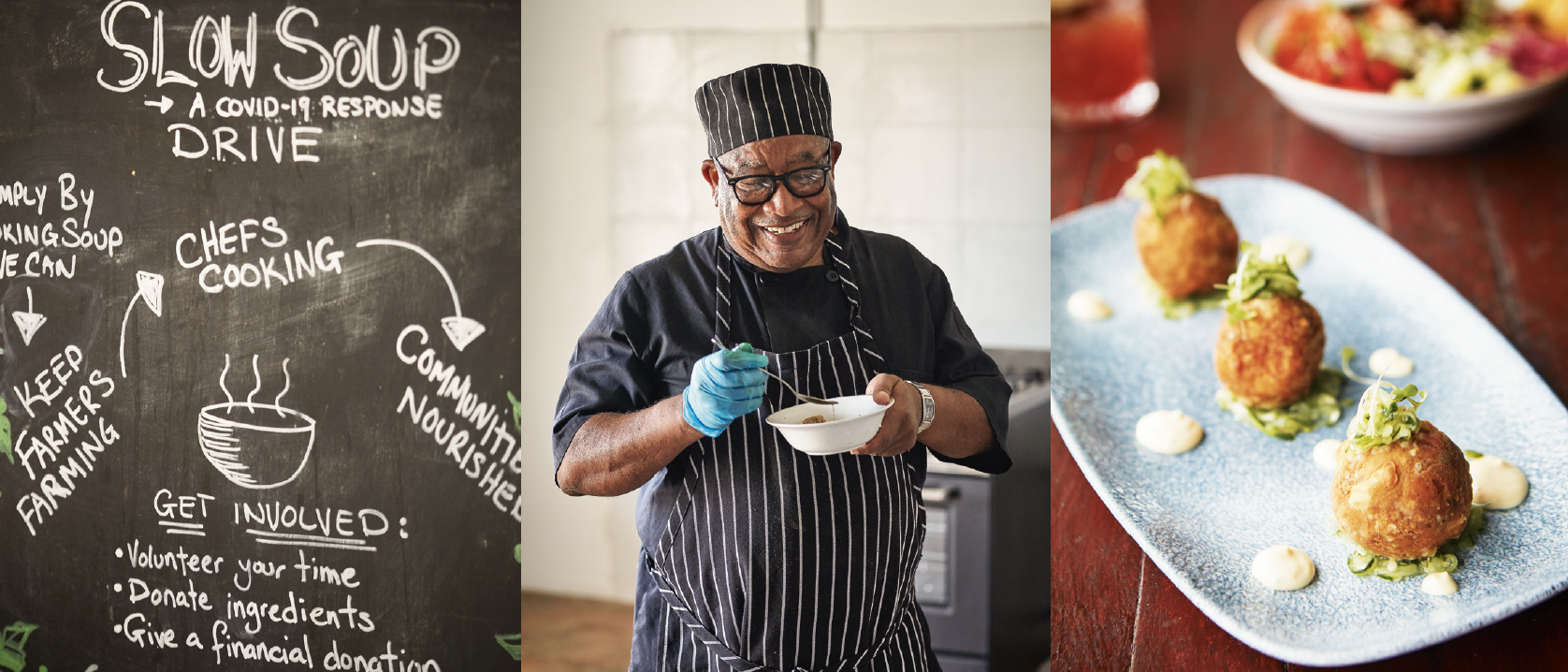
Gad is a strong advocate for better education and training for young people entering the food world – a goal shared by Slow Food Barbados, which has been instrumental in shifting attitudes towards local produce and self-sufficiency. One of its most valued projects, which began during the pandemic and has continued ever since, is a well-regarded mobile soup kitchen, Slow Food Drive.
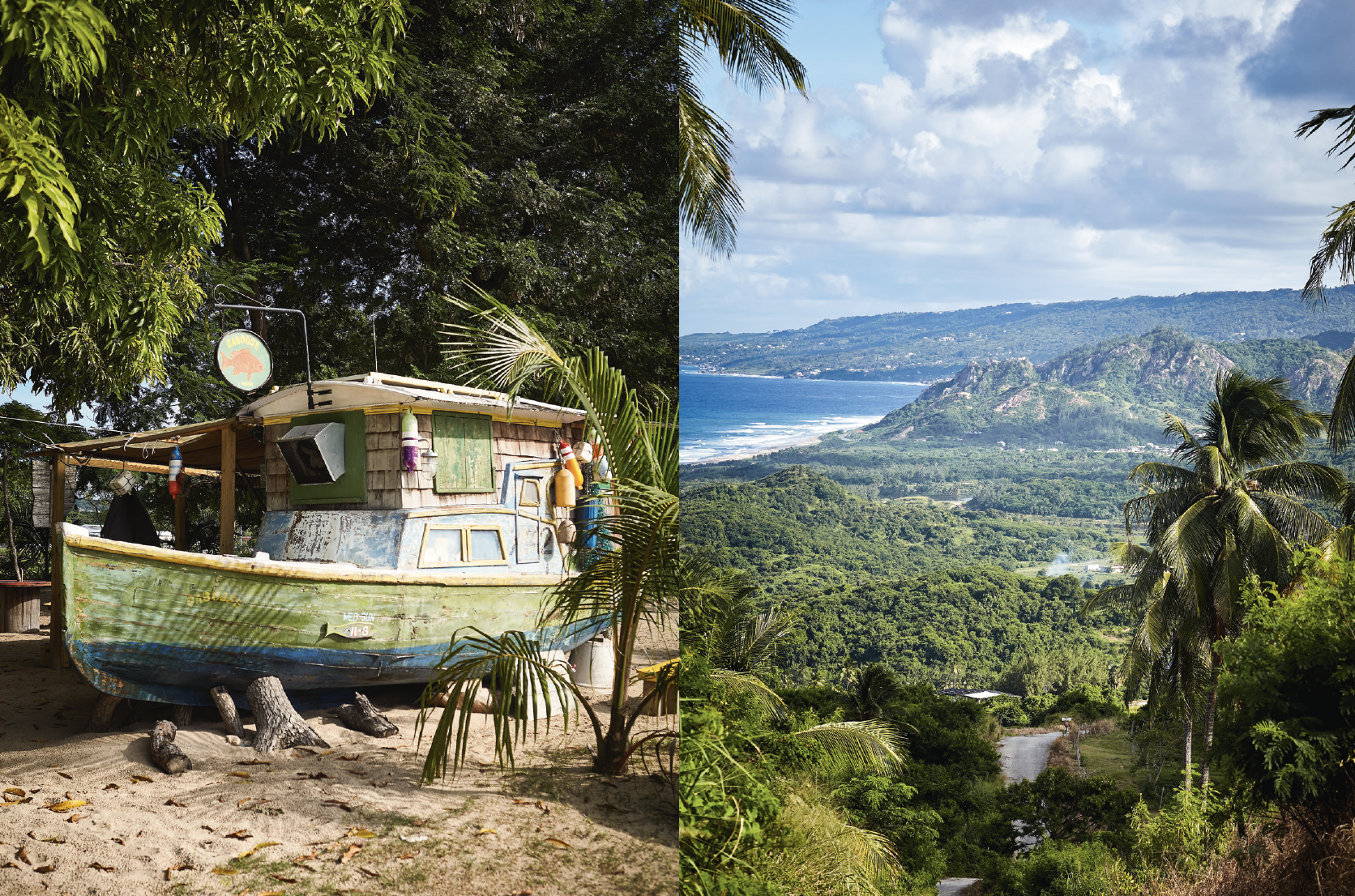
Food security and sovereignty are also championed by a crop of newer green initiatives. At the biodynamic PEG Farm and Nature Reserve, set high on a hilltop with sweeping views, chef Nathan Crichlow runs the Farmhouse Café – an airy, Scandi-style pavilion of wood and glass. Tall, handsome and quick to smile, Nathan honed his skills at Sandy Lane under a roster of international chefs. ‘My partner Rebecca and I are still at the beginning,’ he says. ‘We want to get even more creative and culturally relevant, to really push local foods and healthy eating. Some people arrive expecting rice ’n’ peas, while others want outdated fine dining – but then they taste our food and are blown away.’ Or, as the Bajan saying goes, the memory is ‘sweet-fuh-days’.
Nathan changes the menu with the seasons: on our visit, guavas and golden apples were arriving fresh from the farm. Most dishes are vegetarian or vegan, bursting with bold, zingy flavours, although there is also farm-reared meat, such as pulled-pork cassava pancakes. ‘Back in the day, our grandparents all had a kitchen garden, even if just a tiny plot. We didn’t have today’s dependence on snacks and fast food – nutrition wasn’t the problem it is now. So we chefs have to work more closely with farmers and stress that green is good,’ he says.
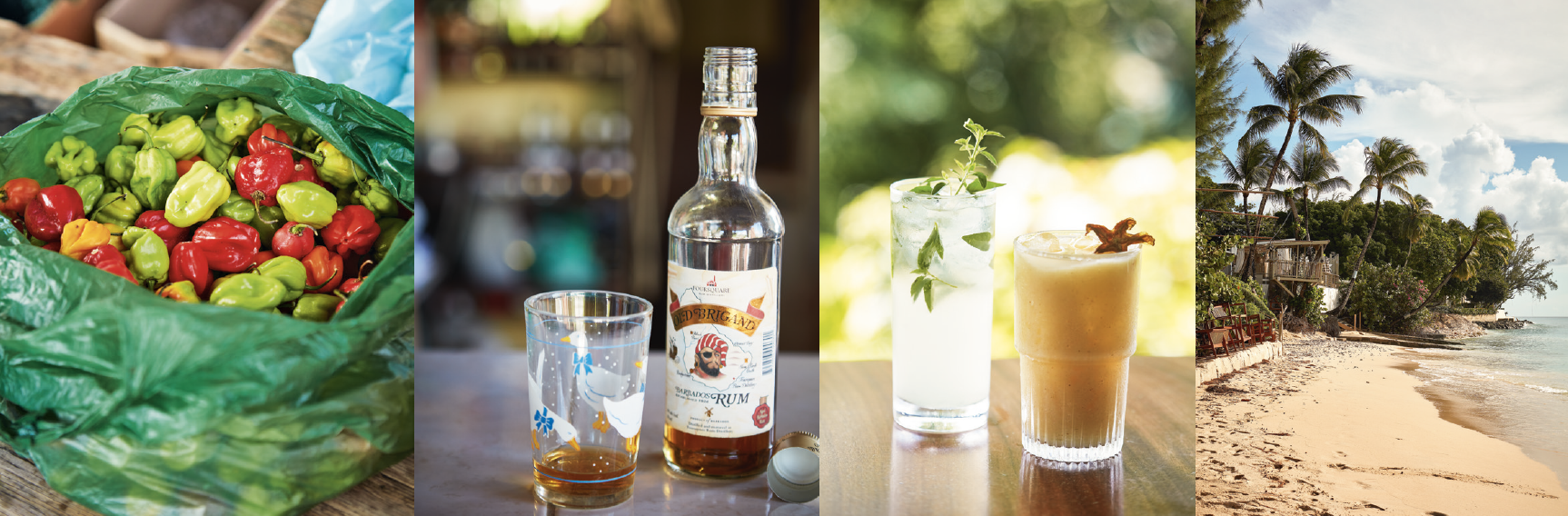
Sugar and rum have always been entwined in Barbadian life, as inseparable as stew ’n’ dumplings, and both were engines of the island’s historic fortunes. With its production relying on slave labour, sugar cane reshaped global diets and food sovereignty. Ironically, most of the crop now heads to the UK for processing into white granulated sugar, only to be shipped back, although a small amount of raw cane sugar is still produced locally. Rum, however, is in the Bajan DNA – from crude bottles produced in ramshackle rum shacks to the elegant premium spirits crafted by the island’s celebrated distilleries. In recent years, several of these producers have adopted a single cask, field-to-bottle approach, using their own plantation sugar, distilled in gleaming copper stills and aged in oak.
Rum, indeed, is everywhere – in cakes, candies, sauces and dishes such as rum-and-grapefruit chicken, a particularly historic combination, as the citrus fruit originated in Barbados as a natural cross between pomelo and sweet orange. There are also inventive creations such as the Ginger Liqueur from Coco Hill, one of the island’s last remaining pre-Columbian forests, made with homegrown ginger and aged Foursquare Distilleries rum to produce a drink as smooth and aromatic as a fine malt.
Mahmood Patel has painstakingly developed the land into one of Barbados’s leading reforestation and conservation projects. Articulate and passionate, he is outspoken about the vast tracts of land historically cleared for monocrop sugar, which caused environmental degradation, soil fertility loss and reduced biodiversity. Like Walkers Reserve, he has terraced the land to limit erosion and crop damage, practises vertical inter-planting and hand-tends a hidden Eden of fruit trees, spices and medicinal plants, creating a working model of sustainable horticulture.
Another pressing concern, as with many places worldwide, is the high prevalence of obesity and diabetes, especially among children. The government has introduced a sugar tax, but it is a tough sell on an island that ‘likes its carbs, not greens’. The issue is complex, sparking debate over reparations: if Empire helped create the problem, should it not also help solve it?
Realistically, no amount of environmental awareness will transform mass food culture, global trade and investment overnight – but small steps can make a difference. The trickle-down effect is clear: at the family-run Round House in Bathsheba, you might find slow-braised pepper pot or their celebrated flying fish pâté. Even trendier venues such as The Sea Shed now serve fish and breadfruit chips. The sign at the waterside Orange Street Grocer, where the French toast is not to be missed, says it all: ‘Change the menu. Change the world.’
Food and Travel travelled to Barbados courtesy of Barbados Tourism Marketing Inc. visitbarbados.org
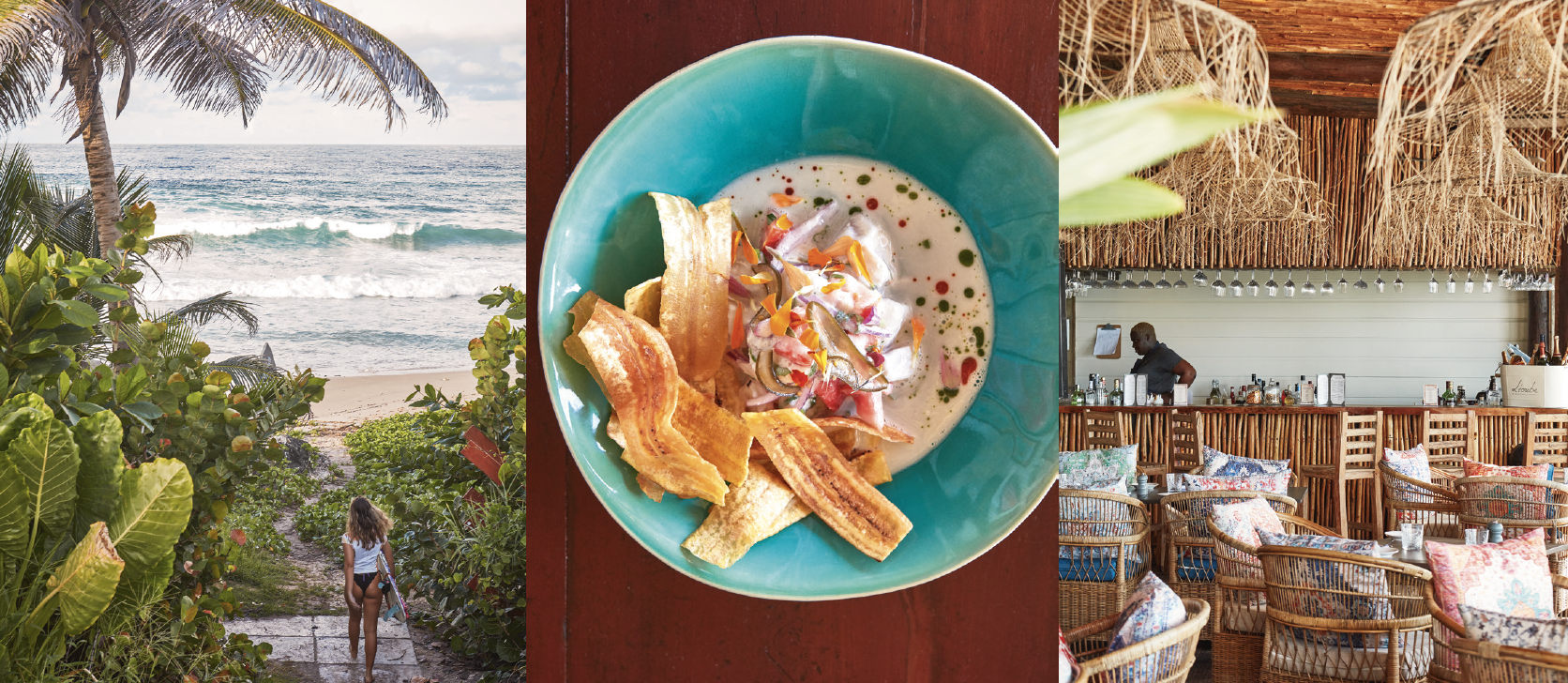
This article first appeared in the Christmas 2025 issue of Food and Travel Magazine. To subscribe, click here.
Where to stay
The Atlantis Historic Inn With its stunning East Coast setting overlooking the breezy Atlantic, the inn was once connected by rail to Bridgetown. Dating back to the 1800s, it has been refurbished with an understated colonial-cum-nautical look. Doubles from £187. Tent Bay, St Joseph, +1 246 433 9445, atlantishotelbarbados.com
Colleton Great House This exquisite former plantation home is an oasis of calm in tropical gardens and a short walk from the stunning West Coast beaches. The classically elegant house, with its open mahogany staircase, combines antique furnishings with a wonderfully warm welcome (and delicious banana bread). Doubles from £337. Hwy 1B, Colleton, Saint Peter, +1 246 439 7357, colletongreathouse.com
Little Good Harbour The West Coast sister hotel to The Atlantis is a smart but unpretentious, family-friendly hotel consisting of spacious whitewashed, coral-stone cottages. Their waterfront Fish Pot restaurant is noted for good Caribbean food too. Doubles from £338. Shermans, St Lucy, +1 246 439 3000, littlegoodharbourbarbados.com
Travel Information
Located in the eastern Caribbean, Barbados lies between the Caribbean Sea and the North Atlantic Ocean. Its capital, Bridgetown, also functions as the island’s main seaport, which became a major link between the Caribbean, Europe and Africa during the 17th century. Close to the capitalis the island’s main airport, Grantley Adams International Airport, located on the south-east of the island. The average flight time from London is around nine hours. The time is four hours behind GMT and, while the official, and preferred, currency is the Barbados Dollar, US dollars are also readily accepted by many businesses. The official language is English, although the Bajan dialect is widely spoken.
GETTING THERE
British Airways and Virgin Atlantic both offer direct flights from London Heathrow to Bridgetown. britishairways.com virginatlantic.com
GETTING AROUND
Car hire Renting a car or a quirky Mini Moke - is ideal for flexibility when exploring, particularly in the more remote corners of the island. For the main routes, the public bus can be a cheap option – but you will need exact change. europcar.co.uk carrentalsbarbados.com
RESOURCES
Visit Barbados is the official website for the Barbados tourism office, full of insights on activities from locals, with recommendations and information to help you plan your trip. visitbarbados.org
Where to eat
Prices are per person for three courses unless otherwise stated
Baia A creative Caribbean-Peruvian fusion food on the beachfront. The style is ‘rustic luxurious’ and the dining decks are perfectly positioned to capture the sunset. From £75. Sand St, Speightstown, Saint Peter, +1 246 432 2242, baiabarbados.com
The Caboose This simple beach bar with steel pan music offers fish cutters (sandwiches) from an old fishing boat. Wash down with Banks beer. Fish cutter from £8. Heywoods Beach, Speightstown, Saint Peter
Farm House Café Enjoy breakfast or lunch at this farm-to-table restaurant on a hilltop nature reserve with lovely views. Gorgeous fresh dishes such as chicken and papaya salad. From £45. PEG Farm, Easy Hall Plantation, St Joseph, +1 246 433 9806, pegbarbados.com/cafe
Local & Co Meals are served with fabulous, creative style that celebrates local traditions in a glamorous but quirky setting. Be sure to order a Corn and Oil, one of Barbados’s oldest cocktails. From £65. Queen’s St, Speightstown, +1 246 421 3276, thelocalbarbados.com
The Orange Street Grocer An eclectic, waterfront deli/café/bistro serving organic salads, wood-fired pizza and pastries, all made from scratch for a menu that changes daily. From £35. Orange Street, Speightstown, St Peter, +1 246 419 0838, theorangestreetgrocer.com
Round House The 19th-century property has an unforgettable view: an unspoiled stretch of beach studded with natural tidal pools close to the top surf spot Soup Bowl. A family-run, community favourite with imaginative food and a mellow vibe. From £60. Bathsheba, St Joseph, +1 246 433 9678, roundhousebarbados.com
Sea Shed A contemporary beachfront restaurant and bar where the water laps your feet at high tide. Expect a sophisticated menu where the Caribbean meets the Mediterranean in the likes of grilled market fish with organic black rice and beurre blanc. From £40. Mullins Beach, St Peter, +1 246 572 5111, seashedbarbados.com
Food Glossary
- Breadfruit
- Large, green fruit with a rough skin and high starch content; eaten boiled, roasted or fried
- Buljol
- A mixture of shredded saltfish, onion, tomatoes and peppers
- Callaloo
- A thick, spicy, soup-like dish made with leafy green vegetables
- Christophene
- A pear-shaped green vegetable of the squash family
- Conkies
- Puddings made from sweet potato, coconut, pumpkin, cornmeal and spices, steamed in banana leaves
- Cou cou
- Slow-cooked seasoned cornmeal
- Cutter
- A sandwich made from Bajan salt bread (which is actually on the sweet side)
- Dasheen
- A vegetable, also called taro or eddoe, used for its edible root and leaves
- Dolphin
- Another name for mahi mahi or dorado
- Fat pork
- A fleshy, oval, purple-coloured fruit
- Fish cakes
- A fried mix of saltfish, onions, peppers and other spices
- Golden apple
- Thick-skinned variety with crisp, tart flesh that turns soft, sweet and fragrant
- Jamoon
- Purple fruit the size of an olive
- Jug jug
- A casserole made from pounded green pigeon peas and salt beef or pork
- Peas and rice
- In Barbados, it’s made with rice and red kidney beans
- Pepperpot
- A stew of oxtail, pig’s trotters, hot peppers and cassava juice
- Pone
- Baked sweet pudding typically made with cassava, sweet potato and cornmeal
- Pudding and souse
- Sweet potato and pickled pork
- Roti
- A flat Indian bread made with wheat flour, served with curries or veg
- Sorrel
- A traditional Christmas drink made using the flowers of a member of the hibiscus family similar in flavour to the cranberry
- Soursop
- Delicate and delicious sweet pulp used for juice and ice cream
- Sugar cake
- A sweet made from diced coconuts, sugar and spices
Get Premium access to all the latest content online
Subscribe and view full print editions online... Subscribe