

In the small clearing, illuminated by a cheerful morning sun, brightly painted, wooden beehives are stacked in twos and threes, side by side, on top of a scattering of lovely wildflowers. A ring of ferns, elder bushes and silver birch surrounds the clearing, and a cluster of pine trees separates it from the fjord’s calm, sparkling water and low, rocky shore just a few dozen strides away. Only nursing bees are at home now; the worker bees have left for their day’s labour. ’The temperature must reach 8C for the bees to leave hibernation,’ explains beekeeper Tonje Kvam. ‘This happened early this year, in March. We have two kinds of honey: summer honey (sommer honning), which we collect from mid-July, and heather honey (lyng honning). Our sommer honning isn’t organic as the bees feed over the local area – they’re able to fly around 2km from the hive – which includes farmland and gardens. But richly flavoured lyng honning is, for the bees collect the pollen from the heather growing over the rocks close to the fjord.’
When harvesting honey, Tonje doesn’t use smoke to force the bees to leave their hives as she believes this stresses them.
’Bees fascinate me. Our honey is unheated, so all its many natural nutrients – minerals, enzymes, vitamins – remain,’ she says. Tonje was born here, and her artist-mother, a first-generation beekeeper, lives nearby. Together, they work to keep a 19km stretch of a fine walking-trail that crosses their land signposted and maintained for everyone to enjoy.
This kind of endeavour is common throughout Inderøy, a small region at the northern end of the Trondheim Fjord, in Trøndelag county, central Norway. A 20-minute drive north, apple-grower Yngve Henriksen also has his neighbours in mind. Yngve grew up here too, but has worked in the city for years. He has returned to the place he loves to play a part in helping the community’s gastronomic culture remain sustainable. Inside his small, spotless fruit pressing area there’s a huge crate of fresh, fragrant rhubarb. ’A farmer-neighbour has just delivered it,’ smiles Yngve, as he oversees the pressing of the delicious juice. ‘Outside the apple harvest, the press lies idle, so farmers bring me blackberries, raspberries, blueberries, crowberries (krekling, an Arctic berry) and more, for juicing. We’ve been here only a few years, but they’re getting involved, receiving income – and have their own suggestions. I want to try juicing gooseberries, and one neighbour is growing several varieties to find which gives the best drink.’
Across from the press, Yngve’s small orchard, which, at 64 degrees north is considerably further north than Europe’s well- known apple orchards, is thriving: ’I grow gravensteins – they’ve been in Norway since the 18th century – discoveries, orange pippin and summerreds. And we have elderflowers nearby, to press with the apples. We have a unique terroir here,’ he says.
Nearby, in Øyna Cultural Landscape Hotel, head chef Maren Brekkvassmo Myrvold concurs. ’We have abundant game, large and small, and ideal conditions – salt, wood, cold winters – for curing foods,’ he says. Maren grew up further to the north, in the mountains on the Swedish border. ’It’s very different there,’ he explains. ‘Dad was a farmer; we had little money, but we ate rådyr (small deer) and foraged woodland foods. Here, I relish the flavours of the local fish, which are plentiful, and I want them to stay that way. I waste nothing; I use the roe of røye (Arctic char) and preserved lysing (hake) from the fjord. We have excellent venison, and I love slow- cooking ‘lesser’ cuts of beef which, in my opinion, aren’t lesser at all. I can grow many herbs and edible flowers on our sheltered hillside, and I forage berries and funghi.’
The remarkable diversity of foods in Trøndelag is the result of geological activity hundreds of millions of years ago. Continents collided, folding the ocean floor and pushing it upwards, to form Norway’s huge, north-south mountain chain. Subsequent ice ages wore down the rock, creating moraine (soil and small rocks at the end of a glacier) and deep, sheltered, north-east/south-west valleys that, today, capture the temperate Atlantic climate and brilliant northern summer sun. This lucky streak continued: the seabed rose, creating thousands of islands and reefs just below sea level with perfect growing conditions for kelp and other seaweed, fish and shellfish, and nutrient-rich clay soils on land.
North-east of Inderøy, this soil supports large crops of spring wheat and barley. Trøndelag’s traditional cereal crops also include rye, oats and wheat varieties that are suited to the local climate. ’Nearly 20 years ago we planted spelt on our farm,’ explains Torunn Bjerkem, co-owner of Bjerkem Kulturgården (a ‘cultural farm’, intent on preserving a connection with the past), ’as it
used to grow here. So did emmer wheat, einkorn and svedjerug, an old Nordic variety of rye.’
These grasslands are winter pasture for reindeer on their annual, north-to-south migration that’s followed by the semi- nomadic Sámi reindeer-herders. This traditional way of life of the Sámi – people of northern Norway, Sweden, Finland and the Murmansk peninsula – has long been under threat from modern life. It’s now protected by law. Trøndelag was once also home to the Vikings in the 8th to 11th century, where they were farmers, craftsmen and fishermen. Away from home, these expert navigators – and marauders – reached as far west as the New World and east to the Levant.
Driving south towards Trondheim, the narrow, winding road passes over rolling, pine-forested hills. Small, white-splodged brown cows graze in the emerald-green fields, and a column
of sheep purposefully walks by, going only they know where. Russet-painted, wooden houses and barns dot the landscape
as the road passes a gaily painted school and tiny, neat settlements of houses, adorned with window boxes filled
with colourful flowers, before reaching the small town of Stiklestad. It is here that the Christian-Viking king Olaf Haraldsson was slain in battle while trying to save the country from paganism. Today, he’s Norway’s patron saint.
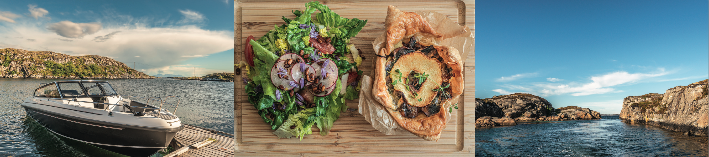
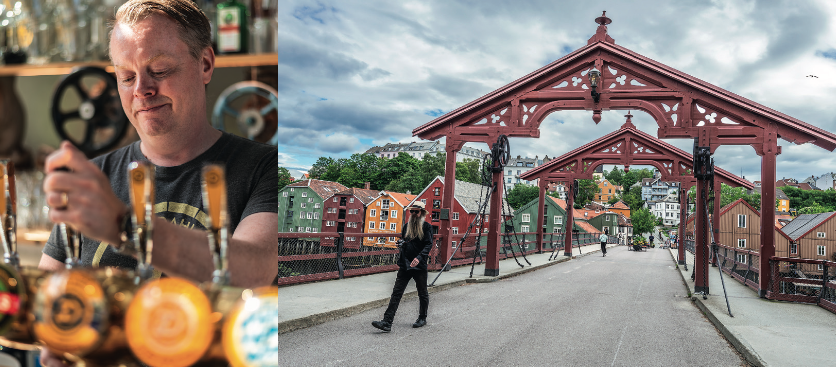
The road now follows the eastern shore of Trondheim Fjord to Trondheim, passing compact, wooden cabins perched on the rocky shore; boats are moored at jetties, ready to explore the peaceful, seafood-rich waters around the fjord’s tree-covered islets. ’Trondheim is best understood from the water,’ declares Olav Wikan, skipper of a small, open, wooden clipper of traditional design, gliding along the city’s Nidelva river, ’because it was founded by 10th-century Vikings as a trading post – for walruses, ivory, sugar – on the fjord shore.’
From Ravnkloa, the site of the old fish market, the clipper passes replicas of historic fishing and sailing boats, the grandly statuesque railway station, and Bryggerekka, once an industrial area but now filled with bars, restaurants and music venues. Turning upriver, Olav steers the boat quietly past delightfully painted three- and four-storey terraced wooden houses raised above the water on sturdy stilts; this clean river, home to beavers and otters, is tidal. As the river narrows, it passes imposing Nidaros Cathedral, burial place of Olaf Haraldsson, and 17th-century Kristiansten Fortress built to repel invading Swedes. At this point it’s crossed by the centuries-old, ornate, iron Gamle Bybro (Old Town Bridge). The city centre lies on one side, the old working-class district of Bakklandet on the other its well-preserved 18th- and 19th-century buildings now transformed into small boutiques and lively cafés.
The Trondheim Fjord enters the Atlantic around 40km west of Trondheim. The road alongside passes through Orkanger, once a mining community – copper and zinc – then leaves the shores of the fjord to cross resplendent countryside and pass through a series of tunnels – the longest, nearly 6km long and 264m deep – to reach Hitra and Frøya, the two largest islands among the thousands of skerries off Trøndelag’s coast.
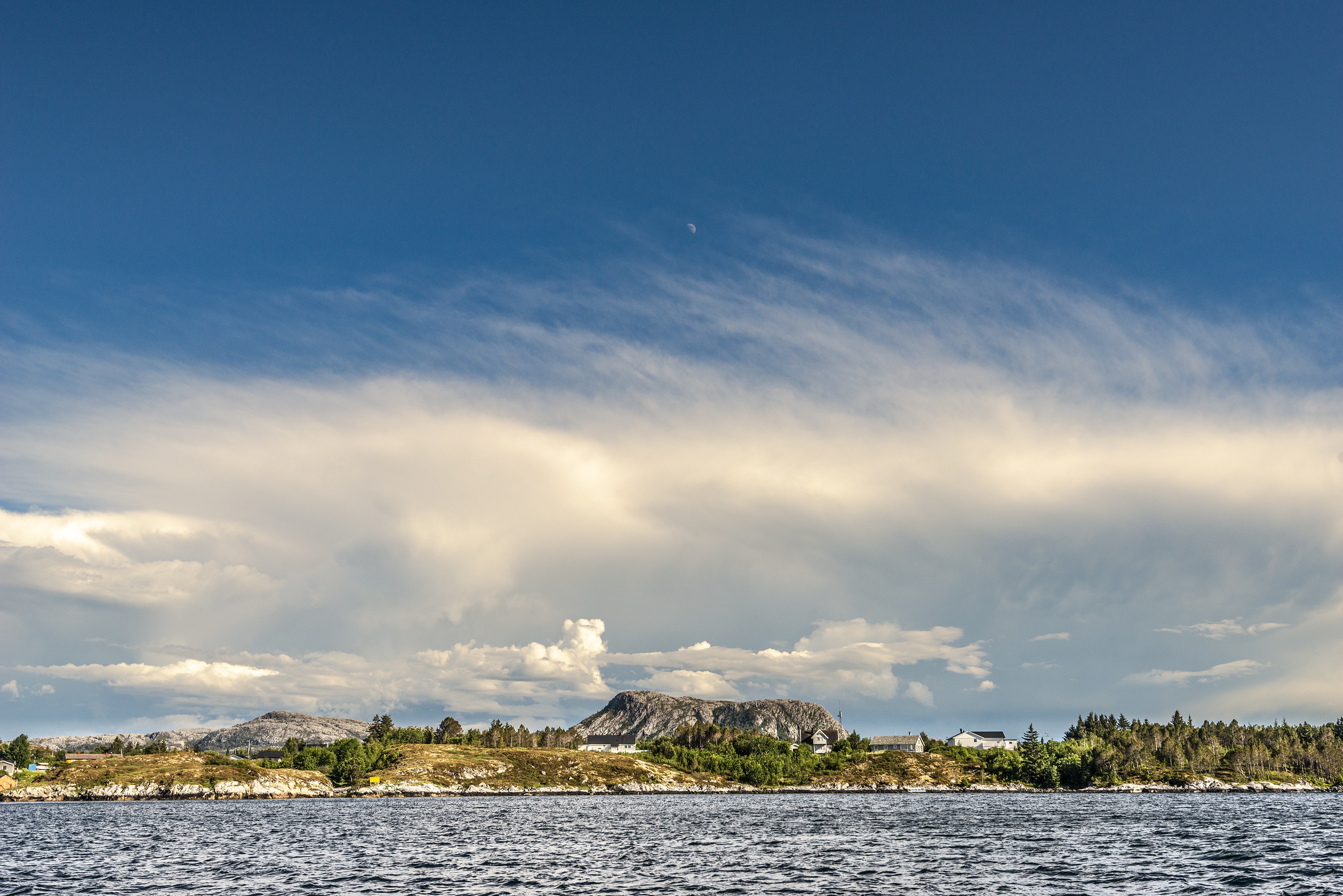
Heather and moss cover Frøya’s smooth, low-lying glaciated rocks; it’s an island of small fishing communities. ’My family moved away as there was no work except fishing’, explains Sara Taraldsen, co-owner of Hurran Gård farm café, ’but they returned and built the farm.’ In her charming café, surrounded by a garden of flowers, vegetables and kitchen herbs, Sara prepares the farm’s lamb, hogget and mutton: ’There’s no natural forest or grassland here so our sheep roam wild and feed on heather, coastal meadows, seaweeds and kelp,’ she says. ‘This gives their meat a distinctive flavour. We eat lamb at Easter and Christmas, and I turn older meat into traditional lammerull (spiced mince).’ Sara makes jams from foraged lingonberries and cloudberries and collects rhubarb for cakes, pies and ice cream from the huge rhubarb patches remaining in the island’s abandoned gardens.
On larger, forested Hitra, deer also run wild, under the keen eye of Dalpro community project coordinator Elin Helland and her daughter Anna Kjerringvaag. ’We have 40-50 deer – we don’t know exactly how many, but they do stop by quite often, especially during the hunting season, from 1 September to 31 December,’ smiles Elin. ’They especially like our company then as we’re not hunters. Once the season’s over, we never see them; they’re off roaming.’ It can be hard for small producers to find time to sell their produce. ’We have local honey, fruit juices, smoked and air-dried wild sheep and deer, deer sausages and grotteost, an aged, cave-stored cheese, in our shop and café,’ explains Elin, ’and the picnic tables on the lake shore are only a ten-minute walk through the trees. Though watch out – trolls live in the woods,’ she warns. In fact, in this peaceful, pretty spot, it’s clear the only real danger is to the lambs during winter storms, when hungry sea eagles fly inland for easier pickings.
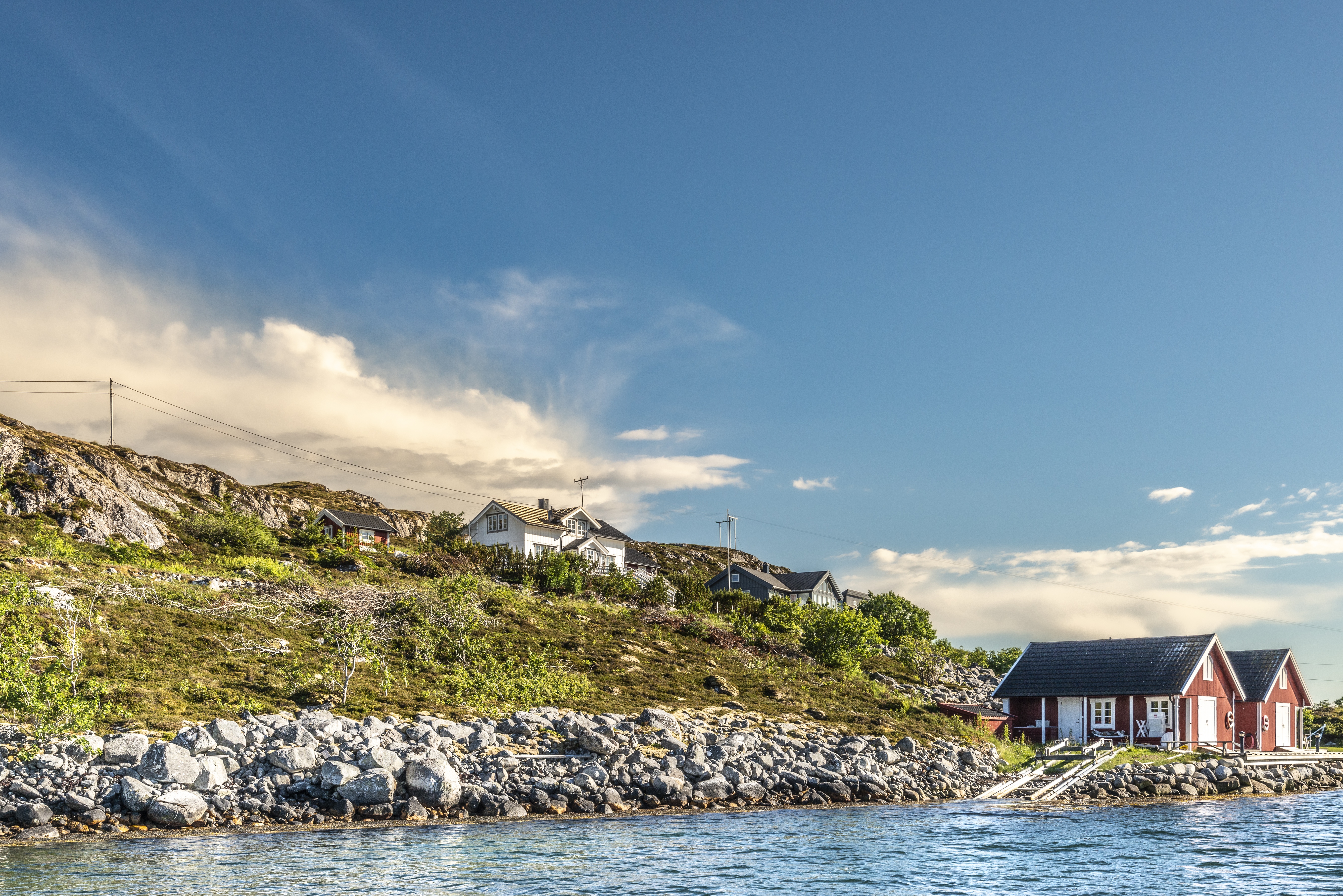
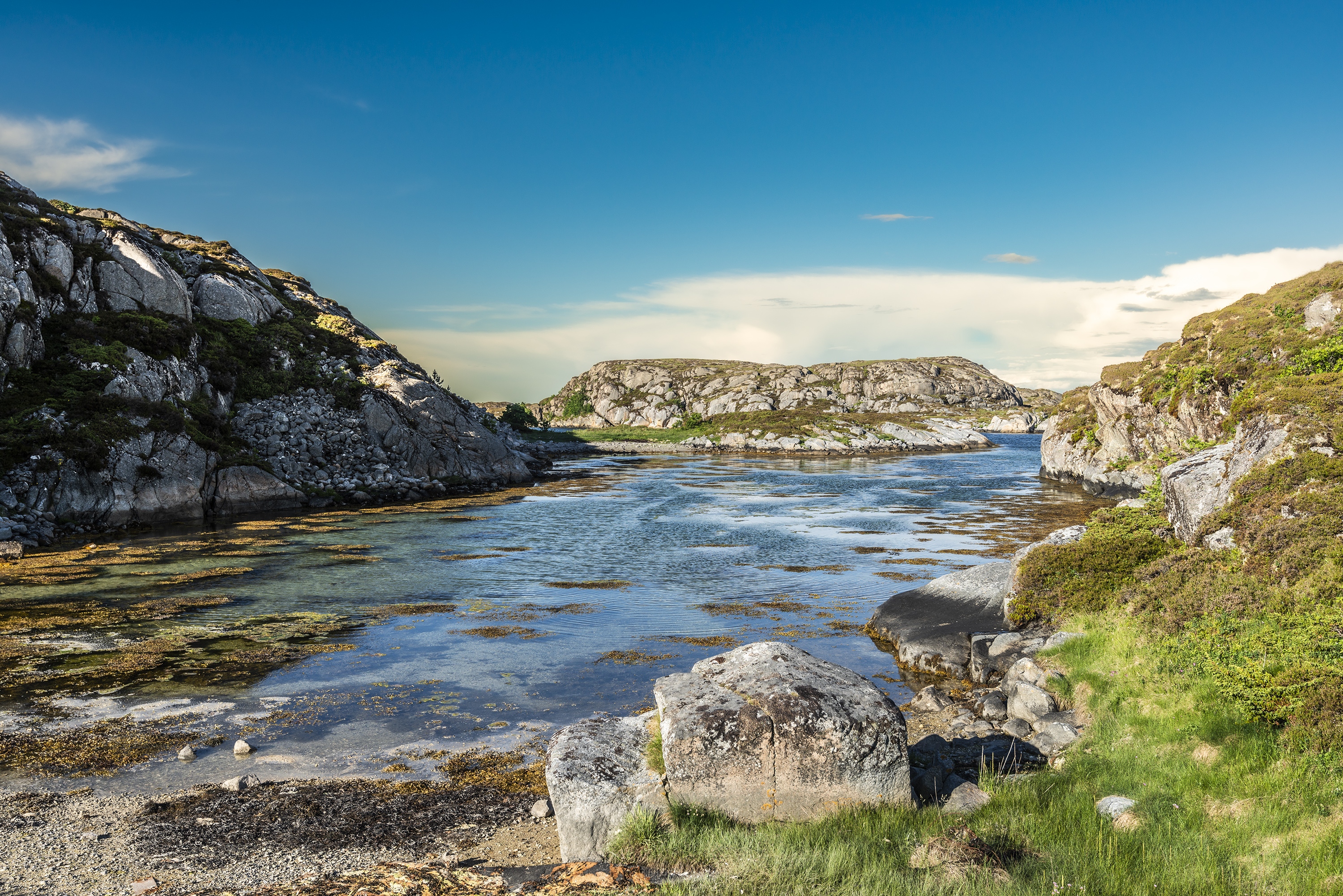
Crossing Hitra to the tiny settlement of Kvenvær, on the Atlantic coast, banks of ferns line the quiet, twisting road as it occasionally passes houses with their roofs covered in turf, where wheat, oats, flowers and even small trees grow. This ancient practice, once used for warmth, serendipitously provides a haven for a variety of insects and a nesting place for birds. Off the coast, there are over 100 islets, mostly uninhabited. ’But the general store on one closed only in 1982 and the 50-student school on another in 1969. We kids were rowed there each day,’ says master-fisherman and community stalwart Bjarne Johan Faxvaag, as he expertly steers his small boat past barely submerged rocks to his crab pots lying deep in a cove near the open sea. A curious sea eagle appears, seemingly from nowhere, to keep watch.

Passing one uninhabited islet, Bjarne reminisces: ’My grandparents are buried in this graveyard, alongside their parents and grandparents; for the funeral, this tiny bay was filled with the islanders’ boats.’ Today, this beautiful spot, with its graves of shipwrecked sailors as well as islanders, is filled with wildflowers – wild columbine, vetch, flowering clover and a large clump of scarlet poppies. Nearby, as Bjarne pulls up his crab pots, smart seagulls gather. ’They like me to do the work,’ he laughs. ’We have halibut here – they spawn in saltwater fjords – and plenty of herring and cod, which come in close to the shore in the evening.’ Bjarne chooses the crabs he wants for his restaurant, Brygga, and tosses the others back into the water, ’for another day’.
This consideration for their fellow creatures and flora is obvious throughout Trøndelag; the people know this fine environment and stunning landscape is a valuable part of their culture. Each of its products – heather-honey, wild sheep, foraged berries and herbs, migrating reindeer, fish and seafoods from the clear, clean, Atlantic waters – has a story to tell.
This article first appeared in the June 2025 issue of Food and Travel. To subscribe today, click here.
Where to stay
Britannia This handsome, late-19th century hotel was built to host British aristocrats who came to fish in the region’s fine salmon rivers. Modern comforts include quiet, spacious suites, a spa and fitness centre. Take lunch or dinner in the Michelin-starred Hall of Mirrors or informal Jonathan Grill, and enjoy a classic or signature cocktail beforehand in the elegant Britannia Bar, where sommelier Øyvind Lindgjerdet is at hand to advise. Breakfast in The Palm Garden on a selection of cheeses – including mellow, yellow Skjenald – cured fish and roast beef, cured sausages, seasonal salad vegetables, and fresh fruits, in-house-baked breads and pastries. Doubles from £194, including breakfast. Dronningens Gate 5, Trondheim, +47 738 00800, britannia.no
The Floating Suite Wake up to lapping waves and the morning calls of seabirds when you stay in this lovely suite floating on the water five minutes by boat from Hitra quay. Sleeping four, it comes with an outdoor dining area and fire pit. Alternatively, stay onshore in The Loft Suite, a quayside loft with a fine view of nearby islets, or Skjåen, a wooden, shoreline cabin close by. There’s a large sauna moored in the sea just off the quay and a well-stocked general store next to Brygga restaurant (see Where to eat). Walk the coastal trail or hire a boat or kayak to explore uninhabited islets and swim in one of hundreds of secluded coves. Or ask about a guided boat tour of the archipelago, an eagle safari, or a fishing trip. Open all year. Doubles from £252. Sjøbakkan 15, Kvenvær, Hitra, +47 911 35987, destinasjonkvenver.no
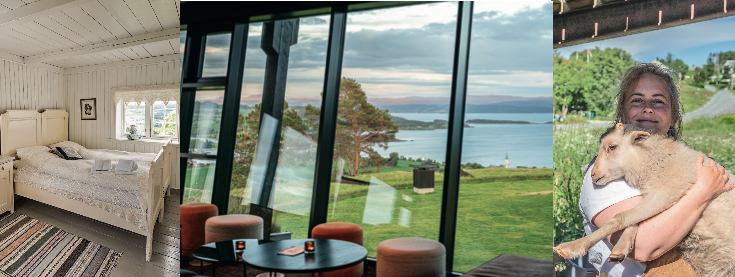
Husfrua Gårdshotell Owners Per Magnus Værdal, a food technologist, and Lise Værdal, a lawyer, have transformed this traditional, 19th-century wooden farmhouse on their family dairy farm into a peaceful, six-room hotel with three self-contained cabins in the grounds. A cockerel crowing and cows moo-ing nearby start the day, and there are fine views across rolling hills east to Trondheim Fjord. Husfrua means ’housewife’ and traditional home-making skills are evident in the generous breakfasts of local cheeses, cured ham and salami, bread and rolls from Marens Bakeri (see Where to eat), and the farm’s own delicious butter, home-made yoghurt, conserves and muesli. A lunch picnic can be prepared on request. For dinner, take a lovely ten-minute stroll across a field to Øyna Cultural Landscape Hotel (see Where to eat). Trondheim airport is an hour’s drive away. Doubles from £130, including breakfast. Sakshaugvegen 44A, Inderøy, +47 928 13615, husfrua.no
Kulturgården Bjerkem Stay in the self-contained annex of a traditional wooden farmhouse in the rolling hills of northern Trøndelag. The farm produces organic milk and meat and grows older wheat varietals for flour. Accommodation is two connected double bedrooms and kitchen. Breakfast on farm butter and cured meats, local cheeses and home-made breads, jams and pickles. In the farm’s large, historic barn, experience the foods and flavours of the region in seven- and 16-course menus prepared by local-born but London- and Dublin-experienced chef Kim Tore Sjøbakk, with matching wines from sommelier Nives Škudar. Annex sleeping four from £173. Såseggvegen 399, Steinkjer, +47 975 62667, bjerkem.com
Travel Information
The central Norwegian region of Trøndelag lies at the northern end of the Trondheim Fjord. The Atlantic Ocean is to the west, Norway’s north-south mountain range and Sweden are to the east. In 2022, Trøndelag was awarded the accolade European Region of Gastronomy. Trondheim is Norway’s third largest city, with a population of around 213,000. It lies on the south shore of Trondheim Fjord, around 500km north of Norway’s capital city, Oslo. Trøndelag has a humid, oceanic climate with mild, wet winters along the coast and very cold winters in the eastern highlands.
Coastal summer temperatures average 16C, while Trondheim averages 19C. Summer days are long, with only an hour or two of darkness around midnight, and winter days are very short. Visit in summer for the wonderful light, fresh berries, fruits and vegetables; in winter, it’s all about atmosphere, wild meats and preserved foods. The currency is the Norwegian krone. The language is Norwegian, although English is widely spoken in Trondheim’s restaurants and bars, and in Trøndelag’s hospitality world. The time is GMT +1.
GETTING THERE
Norwegian fly daily direct to Trondheim from London Gatwick; flight time is around 2.5 hours. norwegian.com
GETTING AROUND
Car hire is the best way to access the isolated farms and beautiful scenery of Trøndelag. avis.co.uk enterprise.co.uk
Public transport Trondheim is a walking city, but it also has an excellent bus and tram system. For an eco-friendly way to travel to the islands of Hitra and Frøya, take the ferry from Trondheim to Hitra and return by public bus. atb.no visittrondheim.no
RESOURCES
Explore Trøndelag is packed with information on the area’s history, architecture, local customs and activities. trondelag.com
Visit Trondheimhas details about places of interest. visittrondheim.no
Where to eat
Prices are per person for three courses, excluding drinks, unless otherwise stated.
Brygga Chef Hristo Donchev relies on skipper Bjarne Johan Faxvaag to supply him with very fresh fish and seafoods – hake, Atlantic mackerel, crab, lobster, scallops – for this large, lively restaurant and he sources meat, fruit and vegetables from island producers. The bar and wooden terrace overlooking the small quay is a popular spot for weekend- fishermen, walkers and locals alike. Try line-caught, pan-fried haddock, bacalao (salted cod), fishcakes or a wild-sheep burger. From £28. Sjøbakkan 15, Kvenvær, Hitra, +47 472 69000, destinasjonkvenver.no
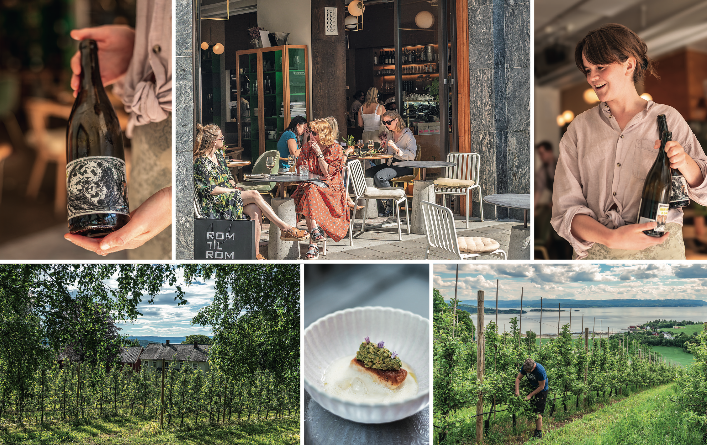
Bula Neobistro Owner Reneé Fagerhøi likes her staff to express themselves in the kitchen and, in this interesting, menu-free, 45-seat restaurant, dishes delight and surprise. Made from Trøndelag produce whenever possible, seasonal dishes might include nettle pasta with egg yolk cheese, 24-day-aged entrecôte steak with anchovy cream, white chocolate with rhubarb, and yoghurt sorbet with strawberries. Drinks pairings include champagne, muscadet, pinot noir and fruit juices such as carrot, sea buckthorn, cayenne, and local-farm apple and rhubarb. There are seats at the bar for small bites too. Five-course menu £72; drinks pairing from £66. Prinsens Gate 32, Trondheim, +47 405 55529, bulabistro.no
Hurran Gård In her cheerful café on the family’s farm, co-owner and baker-chef Sara Taraldsen makes seasonal dishes with home-grown, organic vegetables, herbs and flowers and ingredients from producers she knows. Lamb leg or tenderloin from the farm’s wild sheep may be on the menu too, or try the sweet onion, mushrooms and pear tartlet with garden- herbs salad. Open for lunch and occasional musical evenings. From £21. Sørfroyveien 246, Hamarvik, Frøya, +47 970 39830, hurran.no
Lille Skansen Enjoy a local craft-beer or two on the attractive wooden deck of this casual, busy and light-filled restaurant overlooking the Trondheim Fjord. Well-prepared, non-fussy dishes include a very good shrimp sandwich, meat, tuna or vegetarian burgers, fish and shellfish pastas, mussels and crab – be sure to enquire about the catch of the day. Leave room for passion-fruit cheesecake, waffles or ice cream. From £27.50. Nedre Ila 2, Trondheim, +47 739 21151, lille-skansen.no
Marens Bakeri & Café A popular coffee and lunch spot in the centre of Inderøy’s small main town. Landbrød (country bread), sourdough loaves, raspberry or vanilla cinnamon buns and cakes are made on-site. Lunch on seasonal, mixed salad, filled savoury rolls or sodd meat stew with dumplings washed down with fermented fruit juices. Before leaving, stop next door in the family-owned shop for their own traditionally cured meats, elk salami and smoked sausages to take home. Find tourist information here too, during summer. From £20.20. Meieribakken 4, Inderøy, +47 926 93950
Øyna Cultural Landscape Hotel Dine against the backdrop of the distant fjord through floor-to-ceiling windows at this well-designed hotel on the side of a steep hill – the building seems to be part of the landscape. Chef Maren Brekkvassmo Myrvold changes her thee- and five-course menus with the seasons and availability: expect the likes of asparagus soup, smoked mackerel, fjord hake, tender beef-flank steak, and ginger rhubarb sorbet with cardamom cream cheese, meringue and pine-cone syrup. Drinks include aquavit from an Inderøy distillery. Late on summer evenings, enjoy the view of the sunlit fjord and surrounding hills from the Sky Bar. Three-course menu £53. 255/375 Øynavegen 60, Inderøy +47 973 37301, oyna.no
Sellanraa Central, charming café/bar in a former fire station. Full-length windows open to extend the book-lined café on to the pavement. Chef Szymon Francuz and his team source ingredients from Trøndelag: marinated herring with potato and dill oil, organic mixed-leaves salad with pickled sea buckthorn, walnuts and blueberries, or beef-cheek open-sandwich with ligonberry jam and horseradish. Don’t miss the cheese plate from Grindal, just south of Trondheim. Tasting menu of multiple bite-sized dishes £29. Kongens Gate 2, Trondheim, +47 469 12480, sellanraabar.no
Food Glossary
- Aquavit
- The distilled spirit is a true taste of Norway; some of the best aquavits are matured for three years or more in wooden barrels
- Bacalao
- Salted and dried cod that’s soaked in fresh water before cooking. Also known as klippfisk, it’s made into fishcakes, or used in stews with onions, tomatoes and potatoes
- Brunost
- Chestnut-brown, smooth and caramel-flavoured cheese made from goats’ milk whey (the liquid remaining when the milk solids are turned into cheese)
- Eplekake
- Vanilla sponge cake topped with sliced apples, cinnamon and sugar; served with ice cream, cream or vanilla custard
- Fiskesuppe
- Fish soup: there are many regional variations, but it is generally made with haddock, cod or wolffish (Atlantic catfish), flavoured with carrot, celeriac and parsley and thickened with egg and cream
- Lammerull
- Lamb roll: well-spiced minced lamb wrapped in a cloth and tied with string, then pressed and slow simmered for an hour or two
- Lompe
- Flatbread made with potatoes, salt and flour; it can have either a savoury or sweet filling and can be served with butter or sprinkled with cinnamon and sugar
- Reinsdyrsgryte
- Autumn stew of reindeer simmered with thyme, juniper berries, onion and sometimes mushrooms, then served with potatoes
- Sildetallerken
- Platter of savoury- or sweet-brine-cured herring, with dill or soured cream
- Skjenning
- Leaf-thin, triangular flatbread local to Inderøy. It’s served either plain or coated on one side with milk and sugar; to eat it, place the sugar-side on your tongue
- Sodd
- Stew made with a variety of mutton lamb or goat cuts oat dumplings, carrots and potatoes, flavoured with mace; traditionally served at family celebrations or on special occasions with a side dish of plain skjenning
Get Premium access to all the latest content online
Subscribe and view full print editions online... Subscribe