
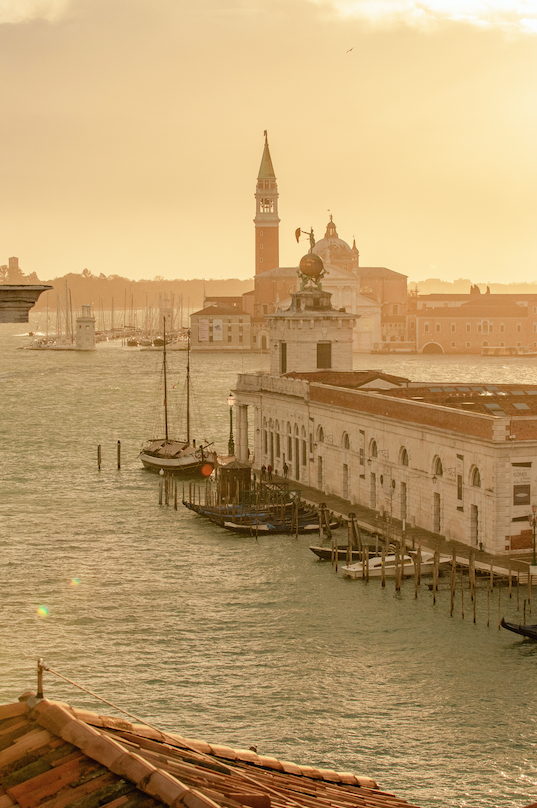
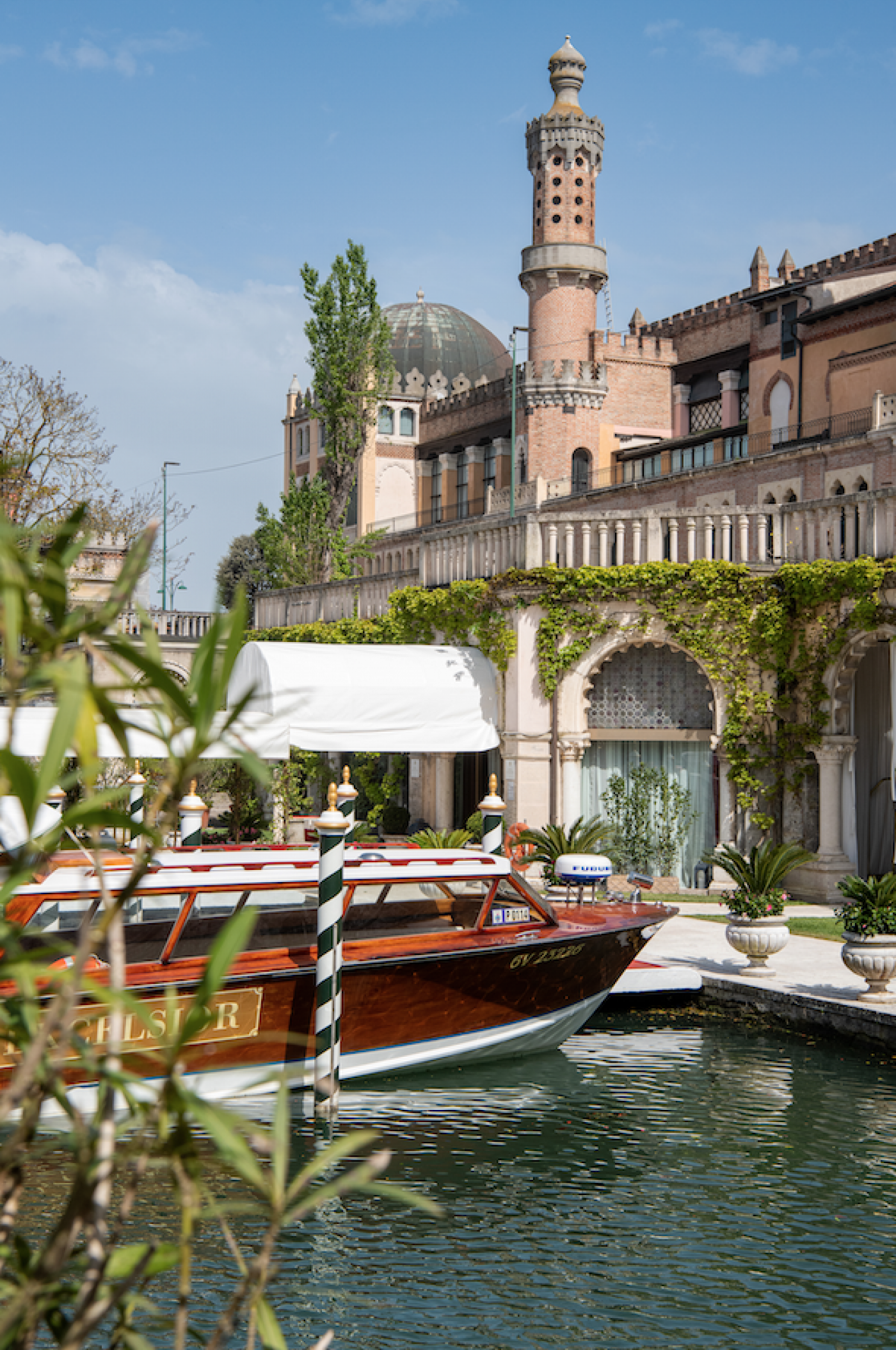
The marble palazzi of La Serenissima slowly fade from sight as the vaporetto veers north-east into the heart of the lagoon. It’s a space of in-between-ness – neither fully sea nor mainland; a kaleidoscope of parallel worlds. The view stretches from the wild beauty of Lio Piccolo, a haven for birdwatchers, to the retro charm of the Lido, Venice’s seaside and home to the red carpets of the film Biennale, where the glamorous Hotel Excelsior continues to preside, as it has for well over a century: glitzy in summer and wonderfully demure out of season. Drifting past Murano’s waterfront of brick furnaces, you see a succession of smaller islands, their occasional ruins alluding to a once-thriving history. After 45 minutes, Burano’s crooked campanile comes into sight, towering above the island’s brightly coloured houses. Time to step ashore.
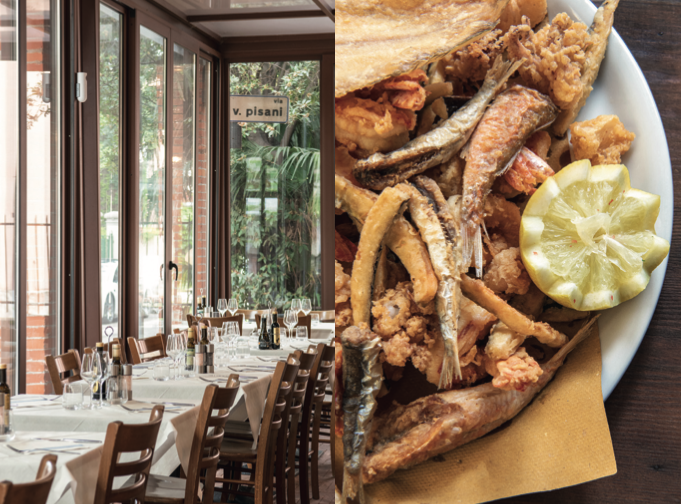
A short walk separates you from Al Gatto Nero, a long-standing trattoria that alone is worth the journey. Next to the canalside tables, the catch of the day is being unloaded from a small fishing boat – sea bream, sea bass, thick-lip grey mullet and a speckled sea trout. ‘You’ve arrived just in time!’ exclaims owner Ruggero Bovo, leading the way to a table in the wood-panelled dining room. The atmosphere is unapologetically old-school, with Murano chandeliers and vintage ceiling fans.
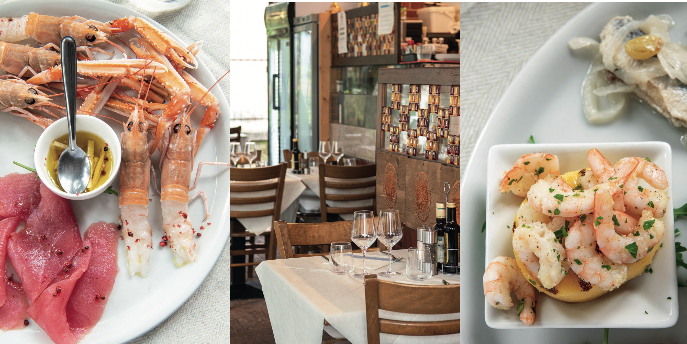
Together with his wife Lucia, Ruggero has been the life and soul of the place for the past six decades. And it’s a place frozen in time, one that is not about fancy presentations and elaborate storytelling but rather well-known staples and flavours. Like the delicate, briny risotto di gò, made with goby, a small fish from the lagoon; or the homemade pasta that arrives like a Van Gogh canvas, colourful and decorated with squash blossom. ‘I respect my island’s traditions and its simple recipes. No need to alter them,’ he says humbly.
Artist Allison Zurfluh’s paintings hang on the restaurant walls alongside the works by Ruggero’s circle of talented friends. The lagoon is Allison’s constant inspiration – particularly the stratified textures of the barena, the intertidal salt marshes – as well as the subject of a mission: two years ago, Allison founded the Barena Association, dedicated to the long-term safeguarding of this unique wetland environment. Her boat is moored outside and she steers towards the green island of Torcello, at the northern edge of the lagoon, gliding past the legendary Locanda Cipriani (currently closed for renovation and due to reopen in September), which seduced many a literary and artistic luminary from Hemingway to Callas.
In the 1500s, before malaria hit and the waterways silted up, Torcello is said to have had 20,000 inhabitants, paved streets and a score of splendid churches. Today? Just seven residents remain. Domenico Rossi, a member of the association’s advisory board, awaits in the quietness of his buen retiro – a waterside cabin where he meticulously organises his tools, including fishing nets that he cuts and stitches himself, like a dress. He is a molecante, a very special breed of fisherman whose job is to separate the good crabs, which have already lost their carapace and are ready to be eaten, from the others, which will be released until they are ready to be captured again. Only 15 molecanti are left in the Laguna Nord – and they don’t have an easy life. Rising sea levels, the disappearance of mudflats and appearance of invasive species like the blue crab are some of their daily challenges.
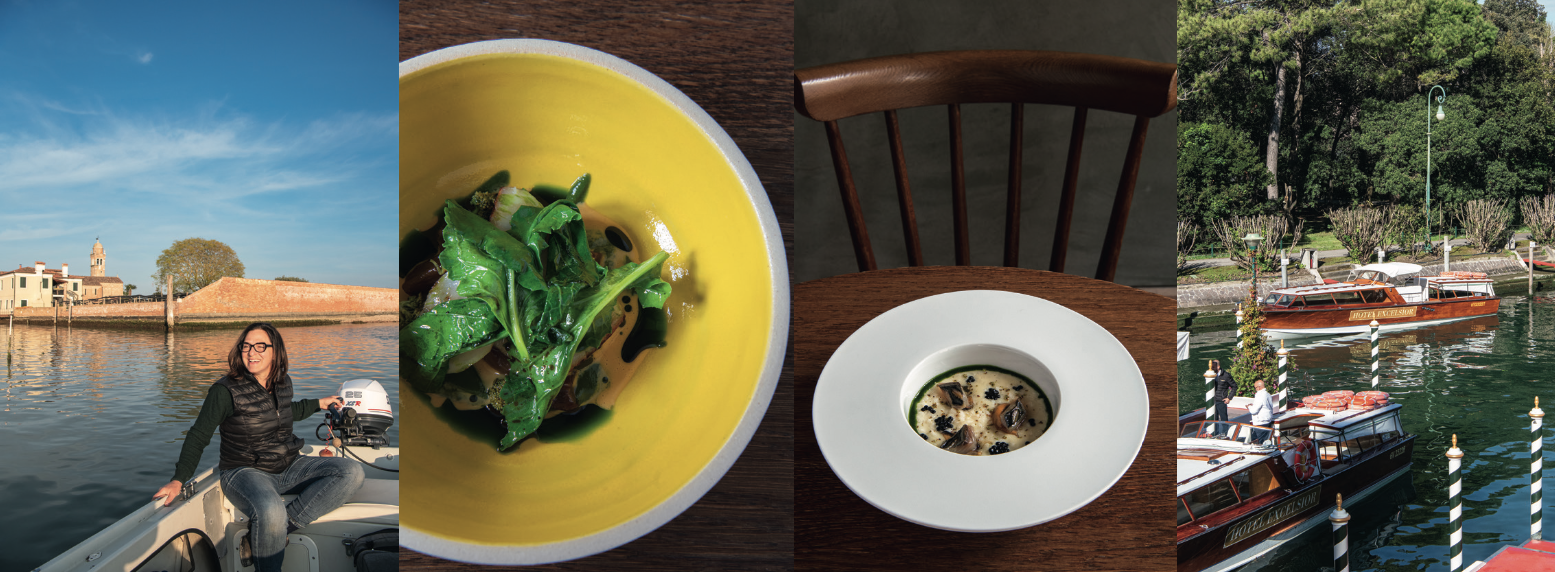
‘Regardless of the problems we face, we still want to make a difference,’ Domenico says. ‘When we created the association, our goal was to protect the borders of the barena from wave erosion by building barriers with biodegradable material. Additionally, we started to clear the salt marshes – removing ghost nets, discarded appliances, plastic, glass and metal objects, even abandoned engines.’ He smiles. ‘We won’t change the world. But cleaning up the barena means your children won’t end up eating that waste in the fish you buy. It also helps to create more homes for wildlife. Once a barren wasteland, this site is now a nesting ground for seagulls. We started with one egg – now there are two nests. Life is slowly coming back; it’s very encouraging.’
Allison adds, ‘Local labour is another key factor in our approach. Local fishermen know how to move safely in this fragile environment without damaging the salt marshes. This creates an income support tool for them, at a time when lagoon fisheries are in crisis. We are fighting two kinds of erosion: that of salt marshes, and that of the lagoon’s social fabric.’ Allison’s boat tour continues as the evening glow gently falls over the lagoon. She cuts the engine and ties up beside a wide, green stretch of Barena. An absolute quietness descends, broken only by the flutter of birds skimming the water’s surface.
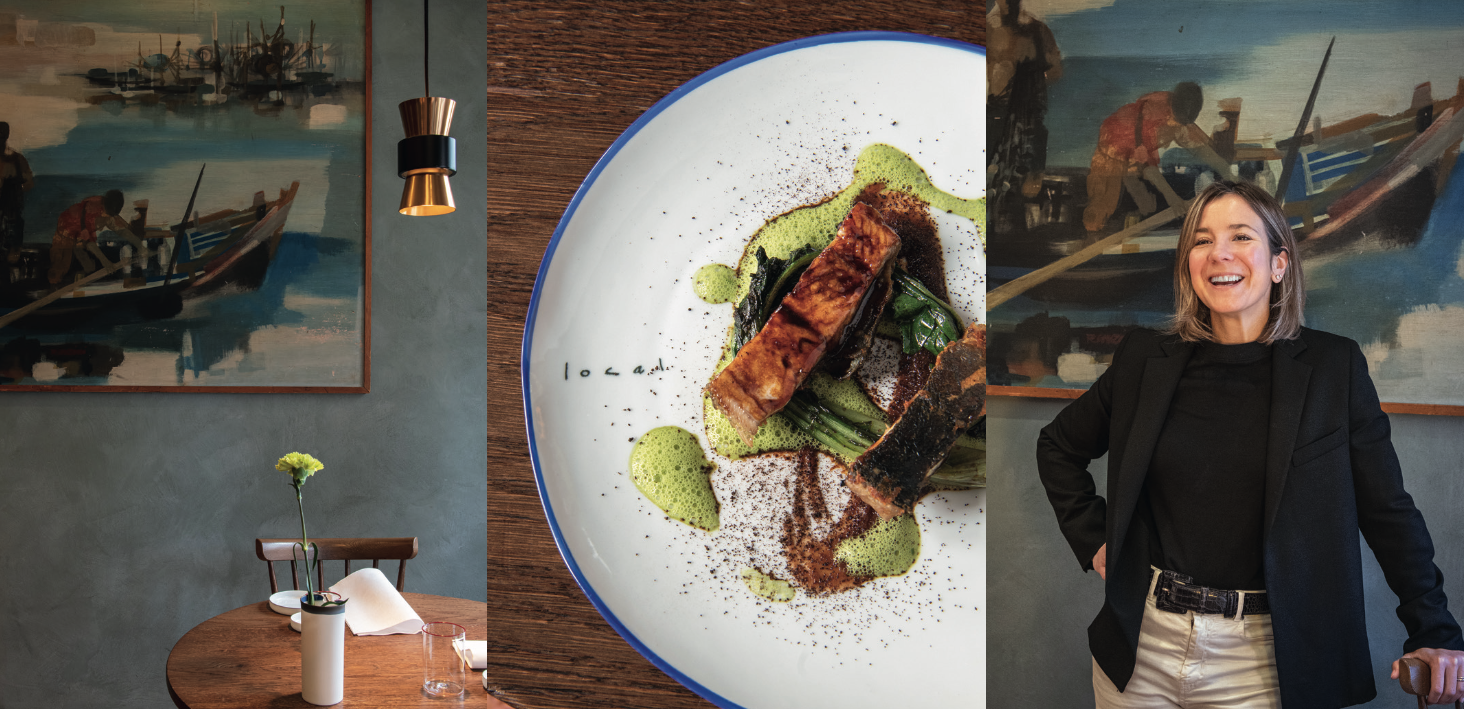
Restaurateurs are playing a growing role in raising environmental awareness. At Michelin-starred Local, tucked away in Venice’s quiet Castello district, owner Benedetta Fullin has introduced a €1 donation to the Barena Association on every bill. ‘Some people are already well-informed and others don’t even know what a barena is, but the response has always been enthusiastic. Guests often donate more,’ she explains. In the kitchen, chef Salvatore Sodano applies ancestral techniques to fine-dining Venetian cuisine. Think dry-aged meats and fish, house-made garums, and shelves of fermenting jars that become one-of-a-kind ingredients. In the private room at the back, where two large fridges are used to age the meat and fish, the one dedicated to fish currently holds a sizeable amberjack, turbots and a few eels. ‘Dry-ageing allows us to work with larger fish and significantly enhances flavour, texture and consistency,’ he explains. Order the eel and you’ll soon understand – it has an exceptionally crispy skin and soft, juicy meat.
Back to the Arsenale quayside, and VERO, Ca’ di Dio’s in-house restaurant, is another unmissable stop. Local vegetables take centre stage in the cuisine of rising star Gabriel Collazzo. Beetroot arrives shaped like a lotus flower – a feast for the eyes and the tastebuds. Red, yellow and pink beetroot are treated with different methods to create earthy flavours and playful contrasts, while a fermented raspberry sauce gives it a bright, acidic edge. ‘The vegetarian world isn’t just about vegetables. It’s about delivering emotions through them,’ says Gabriel.
All the greens in the kitchen come from the island of Sant’Erasmo, the lagoon’s agricultural stronghold. Its salty soil is responsible for the distinctive flavours of the vegetables, like the prized violet artichoke, aka castraura. ‘The techniques they use there are particularly interesting. Unlike the standardised approach to farming on the mainland, working on water demands constant attention to the changing tides. Excessive watering must also be avoided, as the soil is already rich in nutrients,’ explains Gabriel.
That same focus on local terroir is echoed at De Majo Restaurant & Terrace in Murano, where Treviso-born Filippo de Marchi draws on the island’s seafood traditions with lightness and depth. A former pupil of Norbert Niederkofler, he learned early on the importance of respecting the land – and, consequently, the water. His signature Vicidomini spaghetti with clams features the ubiquitous salicornia, otherwise known as sea asparagus or marsh samphire. No extra salt needed, just a dash of delicate olive oil and a hint of ginger and lemon: a tribute to the landscape outside the restaurant windows. Then there’s the wine. Viticulture played a leading role in Venice’s early history – Piazza San Marco was, after all, a vineyard until the 12th century. The toponymy of the city still echoes that legacy, from San Francesco della Vigna to the public squares still known as campi or campielli (fields).
‘The lagoon is not your typical winemaking environment,’ smiles Riccardo Prosperi, sommelier at Venissa wine resort. ‘There are three main challenges: humidity, salt and lack of room for the roots. Salt water is all around – and beneath our feet. The character of this wine is largely defined by its salinity, which also sets clear limits.’
The Venissa resort is worth the visit to quiet Mazzorbo, connected to Burano via a wooden bridge. Here, the Bisol family of winemakers revived a historic estate, transforming it into two restaurants – Michelin-starred Venissa and laid-back Osteria Contemporanea – plus a vegetable garden and, most notably, a vineyard where local variety dorona is grown.
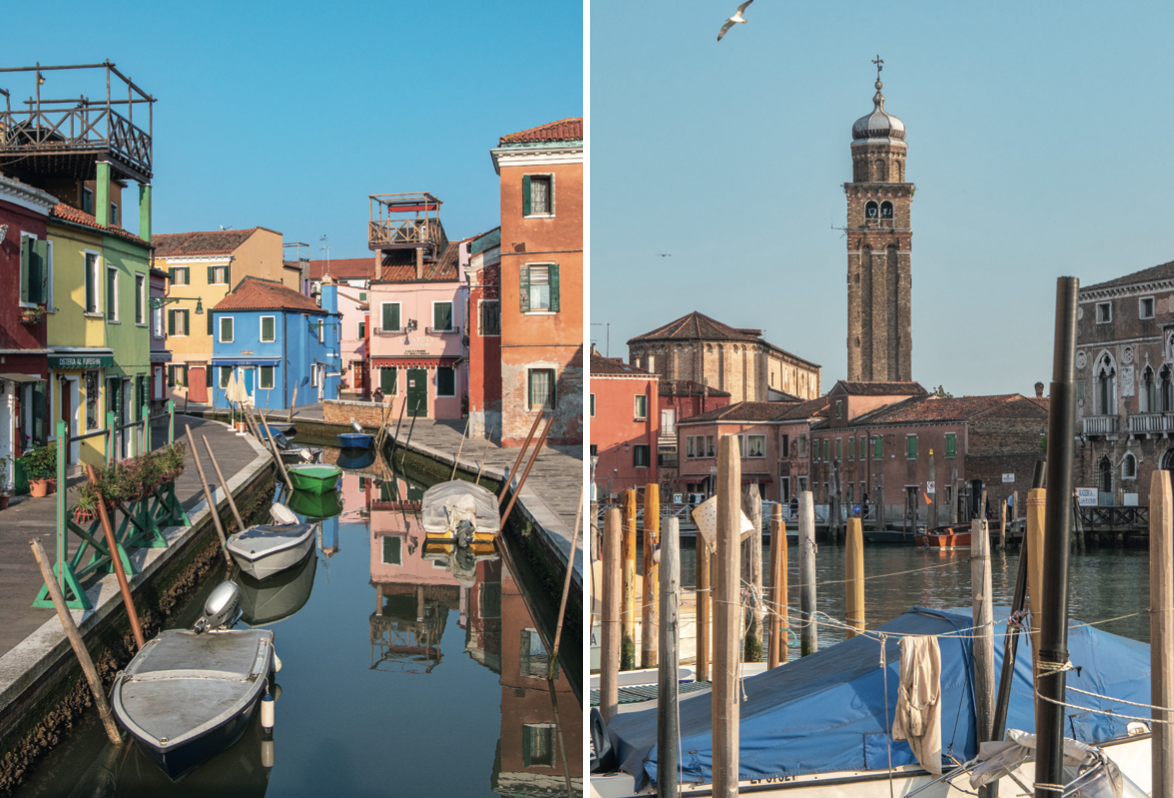
‘Dorona was believed extinct after two devastating events,’ Riccardo explains. ‘First, the harsh winter of 1929, when temperatures plummeted to minus 24 degrees. There are photographs that show the lagoon frozen solid, with people walking between the islands, like a Siberian landscape. Then came the Acqua Granda in 1966 – the highest recorded tide, which submerged the lagoon under nearly 2m of water.’ Things took an unexpected turn in 2001, when Gianluca Bisol stumbled on a few curious-looking vines while taking a walk in Torcello. They turned out to be dorona. Over the following years, he traced more specimens throughout the lagoon, eventually locating 88 plants. Between 2006 and 2007, a new vineyard was planted within the walled grounds of the former monastery of Sant’Eufemia, in the shadow of a 13th-century bell tower – a place where wine had been made until 1966.
That small vineyard now produces two distinct wines: Venusa and Venissa. ‘The difference? A small variation in altitude, which makes a huge difference in these extreme conditions,’ Riccardo continues. ‘The lower section, near the canal, sits just 50cm above sea level. The higher part, near the bell tower, reaches 1m. It means twice as much room for the roots, which absorb more water and suffer less from the tides. The lower vines, where Venissa is made, are periodically submerged during high tide and they struggle more. They fight for space. But what they produce is extraordinary: the grapes are low in water, but very high in aromatics.’
Another gem of a story awaits in San Michele, the cemetery island, a mere three vaporetto minutes from Murano. Renzo de Antonia, president of Laguna nel Bicchiere, is waiting on the landing platform of the vaporetto. ‘Welcome to the other side,’ he chuckles, with a wry acknowledgement of how bizarre it feels to welcome someone to a graveyard. He introduces the now-abandoned convent of San Michele, where the association’s headquarters are. ‘Friars lived here until 2008,’ Renzo explains, pointing to a pocket-size vineyard framed by the brick architecture of the convent. ‘When they left, the late Flavio Franceschet founded the association with an oenologist and two restaurateurs. The goal was to breathe new life into forgotten vineyards scattered around the lagoon.’ In their statute, the word ‘wine’ is rarely mentioned, however. ‘What we really want is to protect the landscape, the lagoon, and to support education. Wine is essentially the excuse,’ he smiles.
Laguna nel Bicchiere work with four local schools, involving 300 children. According to their age, they learn anything from growing flowers and baking bread with ancient grains to making wine and olive oil. The latter project, in partnership with Slow Food, helps fund vegetable gardens in Africa. Renzo adds, ‘It teaches them there’s hard work behind what’s on their plate – and it’s just as important to work for others, not only for themselves.
This article first appeared in the June 2025 issue of Food and Travel Magazine. To subscribe today, click here.
Where to stay
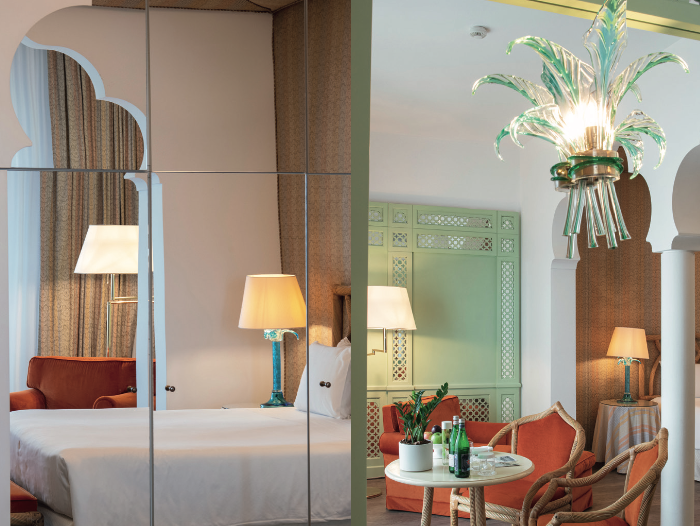
Ca’ di Dio This 13th-century pilgrim shelter – its name means ‘House of God’ – was turned into a five-star hotel in 2021, thanks to Patricia Urquiola’s architectural genius. Sculptures and paintings from the 15th to the 18th century seamlessly blend with bespoke Murano chandeliers and exquisite Rubelli fabrics. Upstairs, luxurious rooms are designed with a refined simplicity, featuring soft colour palettes, gradations and shades celebrating the ever-shifting nature of water. Choose a Rooftop Terrace Suite to enjoy a traditional altana, a raised terrace for sweeping views of Venice and the lagoon. Solid dining options feature a bistro, cocktail bar Alchemia and fine dining restaurant VERO Venetian Roots (see Where to eat). A short walk away from St Mark’s and in front of the Arsenale quayside, with direct vaporetto connection to the islands. Doubles from £330. Riva Ca’ di Dio 2183, Venice, +39 041 09 80 238, vretreats.com/en/ca-di-dio
Casa Burano What could be better when in Burano than staying in one of those iconic colourful houses? The team at Venissa hotel and vineyard recovered and renovated five of them, located in different parts of the island. Refurbished in collaboration with local craftsmen and designers, each of the 13 rooms has a unique interior concept. Doubles from £120, including breakfast served at Venissa, a ten-minute stroll away. Various locations, +39 041 527 2281, casaburano.it/en
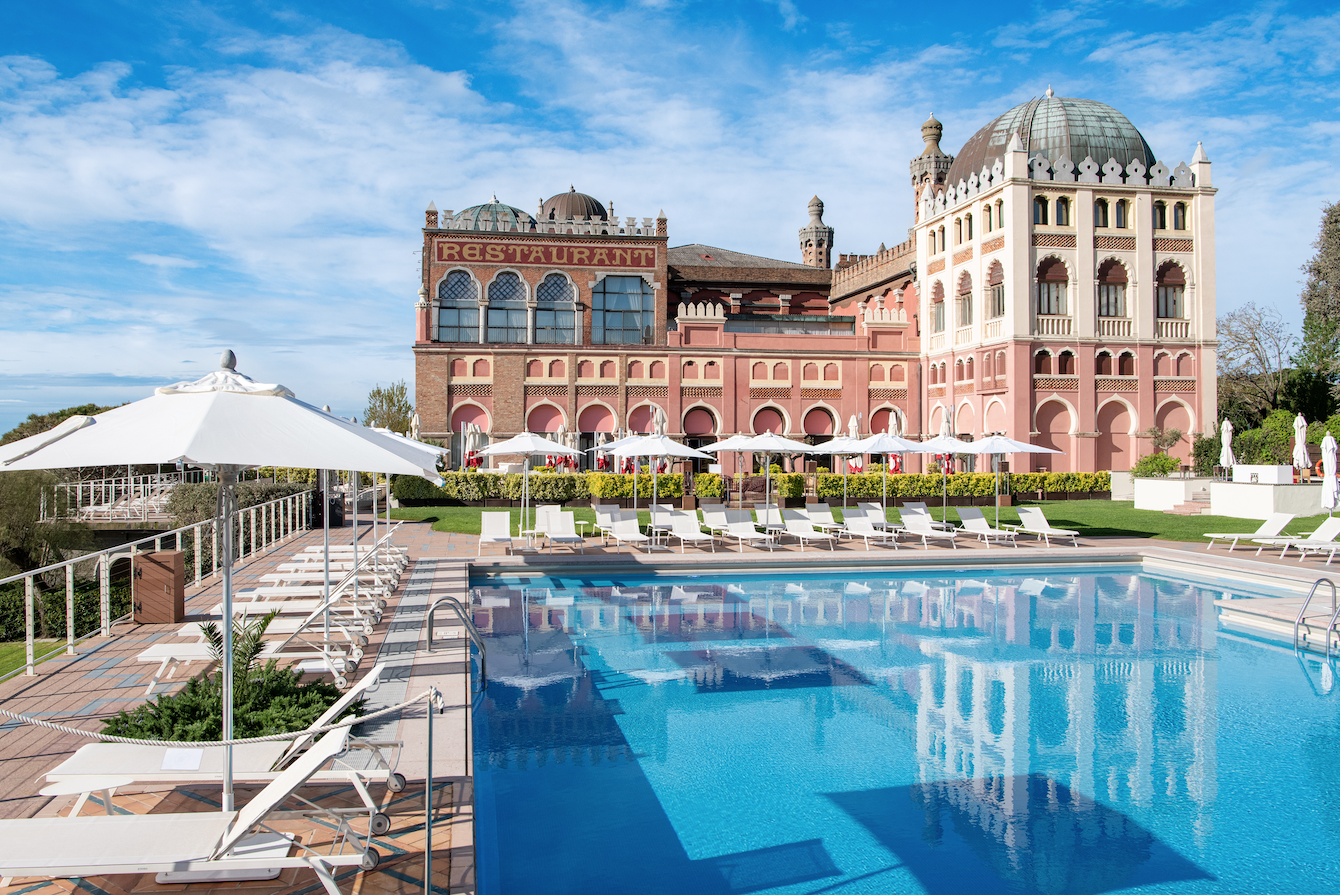
Hotel Excelsior Venice Lido Resort This glamorous grand dame on the shores of the Lido has been synonymous with Venetian dolce vita since 1908. Its long-standing love affair with the cinema industry started in 1932, when it hosted the first Venice International Film Festival. Almost a century later, its distinctive Moorish architecture, lush courtyard and private beach are still a favourite for the star-studded crowds – with good reason. Rooms are spacious and elegant, many with a beautiful view over the Adriatic Sea, and the heated pool is blissful even when temperatures drop. Take a seat at the Murano glass counter of the iconic Blue Bar and indulge in a signature cocktail before relishing a candlelit dinner at Adriatico Terrace (see Where to eat). There’s a complimentary boat service straight into San Marco. Doubles from £372. Lungomare Marconi 41,
Lido di Venezia, +39 041 526 0201, hotelexcelsiorvenezia.com
NH Collection Murano Villa Set within the former De Majo glass factory on the historical island of Murano, this sleek 104-key address combines industrial heritage with contemporary design. Interiors are spacious and minimal; the factory bricks are softened by velvet accents and Murano glass details scattered everywhere – a nod to the history of the place and local craftsmanship. The rooms in the back building feature some incredible views over the lagoon, and so does the first-floor terrace, perfect for a sunset aperitivo. A shuttle service between the hotel and San Marco is available daily (£6.80). Doubles from £128. Fondamenta Andrea Navagero 29, Murano, +39 041 273 1311, nh-collection.com
Venissa On the island of Mazzorbo, Venissa is much more than a hotel – it’s a fully fledged wine estate with a story to tell, ideal for those seeking quietness and slow rhythms. Surrounded by vegetable gardens and vineyard where the rare dorona grape is cultivated, the estate offers three rooms and two suites housed in a restored manor. Décor is minimalist-chic, featuring an all-white design with exquisite decorative touches like Driade’s dainty bird-shaped mirrors. A Michelin-starred restaurant, also called Venissa, the more laid-back Osteria Contemporanea (see Where to eat) and the estate’s own wine complete the experience. Doubles from £136, including breakfast. Fondamenta Santa Caterina 3, Mazzorbo, +39 041 527 2281, venissa.it
Views on Venice If you prefer to base yourself in Venice itself, opt for one of 100 stylish apartment and villas in fantastic locations around the city, all chosen for their canal views. Whether you choose a one-, two- or three- bedroom apartment or a luxury palazzo, they’re all comfortably fitted out with elegant furniture and situated in the most desirable locations Venice has to offer. Often hidden away down atmospheric alleyways, some come with balconies or charming outside spaces. Doubles from £153. Various locations, +39 041 312 2121, viewsonvenice.com
Travel Information
The Venice lagoon is around 55km long and 11km wide and contains multiple islands, both inhabited and uninhabited. The three most famous – Murano, Burano and Torcello – can be reached from Venice by water bus. Currency is the euro and time is one hour ahead of the UK. Flight time from London to Venice Marco Polo Airport is around 2 hours.
GETTING THERE
British Airways offer direct flights from London to Venice Marco Polo Airport. britishairways.com
EasyJet also fly from Manchester. easyjet.co.uk
From the airport, it’s an easy 45-minute transfer by Alilaguna water bus to Venice city centre – or take the ACTV bus to Piazzale Roma, Venice’s main car/bus terminal, in around 20 minutes. alilaguna.it
GETTING AROUND
The vaporetto (public water bus) is the easiest option to explore the lagoon and the islands. A Venezia Unica transport card is excellent value for money, especially if you are planning to move around a lot. Prices from £21 (24-hour pass) to £55 (7 days) for unlimited rides on vaporetti and city buses. veneziaunica.it
RESOURCES
Venice Tourism The official tourism office website has information on events and exhibitions, and plenty of practical info. venice-tourism.com Venezia Unica The official site for buying museum passes and booking some activities, as well as transport, is essential for planning logistics efficiently. veneziaunica.it
Where to eat
Prices are per person for a three-course meal, excluding drinks, unless otherwise stated.
Adriatico TerraceWith sea views and majestic chandeliers, Hotel Excelsior Venice Lido’s restaurant is pure old-world glamour. Expect fresh, raw seafood – red prawns, langoustine, oysters – and grilled fish dressed in delicate sauces. Don’t skip dessert: their refined twist on tiramisù is a highlight. From £68. Lungomare Marconi 41, Lido di Venezia, +39 041 526 0201, hotelexcelsiorvenezia.com
AlchemiaCa’ di Dio’s cocktail bar is a refined hideaway, where an all-day menu plays with local botanicals and ingredients from their garden. In the evening, visually striking cocktails draw inspiration from the four elements – earth, water, air and fire; special mention to their Sal negroni made with gin crafted for them by the Dolomites-based Zu Plun distillery – infused with salicornia. Cocktails from £18.70. Riva Ca’ di Dio 2182, Castello, +39 041 098 0238, v-retreats.com/en/ca-di-dio
Al Gatto Nero A Burano institution whose seafood-heavy menu is shaped by the morning catch: shellfish soup, tender grilled eel or sea bream. Charming touches include plates decorated with Burano’s colourful houses to custom-made cutlery engraved with the iconic cat that gives the restaurant its name. Five- or seven-course tasting menus plus à la carte. From £51. Via Giudecca 88, Burano, +39 041 730120, gattonero.com
De Majo Restaurant & Terrace Lagoon traditions and creative precision come together in the talented hands of executive chef Filippo de Marchi. Expect distinguished versions of cicchetti and meticulous seafood dishes. Delicious vegetarian options too. From £44.20. Fondamenta Andrea Navagero 29, Murano, +39 041 273 1311, nh-collection.com
Elimar Hotel At Excelsior’s Mediterranean-inspired restaurant you can opt for a table indoors surrounded by Moorish arches and Arabesque details or in the elegant outdoor lounge with front-row sea views. Dine on mouthwatering sautéed mussels marinara-style, linguine with clams and fresh catch from the Rialto market. From £65. Lungomare Marconi 41, Lido di Venezia +39 041 526 0201, hotelexcelsiorvenezia.com
Local Michelin-starred Local is true to its name: on the plate, in the glass and in the beautifully crafted space. Tributes to Venetian artisanship include a custom-made terrazzo floor with some 4,000 Murano murrine embedded. Standout dishes include their signature risotto with mussels and marinated mackerel, lovage extract and foraged juniper. Drink options are as inspired as the kitchen – curated by sommelier Manuel Trevisan, they include 55 wines by the glass, many poured from large-format bottles, and teas from China, Japan and Sri Lanka. Seven-course tasting menu £136. Castello 3303, Venice, +39 041 241 1128, ristorantelocal.com
Osteria al Mercà Two large marble tables outdoors recall the days when this brick structure housed the Mercato Centrale. Today, they serve classics like bigoli in salsa – pasta with onion and anchovies – or spaghetti with cuttlefish and black ink. Come evening, it’s the spot for an après-beach aperitivo. From £33. Via Dandolo 17, Lido di Venezia, +39 345 537 8052, osteriaalmerca.it
Osteria Contemporanea Part of the Venissa wine resort, tables spill out on to a garden framed by vineyards, where vegetables and herbs are grown metres from your plate. Chef Attilio Franzoi highlights pristine lagoon fish and hard- to-find produce like the herbaceous broccolo di Creazzo from the mainland. Start with cicchetti, then move on to blue crab spaghetti. Four–course menu £60. Fondamenta Santa Caterina, 3 Mazzorbo, +39 041 527 2281, venissa.it
Panificio Pasticceria Palmisano Carmelina This Burano bakery is still run by Carmelina, now in her eighties, making traditional island biscuits like rich, ring-shaped bussolà Buranello: originally baked by fishermen’s wives for their husbands to hang on hooks on their boats. Biscuits from £4.24. Via Baldassarre Galuppi 335, Burano, +39 041 730010, mgbiscotteriaveneziana.com
VERO Venetian Roots Vegetables from Sant’Erasmo take centre stage for chef Gabriel Collazzo – in carote e piselli, humble carrots and peas are raised up through layered textures, cooking techniques and surprising contrasts. Another standout is the spaghetto quadrato, which arrives as an edible cloud: spaghetti dressed in seaweed butter, topped with a delicate yuzu air, tiny baby squid and sea bream bottarga. Seven-course tasting menu £153. Riva Ca’di Dio 2181, Venice, +39 041 5747201, verovenetianroots.com
Food Glossary
- Bacari
- Local bars where cicchetti are served
- Baccalà mantecato
- Creamed salted cod, enriched with olive oil
- Bussolà
- Ring-shaped butter biscuits from Burano
- Castraura
- Violet artichoke from Sant'Erasmo island, prized for its uniquely intense flavour
- Cicchetti
- Venetian tapas-style its, from simple snacks such as olives and hard-boiled eggs to polpette meatballs, sarde in soar, or baccala salted cod on toasted bread
- Esse
- S-shaped biscuits from Burano, inspired by the Grand Canal’s curves. Traditionally dipped in dessert wine
- Moeche
- Soft-shelled crabs traditionally dipped in egg and flour, fried until golden and served with polenta
- Ombra
- A small glass of local wine, typically enjoyed with cicchetti
- Risotto di gò
- Traditional risotto from Burano made with gò, a small fish found in the Venetian Lagoon
- Salicornia
- A wild, crunchy plant also known as sea asparagus or marsh samphire. It grows spontaneously by the water and is well-known for its distinctive briny flavour
- Sarde in saor
- Sweet and sour sardines marinated with onions, vinegar, raisins and pine nuts – a classic Venetian dish
Get Premium access to all the latest content online
Subscribe and view full print editions online... Subscribe