
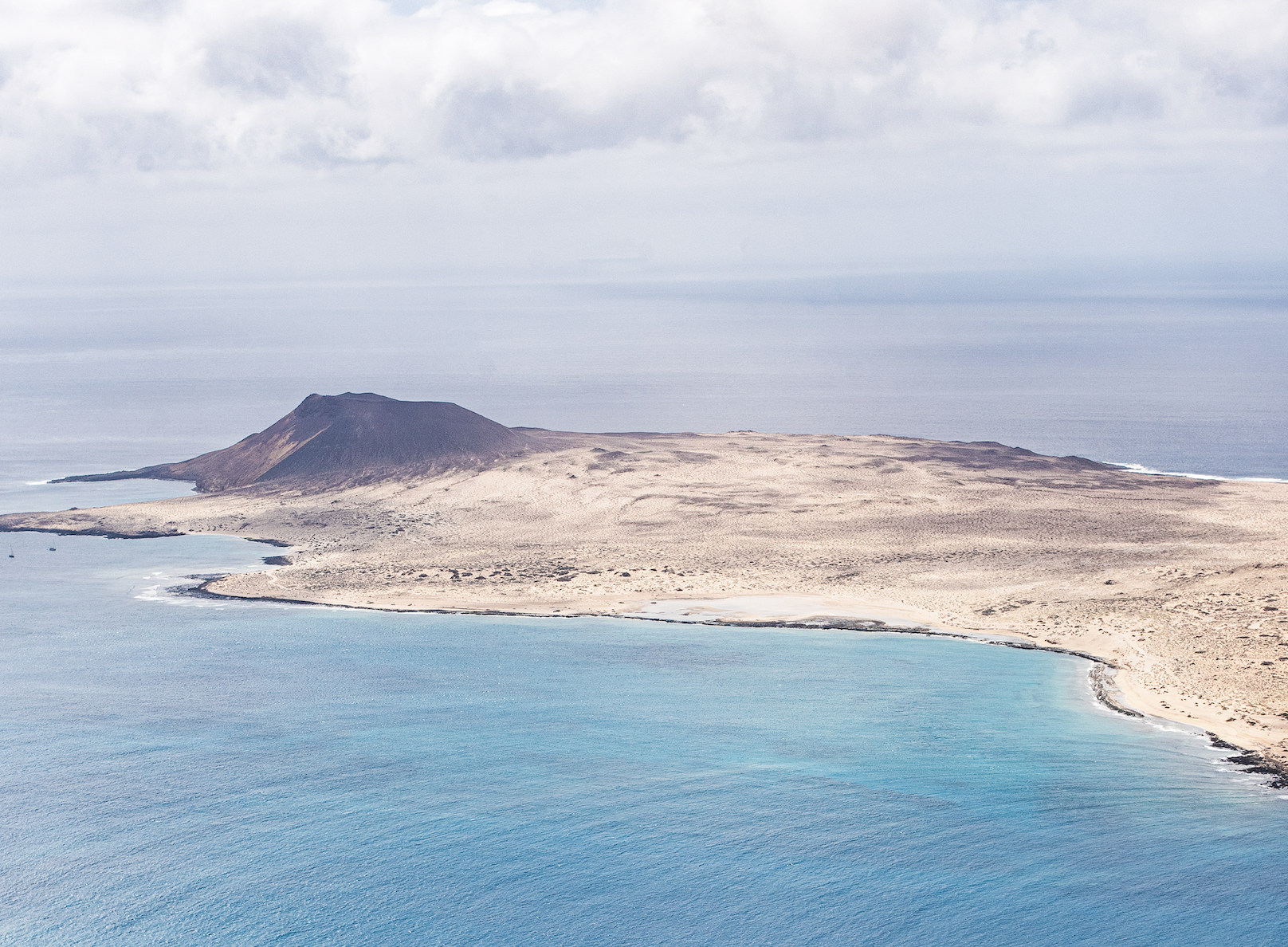
'I can’t explain it, because my head is full of colours, not full of words. It’s a magnetic force that draws you in,’ says guide Carlos Hidalgo Alesson. Born in Cartagena and raised in Madrid, he first came to Lanzarote in the late 1990s and fell in love with the island’s light. He’s hardly the only one. Many initially seek the winter swells of La Santa for surfing or the balmy temperatures of Lanzarote’s eternal spring, and find it hard to leave this fascinating island, the second oldest of the Canaries. One of the most notable visitors was Portuguese Nobel laureate Jose Saramago, who spent his final 18 years in Lanzarote and repeatedly stated that the island’s harsh beauty profoundly influenced his literary work.
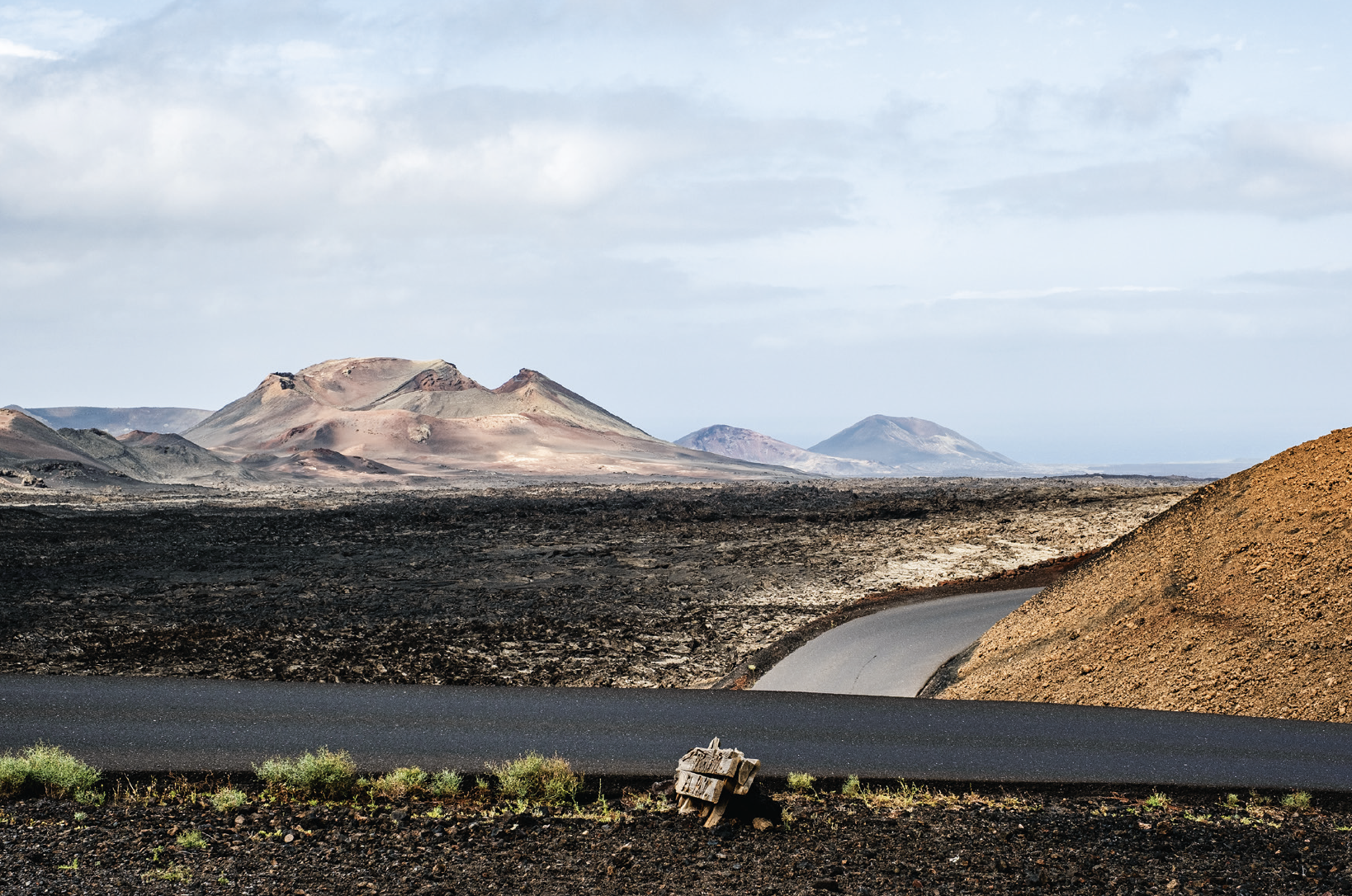
Continuously shaped by waves of volcanic eruptions ever since its emergence from the sea 15 million years ago, Lanzarote’s landscape is nothing short of dramatic, with moon-like lava fields, rugged volcanic rocks and shiny black ash. Yet there’s another, newer reason that attracts visitors: the food scene. Until a few years ago, the island’s culinary landscape was limited to beachside eateries serving the daily catch, and teleclubs – social institutions born in the 1960s, popular with locals and known for affordable, traditional fare. Today, local and foreign chefs alike celebrate Canarian ingredients in elaborate tasting menus and pair them with Lanzarotean wines from grapes grown in the black volcanic ash. Which means a journey through Lanzarote’s gourmet revolution is a fascinating one, whether watching chef Rubén Cuesta peel enormous red La Santa prawns at Lanzarote’s first Michelin-starred restaurant, Kamezí, or breakfasting on a local finca’s goat’s yoghurt and prickly pear jam.
‘I discovered Lanzarote when living in London: cheap flights,’ says Víctor Valverde, an energetic Spanish-born chef, who had cooked in San Sebastián and Madrid before a stint in London. ‘I fell in love with the work of César Manrique: how he understood the island, how he developed the land.’ The visual legacy of the artist, sculptor and architect – the world’s most celebrated Lanzaroteño – oozes from every corner on the island.
He developed a vision for sustainable development during Lanzarote’s early tourism awakening of the 1960s, and it is owed to him that no gargantuan hotel blocks flank the coast. ‘His style is inimitable: smooth, round, no sharp edges, the use of local materials, local flora. He wasn’t against tourism, but against mass tourism,’ says Carlos. The island is known for design-led, Manrique-inspired boutique hotels, and Victor’s restaurant is located in one of the best, a 17th-century manor house lauded by the artist as an outstanding example of Canarian architecture,nestled in a quiet street of the island’s former capital, Teguise.
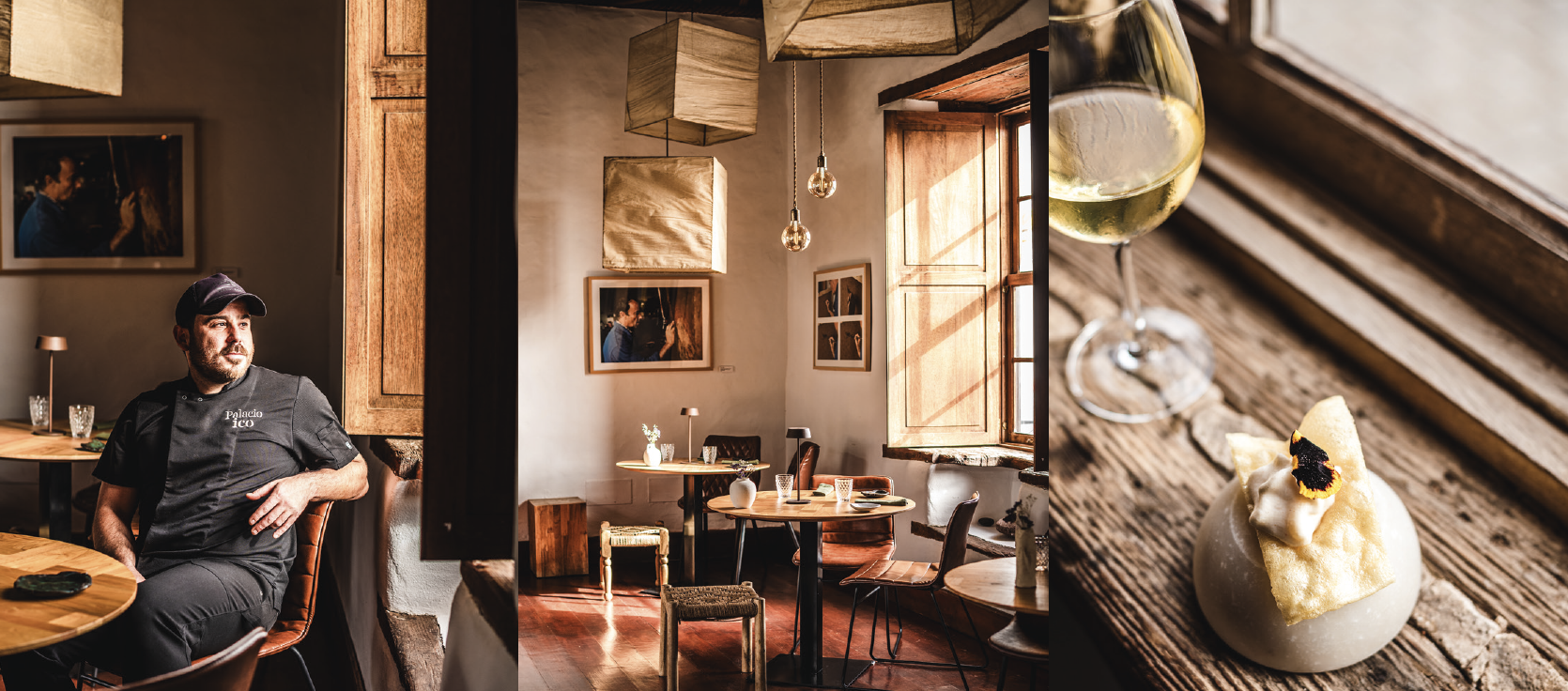
Palacio Ico takes its name from the legendary princess, mother of the last king of the Majo people to rule the island before the
Spanish conquest of the 15th century. The Michelin-recommended restaurant takes diners on a journey across the island’s produce and history. Victor’s tasting menu – served on handmade ceramic ware from Teguise, rough edges and lava-like glaze evoking the volcanic landscape – starts with a buttery salmon smoked in Uga, a small wine-producing village in the south. It ends with sweet, airy mousse made with gofio, fine cornflour that dates back to the Majos, Lanzarote’s first inhabitants, who migrated from North Africa centuries before the Spaniards. Victor sources his ingredients from farms and boats that deliver straight to his kitchen. ‘As local production is minimal, it makes our produce very exclusive,’ Victor says. ‘Minerals from the volcanic soil give our vegetables a unique taste. Local batata, one of the traditional crops, is different from anything I’ve tasted elsewhere. It’s because the crops are covered in el jable, salty sand brought with the wind from the ocean. You can taste the sea salt in our sweet potatoes.’
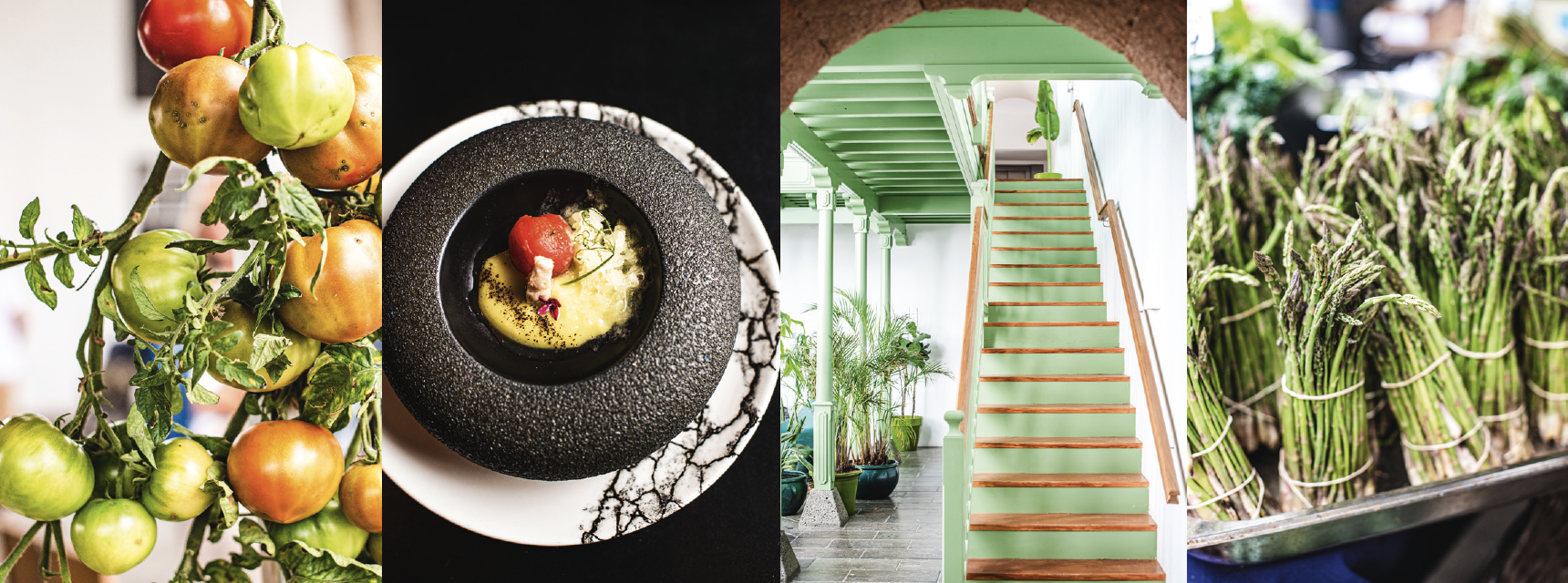
These, along with small yellow Canarian papas and a variety of squashes used for potajes, hearty local stews, are Lanzarote’s most emblematic crops. They need very little water to thrive. ‘We belong to Spain, but this is Africa,’ Carlos explains, passing the arid mounds of black and rusty sands on the way from the island’s former capital to the current one. Just 125km off the coast of Africa, Lanzarote gets around 12cm of rain a year, which is comparable with the Sahara Desert. ‘We don’t have many products, but the ones we do – Canarian potatoes from Los Valles, or the sweet, juicy tomatoes from Tinajo – are truly excellent,’ chef Orlando Ortega says. Born in Arrecife and trained at El Bulli, Orlando gives traditional Canarian ingredients inventive makeovers at his minimalist restaurant Lilium, located in the swish marina, not too far from the commercial port whose prosperity made Arrecife the island’s capital in 1852. ‘We have long traditions of making wonderful goat’s cheese. Goat is one of our traditional meats, as well as rabbit and the famous Canarian black pork. Some of our best produce comes from the sea: octopus, prawns, red tuna, parrotfish, cherne, even sea salt. I only use sea salt from Janubio,’ he says. Once a major export – at the industry’s height there were 26 salinas in Lanzarote – the prized sea salt is still extracted on Lanzarote’s dramatic Lava Coast. Orlando uses the salt from Salinas de Janubio to make dehydrated tomates arrugados, a play on the famous dish of wrinkled potatoes, which he pairs with prickly pear sorbet and goat’s curd. For Orlando, reinvention feels like a necessity: ‘As an island, we come from a history of famine. Reinventing is in our blood,’ he says.
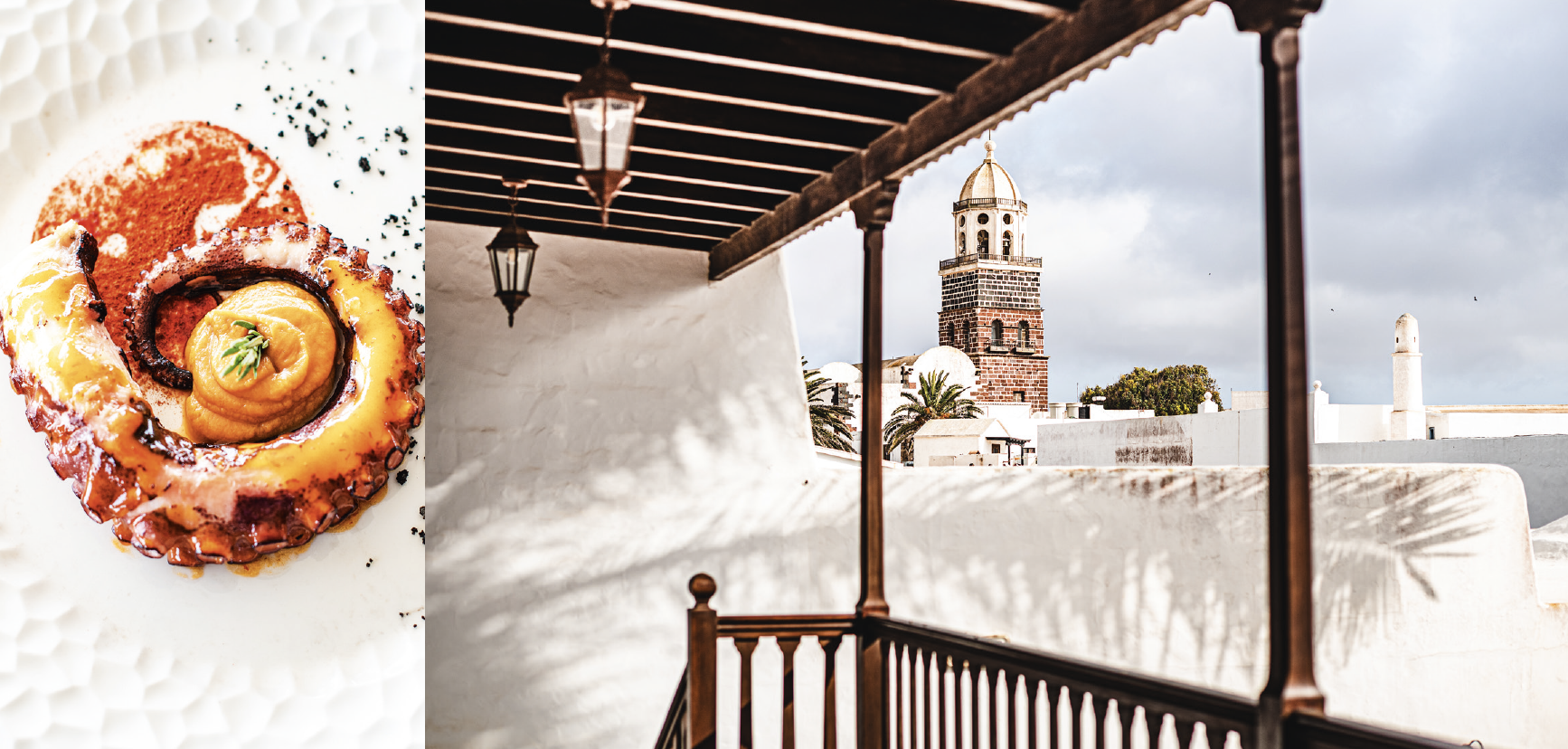
Over the centuries, droughts and volcanic eruptions have brought periods of famine, and the island’s most challenging reinvention followed one of the greatest volcanic cataclysms in recorded history. A series of eruptions hit Lanzarote between 1730 and 1736, destroying towns and burying almost a quarter of the island under a blanket of black volcanic ash. ‘People thought it was the end of the world,’ says Carlos. Many fled to the Americas, but those who stayed discovered fertile soil under the thick ash.
‘It’s a miracle to be able to grow wine in these conditions, with so little water. We owe it to the eruptions,’ says Elena Coticelli, originally from Italy, who came to the island eight years ago to surf. She now works at 250-year-old El Grifo, the oldest vineyard in the Canary Islands, in La Geria, Lanzarote’s wine country. Its protected landscape is dotted with bodegas surrounded by fields of gritty black ash, lava mountains looming in the distance. Each vine is planted into a separate, conical hollow, flanked by a zoco, a semi-circular wall built with lava stones.
‘The pitches started as an attempt to reach the fertile soil below the ash,’ says Elena. ‘They protect plants from the sun and the trade winds – which are a little annoying but necessary for our wine.’ With no fresh water sources on the island and no irrigation systems in place, Lanzarote winemakers rely on moisture brought by the winds. ‘The volcanic ash, picon, captures and traps that moisture.’ Without picon, such widespread cultivation would be impossible. But it’s still not easy. ‘We’re talking about heroic viniculture: it’s challenging, laborious and the production is very low,’ says Elena, pouring a chilled malvasia that is complex, fruity, mineral and very much worth the effort. Native varieties are well adapted to harsh conditions and La Geria is mostly planted with malvasía volcánica, listán negro, diego or moscatel de Alejandría, which is collected towards the end of the harvest and used to produce deeply aromatic dessert wines.
‘Can you imagine hiking up here, collecting grapes by hand and then walking back down with a 15kg crate on your shoulders?’ says Marta Labanda, leading the way up a volcanic hill a few miles from Bodega El Grifo. Best not to: the gritty picon makes each step on the steep hill perilous and the blinding sun and constant strong wind would certainly not help if you were loaded down. Marta’s wine project, Titerok-Akaet, recuperates abandoned vineyards and this one in Barranco de Obispo was one of the first vineyards established on the island after the Timanfaya eruption.
Marta, originally from La Rioja, and her life-and-wine partner, Juan Daniel Ramírez from Gran Canaria, were both captivated by Lanzarote’s unique varietal heritage and quickly learnt about the challenges of growing wine on the island: lack of water, constant wind, very low production. ‘It’s like trying to make wine on the moon,’ she says. ‘It’s hard work and it’s difficult to make a profit, but Lanzarotean wines are unique: distinctly volcanic, mineral and a little salty because of the sea salt brought with the wind. All our white wines are skin-fermented, which extends the contact with grape skins that have accumulated the salt. These wines are great for gastronomic pairings as the saltiness brings out other flavours.’
Sommeliers agree with Marta, as chilled bottles of local volcanic whites are a popular pairing. ‘Wine talk should be pleasant, but in Lanzarote, it’s all about salt, grit and sulphur,’ Isaac Groba laughs, offering a taste of Chupadero, grown on a volcano of the same name. ‘It’s listán blanco, a variety that grabs a lot of flavour from the soil. If you ask me, it smells like a volcano.’ That may not sound very inviting, but it’s easy to enjoy its complex volcanic aroma, with the slightest hint of sulphur. It pairs well with lightly cured cherne (stone bass), one of the most popular local fish. ‘It can be mistreated by being overcooked, but we believe there’s more to it and want to serve it in the purest form.’
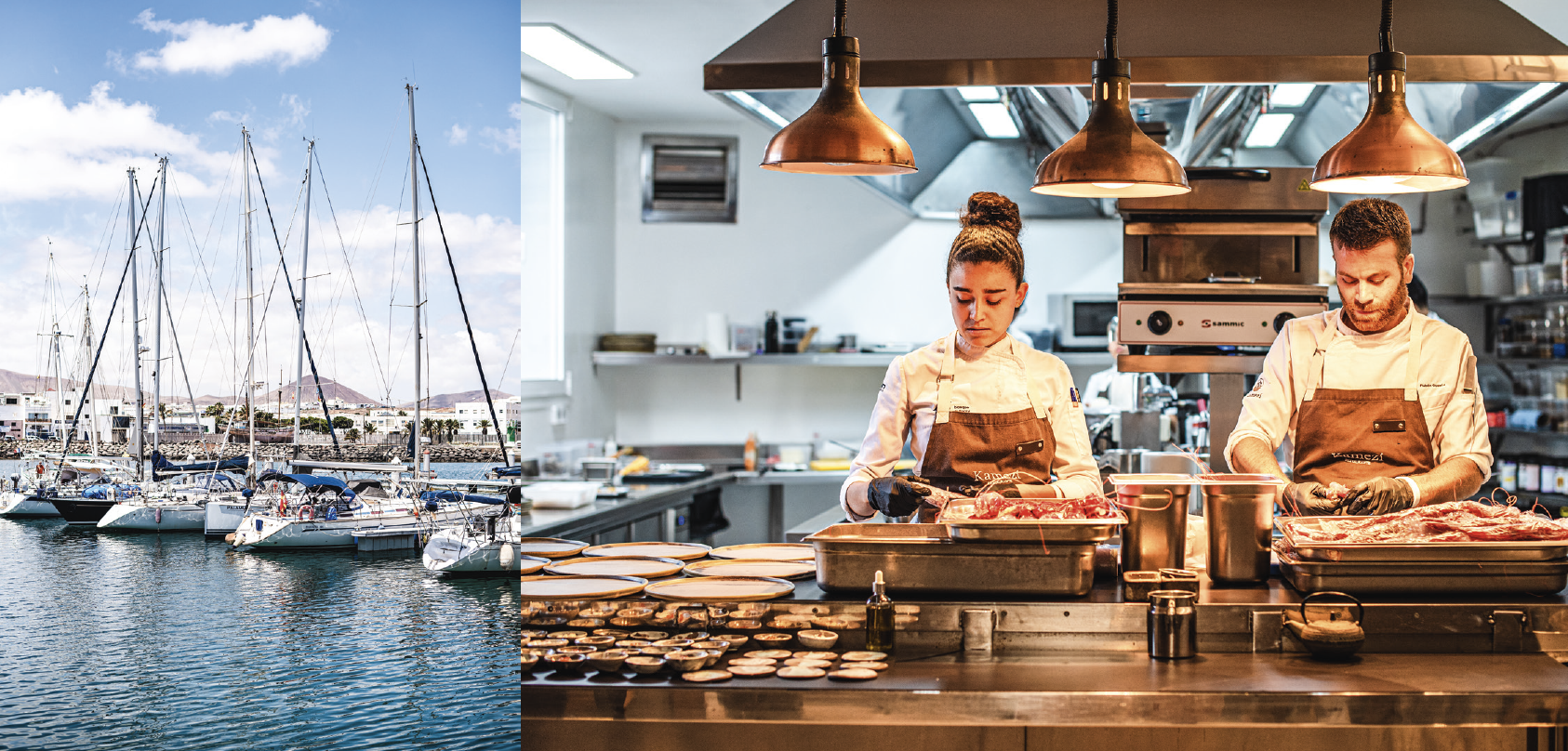
Here, tiny does not mean limited. The kitchen at La Tasquita may be smaller than some of the ensuite bathrooms at nearby César Lanzarote hotel, but it produces some of the best meals to be had on the island, prepared by just two people: head chef Eva Pérez Prat and young chef Isaac, from Tias. La Tasquita is a brainchild of Juanjo López Bedmar, a celebrated Madrid chef known for his radical minimalism. In the dimly lit room, there are only six covers. ‘It’s such an intimate setting and we’ve seen it all,’ says Eva. ‘People either making friends or not speaking at all.’ It’s the produce that demands attention, though. The sweet, small gambas prawns from La Santa have the most tender, buttery-soft texture. (‘It’s a disaster when we’re preparing them in the kitchen,’ says Isaac. ‘Every second one goes in the mouth – they’re like sweets.’) The gambas are provided by the Oliveros family, renowned as the only ones fishing for La Santa carabinero – the treasured crimson prawns, each bigger than a hand, found in the deep, choppy waters of the north. No local tasting menu is complete without the delicacy.
A mouthful of creamy avocado mousse topped with strawberries – both elements grown in the hotel’s garden – link back to César Manrique’s legacy. The island is scattered with his intervenciones, artistic projects that bridge design, architecture and art – a panoramic restaurant in the heart of Timanfaya National Park, a chic house built in an old volcanic quarry, a breathtaking viewpoint in a former gun emplacement. In creating them, he followed the island’s natural landscape. It seems local chefs are letting the produce take the lead too, with similarly spectacular results.
Where to stay
Buenavista Lanzarote Five design-led suites created in a former bodega warehouse blend into the volcanic wine-growing landscape of La Geria. Wonderfully secluded, each suite is a serene haven of polished concrete, antique furniture and stunning views. A delicious breakfast is delivered to the rooms, and it includes local products like Uga smoked salmon, eggs from the family’s own hens and homemade marmalades. Doubles from £284, including breakfast. Carr Conil 22, La Asomada, +34 606 935753, buenavistalanzarote.es
César Lanzarote Housed in a former home of César Manrique, this impressive 19th-century whitewashed finca is surrounded by vines and volcanoes. A typical Canarian courtyard opens up to a pool deck that offers views of the mountains and the neighbouring island of Fuerteventura; each of the 20 rooms overlooks dramatic landscape. Breakfast is excellent, with fresh products from the hotel’s own garden, homemade jams, freshly baked bread from Kamezí Restaurant, as well as goat’s cheese and yoghurt from nearby Finca de Uga. Doubles from £503, including breakfast (minimum 2 nights). Cam Barranco Por la Vegueta, La Asomada, +34 928 877676, annuahotels.com
Lava Beach Hotel With an excellent location on the island’s south-west coast, this hotel has direct access to the long stretch of fine, golden sand on Matagorda Beach. The best rooms come with terraces that offer views of the sea behind a lush, black-sand cactus garden, and guests can drift off to sleep to the gentle sound of the waves. There’s a lagoon-size swimming pool with hydrotherapy stations and a tranquil spa with sauna and steam room. The buzzing bars and beachfront restaurants of Puerto del Carmen are a ten minute drive away — or take a pleasant 5km walk along the seaside promenade. Doubles from £177, including breakfast (minimum 3 nights). Marte 6, Tías, +34 928 510596, hotellavabeach.com
Palacio Ico A chic, nine-room boutique hotel located in a 300-year-old heritage manor house in the heart of the island’s tranquil former capital Teguise. It features intricate wooden balconies, 5m-high coffered ceilings, stone walls and a cactus-dotted patio, built within the walls for protection from strong winds. The building has been carefully restored and filled with the work of local artists and craftsmen, creating one of the most stylish getaways on the island. Doubles from £180, including breakfast (minimum 2 nights). Calle el Rayo 2, Teguise, +34 928 59 49 42, hotelpalacioico.com
Travel Information
Lanzarote is the easternmost of the Canary Islands, a Spanish archipelago off the coast of north-western Africa. The official language is Spanish and currency is the Euro. It’s in the same time zone as the UK. Flight time from London to the capital, Arrecife, airport is around four hours 15 minutes. The climate is pleasant all year round, rarely dropping below 17C in winter and usually reaching around 30C in summer.
GETTING THERE
EasyJet fly to Arrecife from London Gatwick and Luton, Edinburgh and regional airports including Birmingham and Manchester. easyjet.com
British Airways fly direct from London Gatwick. jet2.com
Ryanair have regular flight to Arrecife from London Stansted and multiple regional airports. ryanair.com
GETTING AROUND
By road Driving is the best way to explore the island’s bodegas, beaches and back roads. There are plenty of car rental agencies at the airport, in Arrecife and all main tourist resorts. If you decide to travel on public transport, Intercity Bus Lanzarote buses operate all around the island, with a useful app you can download. arrecifebus.com
RESOURCES
Turismo Lanzarote is the official tourism office, with a website full of information to help you plan your trip: what to see, what to do, accommodation options and beaches. turismolanzarote.com
Saborea Lanzarote is a great source of recommendations for restaurants and wider culinary experiences. saborealanzarote.org
Where to eat
Prices are per person for a three-course meal, excluding drinks, unless otherwise stated
Dunas de Famara On the front of Caleta de Famara — most famous surfing beaches, overlooked by the imposing Risco cliffs – Dunas de Famara is well-loved for the unbeatable views from its sunsoaked terrace and the inventive interpretations of local produce. Lanzarotean chef David Diaz Brito serves La Santa carabineros with a mash of local sweet potatoes and tender local baby goat, marinated for 18 hours and then simmered in malvasia. From £43. Calle Chirimoya 13, Famara, +34 928 178477, restaurantedunasdefamara.com
Kamezí Restaurant The first and – so far – only Michelin-starred restaurant on the island, Kamezí has an impressive deli selling local products, as well as its own bakery, which supplies many of the other high-end restaurants. The raw, minimalistic interior of the restaurant provides a stunning background for chef Rubén Cuesta’s tasting menu, deeply rooted in the clear waters and volcanic landscape of Lanzarote. Dishes might include gofio porridge with onion purée, and succulent goat served with fried local cheese and sweet potato, or Canarian almond, lemon-zest and raisin dessert frangollo. 14-course tasting menu £138; wine pairing £69. Calle Monaco 2, Playa Blanca, +34 626 873695, kamezi.restaurant/en
La Bodega de Santiago Brothers Carlos and Carmelo Monzon have been running this award-winning bodega for more than 20 years, implementing ‘kilometre-zero’ principles long before it became fashionable. Located in a 200-year-old whitewashed house, the restaurant is known for its shady garden, built around a massive, 80-year-old fig tree that was planted by Carlos’ and Carmelo’s father. The menu is filled with local delicacies along the lines of zingy parrotfish ceviche with local sweetcorn, and a creamy Basque cheesecake made with three different cheeses, including a light blue, from Finca de Uga. From £50. C Montañas del Fuego 27, Yaiza, +34 928 836204, labodegadesantiago.com
Lilium Run by chef Orlando Ortega with his partner Sandra Guadalupe, the minimalist Lilium is located in Arrecife’s sleek marina. The Arrecife-born chef creates intense flavours with the best of Canarian ingredients: local black pork is vacuum-cooked and topped with sweet banana mousse, and tender prawns from La Santa are mixed with juicy pineapple from the island of El Hierro. From £56. Marina Lanzarote, Arrecife, +34 928 524978, restaurantelilium.com
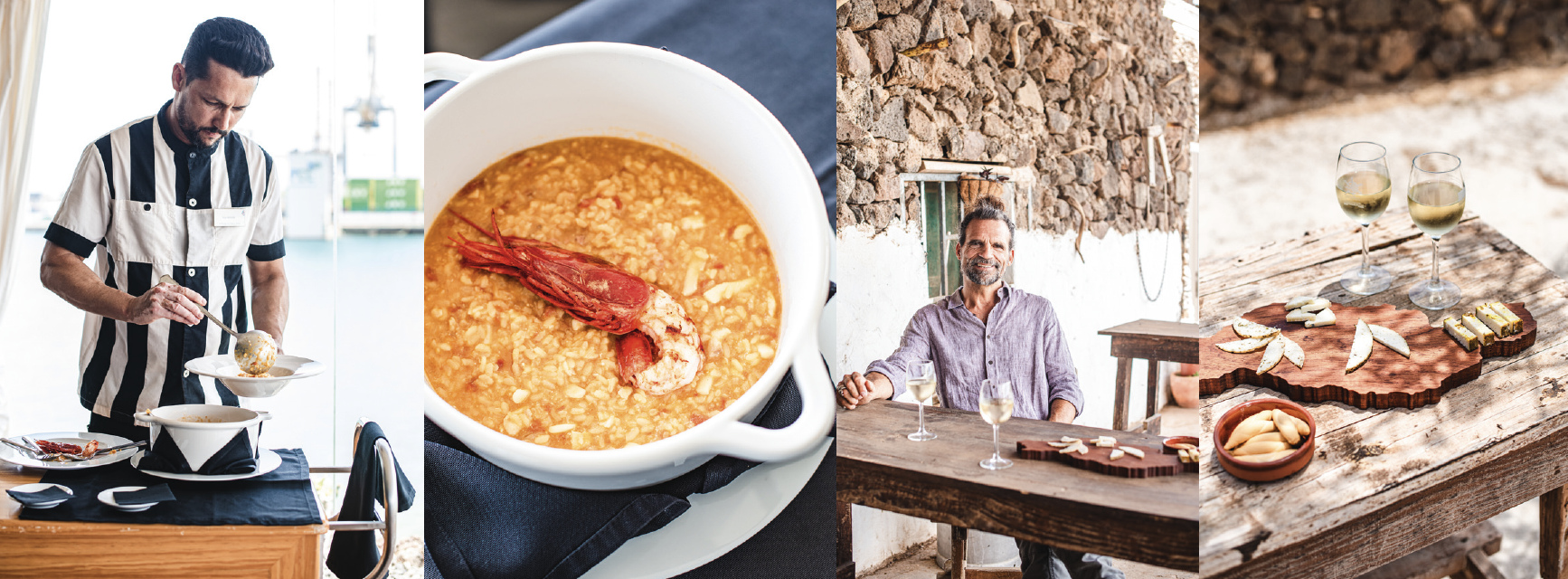
Restaurante Castillo de San José This atmospheric restaurant is housed in an 18th-century military fortress that was built to protect the port of Arrecife. The Castillo was converted into the first contemporary art museum in the Canaries, opening in 1976 after refurbishments directed by César Manrique, and the restaurant within is designed in lava stone and wood, with stunning views of the Bay of Arrecife. Make sure to try arroz caldoso — a creamy, brothy rice served with the delectable carabinero de La Santa – and a dessert of local strawberries flambéed with Cointreau at the tableside, on the menu since the 1990s. From £37. Av de Naos, Arrecife, +34 928 812321, cactlanzarote.com
Tacande Restaurante The artsy village of Haría, nestled in a lush valley where native palm trees grow, is famous for its Saturday craft and produce market. Located on the central pedestrian alley, Tacande gets busy on market days, attracting locals and tourists alike with Canarian fusion. Chef-owner Víctor José Betancort cooks local cherne in tom kha gai sauce and stuffs fried empanadas with slow-cooked goat stew. But the recipe for his caldo millo — a local soup of locally grown corn, chickpeas and Canarian black pork — is a traditional one from his grandmother Cristina. From £36. Plaza del Castillo 5, Haría, +34 928 835117, restaurantetacande.com
Food Glossary
- Bienmesabe
- Literally translating as ‘tastes good to me’, this Spanish dessert made with honey, egg yolk and almonds is very popular across the Canary Islands
- Conejo al Salmorejo
- A succulent dish of rabbit cooked with white wine, vinegar, herbs and spices
- Enyesques
- Canary tapas or appetisers, these typically include papas con mojo potatoes, fried local cheese, gofio escaldado (see below), olives, chorizo and morcilla
- Garbanzada
- A hearty chickpea stew, traditionally cooked with pork ribs
- Gofio escaldado
- Toasted corn flour mixed with fish broth to a purée of hummus-consistency, served with fresh mint and red onion slices for dipping
- Lapas
- An indigenous species of limpet, these shellfish are popular in seaside restaurants, traditionally grilled and served with mojo verde (see below)
- Mojo
- Traditional Canarian sauce. The red version (mojo rojo) is traditionally served with papas arrugadas (see below), and is made with garlic, pimentón and red peppers. Rojo verde consists of garlic, coriander and, occasionally, avocado
- Papas arrugadas
- Small, wrinkled potatoes cooked skin-on in heavily salted water and served with mojo rojo. Traditionally made with papas bonitas, an ancient Andean variety
- Pella de gofio
- Sweet gofio roll with almonds, raisins, honey and spices
- Queso asado
- Grilled or pan-fried cheese, served with a generous drizzle of mojo
Get Premium access to all the latest content online
Subscribe and view full print editions online... Subscribe