
There are places whose symbolic significance transcends geography – distances that belong to our emotional landscape rather than Google Maps. Laos is undoubtedly one of them, especially when seen from the brown-hued water of the Mekong, a sacred artery that has shaped the life, faith and imagination of Southeast Asia for centuries.
Rising on the Tibetan Plateau at 5,700m, the ‘mighty Mekong’ flows for nearly 4,900km through China, Myanmar, Thailand, Laos, Cambodia and Vietnam, carrying the fertile silt that gives its waters that distinctive colour. Buffaloes can be seen bathing in the shallows as golden Buddhas peer down from their hillside perch. Fishermen cast their nets in the morning’s orange glow. Boats of every shape criss-cross the current – long-tails painted in bright colours, wooden barges with thatched bamboo cabins and the occasional speedboat briefly shattering the silence before vanishing into the horizon.
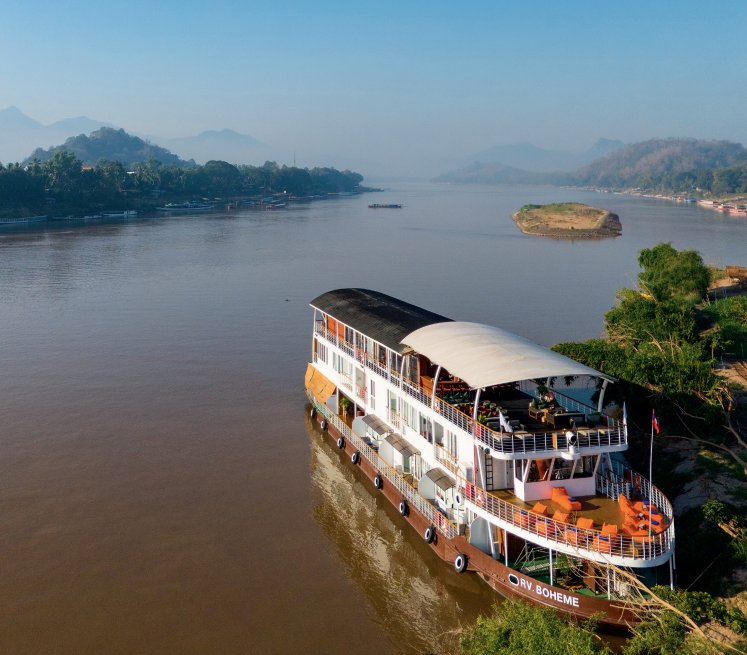
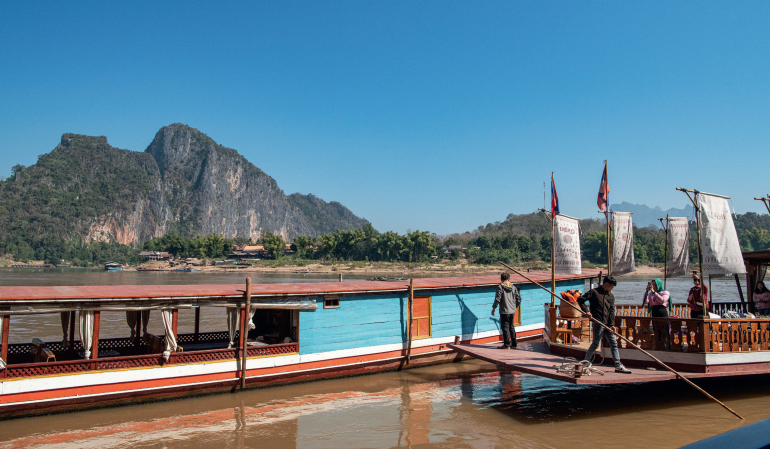
And then there is the new, three-tiered Bohème, the largest vessel ever to cruise Laotian waters: sleek and teakwoodtrimmed, closer to a floating boutique hotel than a ship. Ours is an intimate journey. Bohème welcomes a maximum of 26 guests, tended by a 20-strong crew. Boarding takes place near Vientiane and disembarkation in Luang Prabang – it’s a 300km trip stretched into a five-night, six-day voyage that unspools at the pace of the current. In a country now linked north to China by high-speed rail, travelling by river feels like an act of quiet, slow rebellion.
Before departure, the traditional Baci ceremony sets the pace. An elder chants blessings as we gather around a tray adorned with offerings. Each has a meaning: hard-boiled eggs symbolising fertility and new beginnings; sweet rice parcels wrapped in banana leaves for unity and belonging; a bottle of rice whisky for purification; a whole boiled chicken, head and feet intact, for divination; fruits and flowers completing the circle.
Cotton strings are tied around each guest’s wrist – gentle knots that are meant to hold luck in place. In Laos, a river journey is still considered something slightly adventurous, a lingering echo of old tales, fragile wooden boats and beliefs in a world inhabited by spirits. The Baci has a way of bridging those realms, integrating the sacred and the human.
Fruit-infused drinks are passed around; laughter and introductions follow. By the time the chanting fades, the ritual has already worked its quiet magic. The ice is broken and conversations loosen at the lounge bar. Two decks below, the crew cast off the ropes and the journey begins with the spiced sweetness of a Lao mojito – bright with ginger, softened with honey – and the evening glow washing over the riverbanks.
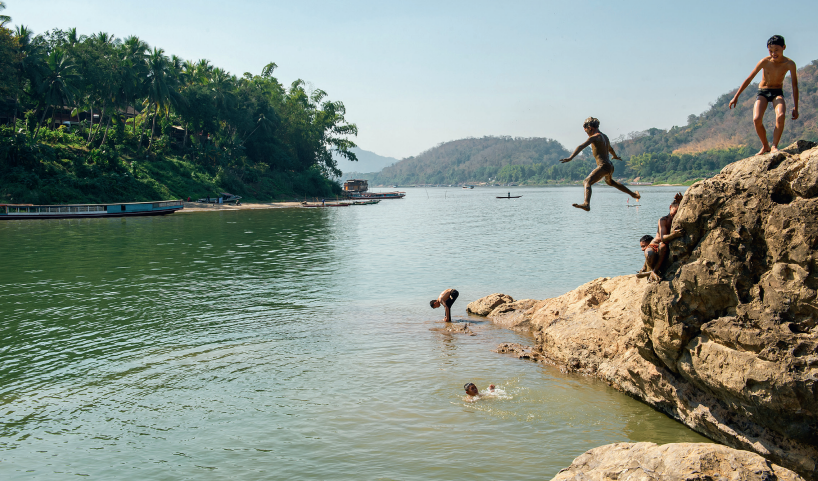
From our suite balcony, the world drifts by in soft focus: jadegreen mountains, steep slopes, sandbanks and limestone outcrops. On the riverbanks, life unfolds in vignettes as you pass by villagers washing clothes, gold-panners bent over sieves and children playing in the shallows. The Mekong traces a hidden geography of hamlets reached by footpaths carved into the hillsides. Gliding along its waters means becoming part of the picture and yet remaining slightly apart.
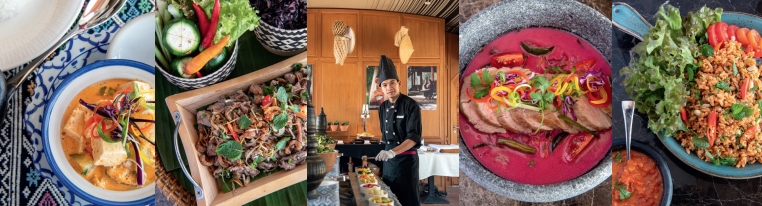
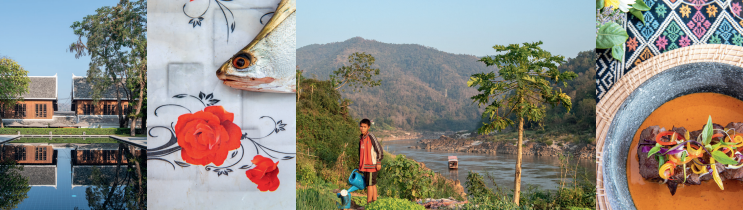
Food is a way to bridge that distance. Onboard meals are enjoyed unhurriedly: wooden bowls filled with fragrant broths, banana-leaf parcels, trays of green papaya salad bursting with lime and chilli. What makes these flavours distinctly Laotian is their layering of fermentation, fresh herbs and bold, earthy saltiness. Ingredients such as padaek, a thick fermented freshwater fish paste, often replace or accompany fish sauce; fresh herbs are not mere garnish, but an essential backbone. Coconut milk is used sparingly, sweetness rarely dominates. Here, flavours lean bright, sour, pungent and herbal, meant to be shared, eaten with sticky rice in hand. In this suspended space between river and shore, food becomes a way of tasting the country without leaving the deck; of closing, if only briefly, the distance between observer and observed.
Some dishes are a veritable gateway to the country’s heritage – like the lhon som moo, pork stewed with vegetables and fish roe fermented in coconut milk, paired with grilled pork and steamed rice, served in visually striking pink sauce. ‘This was once served exclusively in the kitchens of the Royal Palace,’ explains onboard chef Vongpasith ‘Dam’ Khunsavath. ‘Every bite carries the aromas and textures of the king’s table.’
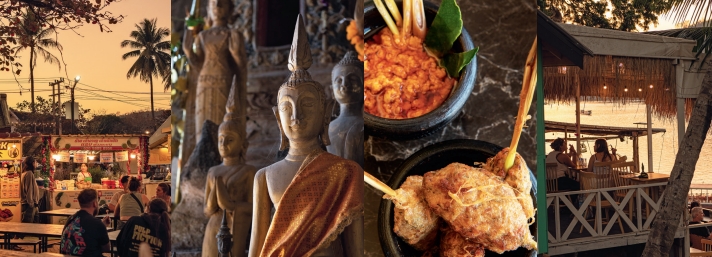
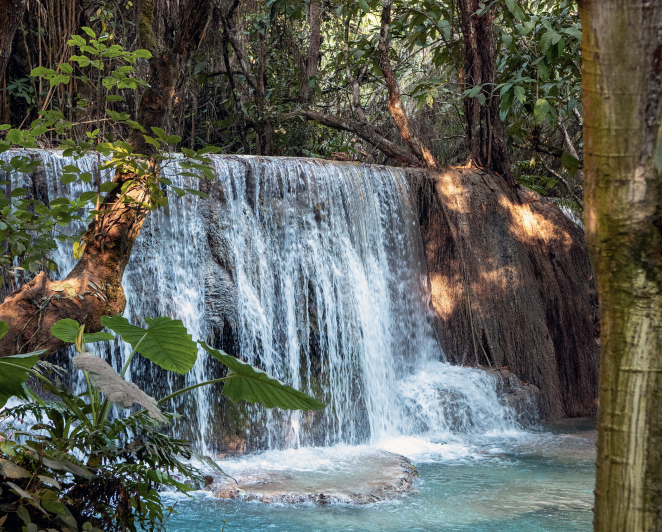
Between stretches of calm navigation, excursions reveal different faces of Laos, from the turquoise pools of the Kuang Si Falls to the small village of Ban Xang Khong. Here, the rhythmic clatter of wooden looms fills the air as women weave shimmering silk scarves and craft delicate sheets of saa paper from mulberry bark, their courtyards blooming with colour and texture.
Further north, the Pak Ou Caves rise dramatically from limestone cliffs overlooking the Mekong – a sacred site where thousands of Buddha statues watch over the current. Reached by a smaller boat departing from Bohème, the approach to the caves is cinematic: monks in saffron robes, fishermen at work and the echo of chants drifting from inside the rock.
Sometimes stepping ashore brings unexpected surprises. Such is the case with Laos Buffalo Dairy, the country’s first buffalo dairy. Founded in 2016 by Australians Susan Martin and Steven McWhirter, together with American chef Rachel O’Shea, it began as a brave midlife experiment: in a country where buffaloes are traditionally seen as working animals or ‘family savings accounts’ to be sold in times of need, the idea of milking them was quite revolutionary. The concept is disarmingly simple. Farmers lease their pregnant buffaloes to the dairy, where the animals receive veterinary care, vaccinations and proper nutrition. After calving, the milk is used to produce mozzarella, ricotta, yoghurt and ice cream, which are supplied to hotels, restaurants and shops across the country. So families earn extra income, animals live healthier lives, and a new market is quietly taking shape.
The project goes beyond food, though. In a country where child malnutrition remains widespread, buffalo milk – naturally rich in protein and calcium, low in cholesterol and sodium – is a quiet game-changer. The dairy also runs school nutrition programmes, trains farmers in sustainable practices and employs local staff, many of them women, offering steady work where other opportunities can be scarce.
Visitors can join short tours, bottle-feed calves or simply watch the herds grazing in the light of late afternoon. The visit ends, predictably, with a tasting: fresh, subtly tangy cheese and cool, creamy gelato – flavours that feel both familiar and new. What began as a whimsical idea, fuelled by determination and muddy boots, has become a small revolution of its own, proof that along the Mekong even the most improbable dreams can take root.
Luang Prabang, the final destination of our slow journey, welcomes us with its distinctive honeyed pace – a jumble of French colonial villas and gilded temples, with frothy patches of pink bougainvillea filling the space in between and frangipani flowers scattered on the pavement.
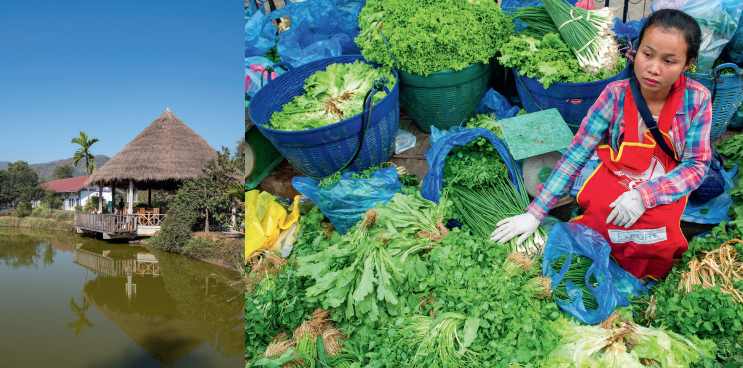
Arriving here, in the country’s spiritual heart, always feels a little mystical, even for visitors who have been many times. At Luang Prabang’s morning markets, fruit stalls brim with flavours that feel familiar yet different: tart, juicy Nambak oranges; purple passion fruit with fragrant orange pulp; the sweet softness of kluay hom bananas; longan beads to be cracked open with thumb and forefinger; and crimson-haired rambutan, spilling from baskets in generous heaps. The colours and aromas mirror the country’s cuisine: subtle, balanced, never fiery, always layered with grace.
Come evening, the scene transforms again: noodle soups now simmer in iron pots, paper lanterns sway above Sisavangvong Road and the scent of grilled lemongrass chicken drifts through the evening. Sunset is pure enchantment, better enjoyed from one of the terraces along the river, perhaps sipping an ice-cold Beerlao before walking the short distance to the Avani+ Luang Prabang hotel, housed in a former French barracks. It’s a graceful reminder of the city’s colonial past and its quiet embrace of tourism, where the old parade ground has been transformed into a serene swimming pool.
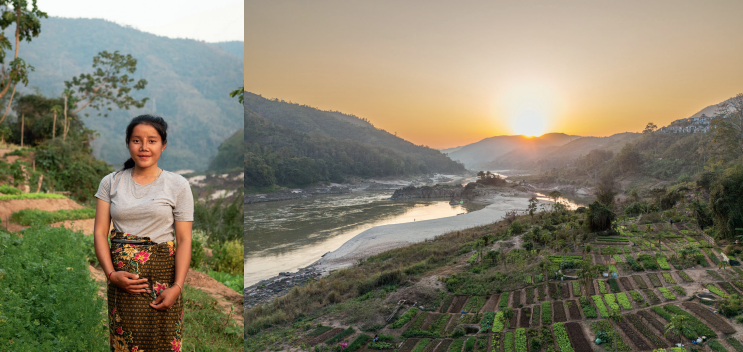
There, on one unforgettable evening, we had the pleasure of tasting the food of the late chef Ponpailin ‘Noi’ Kaewduangdee, the beloved founder of Vientiane’s Doi Ka Noi restaurant and author of A Child of the Rice Fields. Watching Noi cook felt like witnessing a living archive of Lao identity – every gesture deliberate and every flavour rooted in memory. Her food spoke of family rituals and local markets, of the generosity of a people who, before feeding themselves, feed their guests.
That sense of generosity becomes even more evident the morning after. At dawn, the city slows to silence for the Tak Bat, the daily almsgiving ceremony. Kneeling on woven mats in the chill of early morning, locals and visitors wait for the line of saffron-robed monks to appear, steel bowls glinting in the halflight. However touristic the ritual may seem, it retains a purity that moves even the most distracted traveller – a brief, wordless exchange of nourishment and gratitude.
This article first appeared in the March 2026 issue of Food and Travel Magazine. To subscribe, click here.
Where to stay
Amari Vientiane This contemporary, large-scale hotel has 248 rooms and suites, located along the banks of the Mekong and only a short walk from the night market. Rooms come with views of either the city or the river, and facilities include an infinity pool overlooking the river, a restaurant serving international and regional dishes, and a spa for downtime between outings. Efficient, modern and well located for a brief stay in the capital. Doubles from £74, including breakfast. Chaofa Ngum Road, Wat Chan Village, Chanthabuly District, Vientiane, +856 21 618123, amari.com/vientiane
Avani+ Luang Prabang Right in the heart of Luang Prabang’s Unescolisted Old Town, next to the night market, this hotel provides a quiet sanctuary from all the bustle. Set within a restored former French military barracks, colonial buildings frame a leafy courtyard and pool, while the 53 rooms and suites blend heritage details with contemporary comfort: think teak floors, wooden furnishings and a calm, lived-in elegance. In-house restaurant Main Street Bar & Grill serves a mix of local Lao flavours and international classics, while the poolside bar is a natural pause point to linger after a day spent exploring temples and markets. Doubles from £175, including breakfast. Setthathirath Road, Hua Xieng Village, Luang Prabang, +856 71 262333, avanihotels.com
Travel Information
THE CRUISE AT A GLANCE
Launched in December 2024, Bohème is the newest vessel in the Mekong Kingdoms fleet – and the largest ever to cruise Laotian waters. With just 13 suites spread over three decks, the 50m cruiser feels both intimate and indulgent. All accommodations feature private balconies from which to view the ever-changing landscape, but the standout is the Royal Suite: 60sq m of space with wraparound windows, a freestanding bathtub and the feel of a floating apartment.
The five-night journey runs between Vientiane and Luang Prabang (or vice versa), blending river time with curated stops. You can expect to visit craft villages such as Ban Xang Khong; the Pak Ou Caves, home to thousands of Buddha statues; the cascades of Kuang Si; and the Xayaboury Elephant Conservation Centre.
Prices start at £2,525pp, including excursions, meals on board and selected drinks, and excluding international flights, private transfers, spa treatments and gratuities. Guests staying in the Royal Suite also enjoy a 60-minute spa treatment and full laundry service.
The last five-night departure of the current season is 29 March, with cruises resuming in October and continuing through to the end of March 2027. Alternatively, from April to mid-July, you can book on to a three-night Luang Prabang–Xayaboury–Luang Prabang itinerary from £1,715pp. mekongkingdoms.com
Where to eat
Food Glossary
- Kluay hom banana
- A particularly sweet, fragrant variety, with a soft texture when ripe; popular across Laos and Thailand
- Laab/larb
- A boldly seasoned Lao meat salad made with minced meat, fresh herbs and toasted ground rice, brightened with lime and padaek (see below). Often regarded as Laos’ unofficial national dish, it’s typically eaten with sticky rice or wrapped in lettuce. The ingredients and variations of the basic recipe are endless
- Lhon som moo
- A traditional Luang Prabang dish once served in the Royal Palace: pork stewed with vegetables and fermented fish roe in coconut milk, accompanied by grilled pork and steamed rice
- Longan
- Commonly known as ‘dragon’s eye’, a juicy tropical fruit related to the lychee, with translucent flesh and a sweet flavour
- Nambak orange
- An organically grown variety from Houay Hit village known for its distinctive tart-sweet balance
- Padaek
- A thick, pungent Laotian fermented fish sauce made from freshwater fish, essential in many Lao dishes
- Rambutan
- A tropical fruit with soft spines and bright red or yellow skin; its white flesh is similar to lychee but typically sweeter
Get Premium access to all the latest content online
Subscribe and view full print editions online... Subscribe