
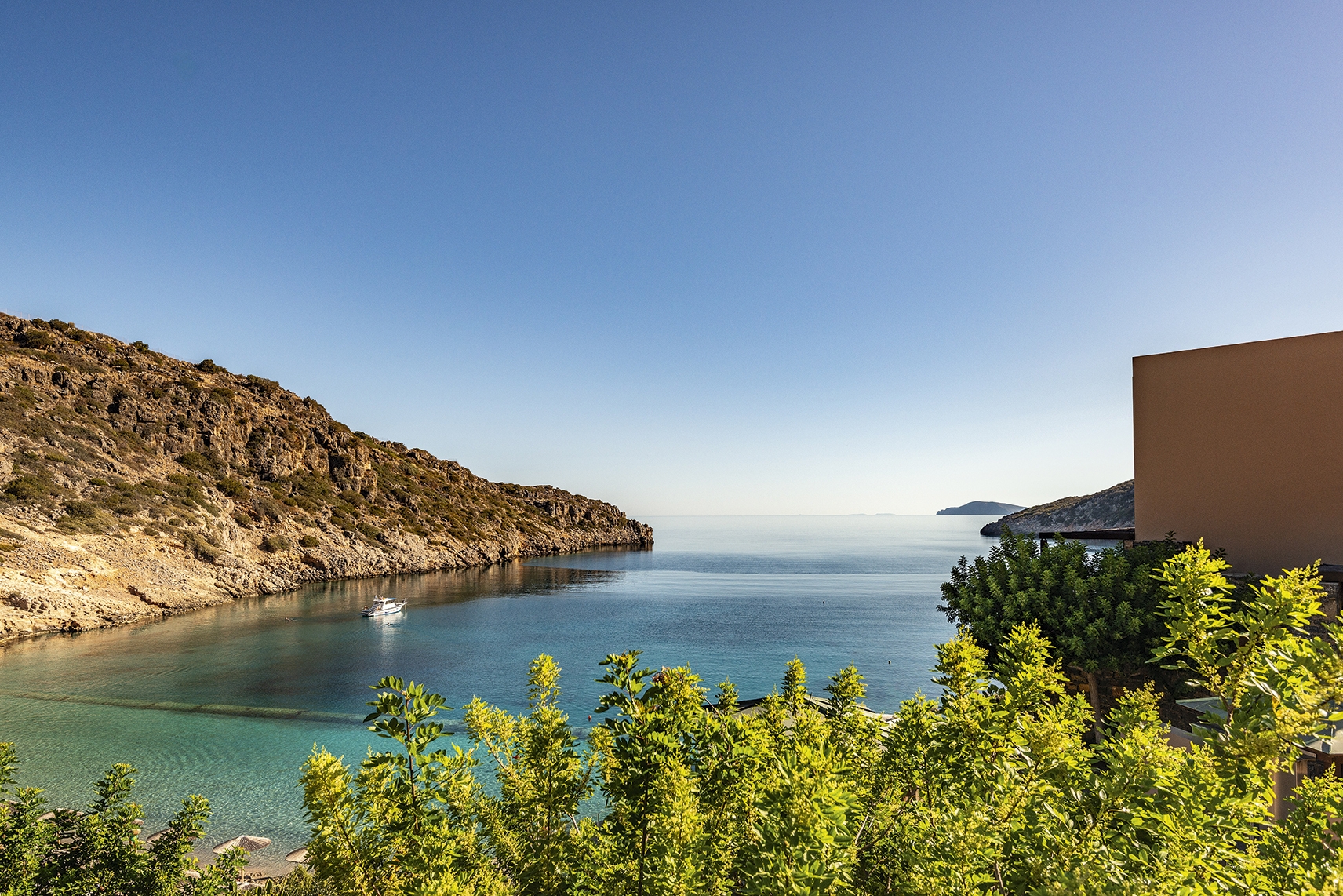
From the eastern Crete village of Zakros, a beautifully scenic, narrow road winds its way down a sloping scrub-covered mountainside to Kato Zakros, a cluster of low, white-washed houses beside a sand-and-pebble beach lapped by the azure waters of the Mediterranean Sea. Kato means ’below’ in Greek, and describes a lowland settlement connected by a sense of community to a village in the hills above; villages were built in the mountain foothills as protection from pirates, who were a scourge on this part of the island until two centuries ago.
Three millennia earlier, the local people – highly sophisticated, sea-faring Minoans – had no such worries. They built a prosperous, paved town here and a magnificent 150-room palace, one of four unearthed so far in Crete. In the palace ruins, excavators discovered remnants of an exquisite rock-crystal vase; it was in more than 1,000 pieces and took eight years to piece together. Could those creative, artistic Minoans have made fine food too?
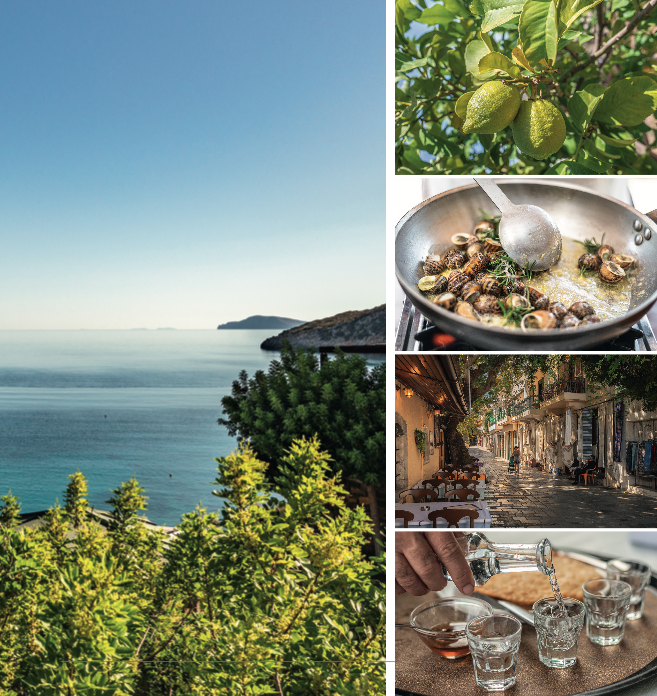
’They certainly could,’ says Kostas Spetsotakis, co-owner with his son, Christos, of Nostos (meaning ’a desire to be back home’), a welcoming beachside taverna in Kato Zakros. ’We have strong, minerally soil in this valley. Fig, almond and olive trees thrive, cucumbers are crisp and sweet, fava beans abundant.’ All these good foods were known to the Minoans. ’Fishermen pull up their boats in the bay, there’s small game, herbs and horta (wild greens) in the mountains surrounding us, and shepherds provide us with cheeses, yoghurt and meat from their sheep and goats,’ he adds. Kostas left Kato Zakros for town life when he was 12 years old, returning years later to the family taverna to cook the delicious dishes he had grown up with: slow roasts in a wood-burning oven – lamb with potatoes, goat with wild artichokes – and rabbit stifado, or stew, with herbs and small onions, horta and barley bread, all made with the family’s own olive oil.
Above Kato Zakros, fourth-generation olive farmer Christina Chrysoula is, in her modern way, as ground-breaking as those early Minoan farmers. ’I connect with other women-farmers around the world who value the landscape they work with,’ Christina explains. ’There’s an excellent terroir here that we need to protect. We have a fine climate for growing olives – long, hot summers, mild winters with a little rainfall – and well-structured soil able to hold water; and we make our own compost. Climate change is affecting us, though,’ she adds. ’For the past few years, we’ve had less rain than usual.’
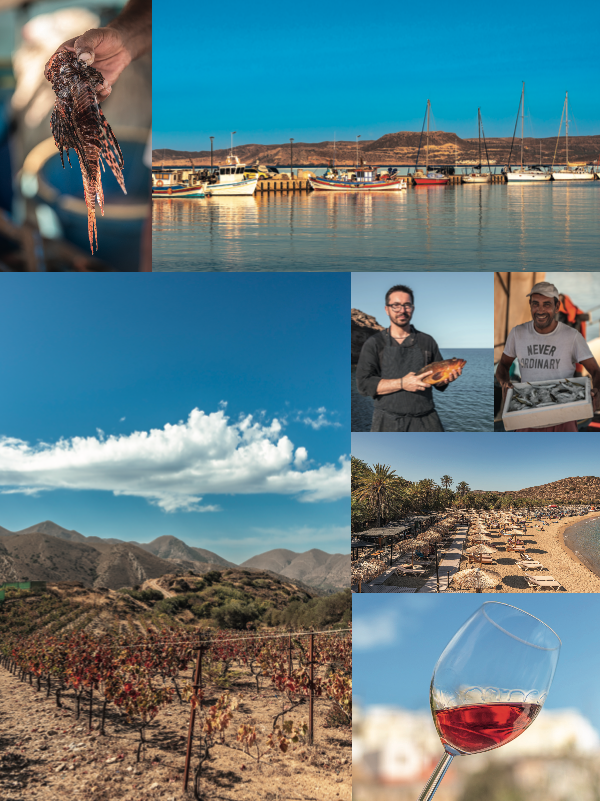
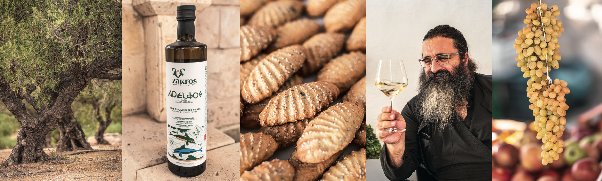
In Crete, an olive farm is measured by the number of its trees, not the area it covers. ’We have 1,200 Koroneiki olive trees, some 100 years old,’ she says. ’We gather our olives by hand, starting in November, just as their colour turns from green to dark purple. The harvest can take us a month or more.’ Koroneiki olives are small but contain a high percentage of oil, and this bitter-green, aromatic extra virgin olive oil has PDO (protected designation of origin) status.
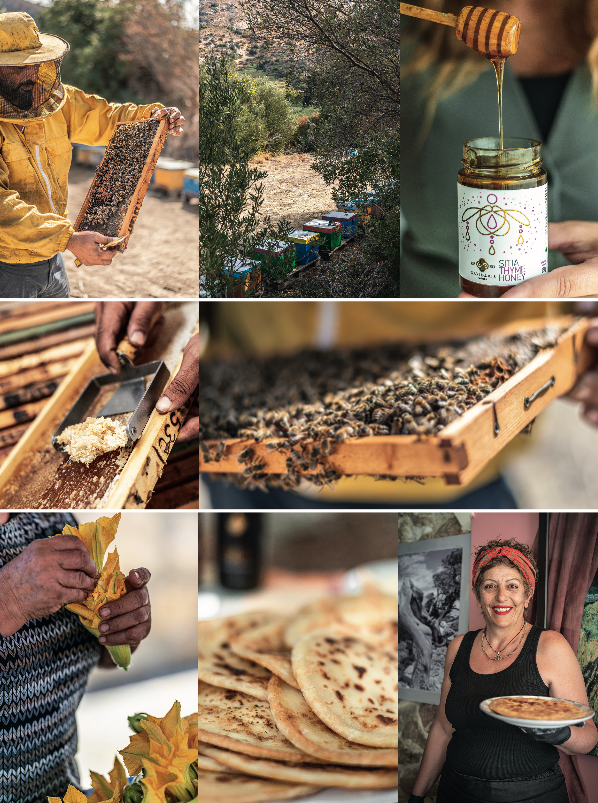
Crete is the largest island in Greece, and the fifth largest in the Mediterranean. Its eastern region, Lasithi, is a landscape of rocky massif, with peaks rising above 2,000m, small clusters of pine and cedar, remote villages, terraced hills and, on the coast, native palm trees. It’s an area too of caves, gorges and narrow, green valleys created by a porous top layer of limestone rock; beehives stand scattered over herb-rich hillsides. Honey from bees that forage only on wildflowers has a more intense flavour and, knowing where the blossoms are, local beekeepers move their hives beside them: sage in spring, orange, lemon and carob in summer, pine and thyme a little later; and, on hillsides above 1,500 metres, white thyme and sideritis (also known as ironwort), a native tea-herb known for its healing properties. Nearly four millennia ago, a Cretan master-goldsmith demonstrated the Minoans’ love of these clever bees by crafting a pendant showing two bees pressing pollen one to another. It’s now in the Archaeological Museum in Heraklion, Crete’s capital.
This pure, thick, rich honey is just one local ingredient in the traditional sweet pastries that are made by a group of talented women in their Zakros cooperative, Melion. Others are plump raisins for stafidoto, or raisin-stuffed pastries; olive oil, almonds and tsigouthia (a distilled spirit, made from the remnants of grapes after wine-making) for melomakarouna, a Christmas sweet; sheep’s-milk butter and walnuts for kourabies, similar to shortbread and made for all special occasions; and a native wheat for xerotygana, a celebratory sweet pastry doused in syrup.
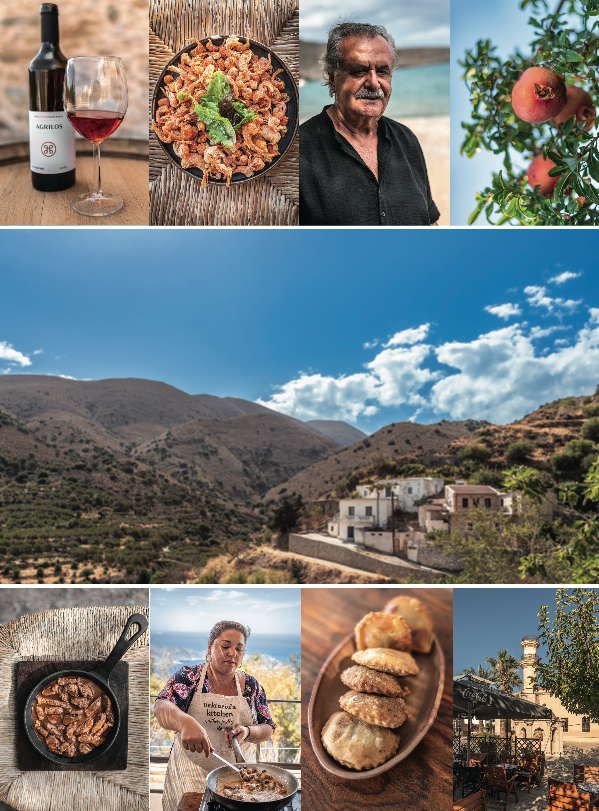
The road north out of Zakros passes small villages surrounded by miniature wheat fields, vegetable patches and pretty fruit trees as it meanders along the eastern slopes of the Ziros Plateau. At Palekastro village, a turning goes east to Vai and a dense, palm- tree forest leading down to a long, sandy beach. Three enticing beaches lie to the north, as well as the ancient site of wealthy, Phoenician-built Itanos, once praised by the fifth-century BC Greek historian Herodotus. Its prosperity lay in porphyropsin, a purple dye-pigment extracted from seashells. Goats graze these rugged hills, and grapes and olives grow on sheltered hillsides.
Having survived lengthy island occupations – Catholic Venetians, Muslim Ottomans – and devastating civil, independence and world wars, the 15th-century-founded Orthodox Toplou Monastery is the caretaker of this spectacular panorama. ’People have worked on, and with, this land for many millennia, and I want a new generation to be able to,’ explains Abbot Ambrosios in the monastery’s charming courtyard. ’We have more than 25 micro- climates here, a 50cm-deep sandy topsoil and a very fine terroir. Liatiko, a local, ancient grape varietal, grows well and winemakers request graftings to plant elsewhere. We have a good relationship with local people – many work here, and a local cheesemaker makes kephalotyri (a semi-hard, salty, mildly pungent cheese) for us. We’re organic and we look out for our animals too. In dry periods, we leave out water for the rabbits, owls and other wildlife.’
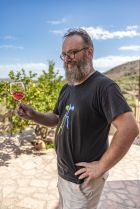
The monastery has always cultivated grapes. ’Today, we grow varietals like thrapsathiri, native to this region, Cretan vilana and Greek-island mandilaria; and, for the past 25 years, assyrtiko (native to Santorini) on the dry, flinty, soil near Vai,’ the abbot continues. ’Liatiko grapes produce light reds and full- bodied rosés and, once they become raisin-like, a sweet wine; in the old days, the grapes were laid out to dry in the sun.’
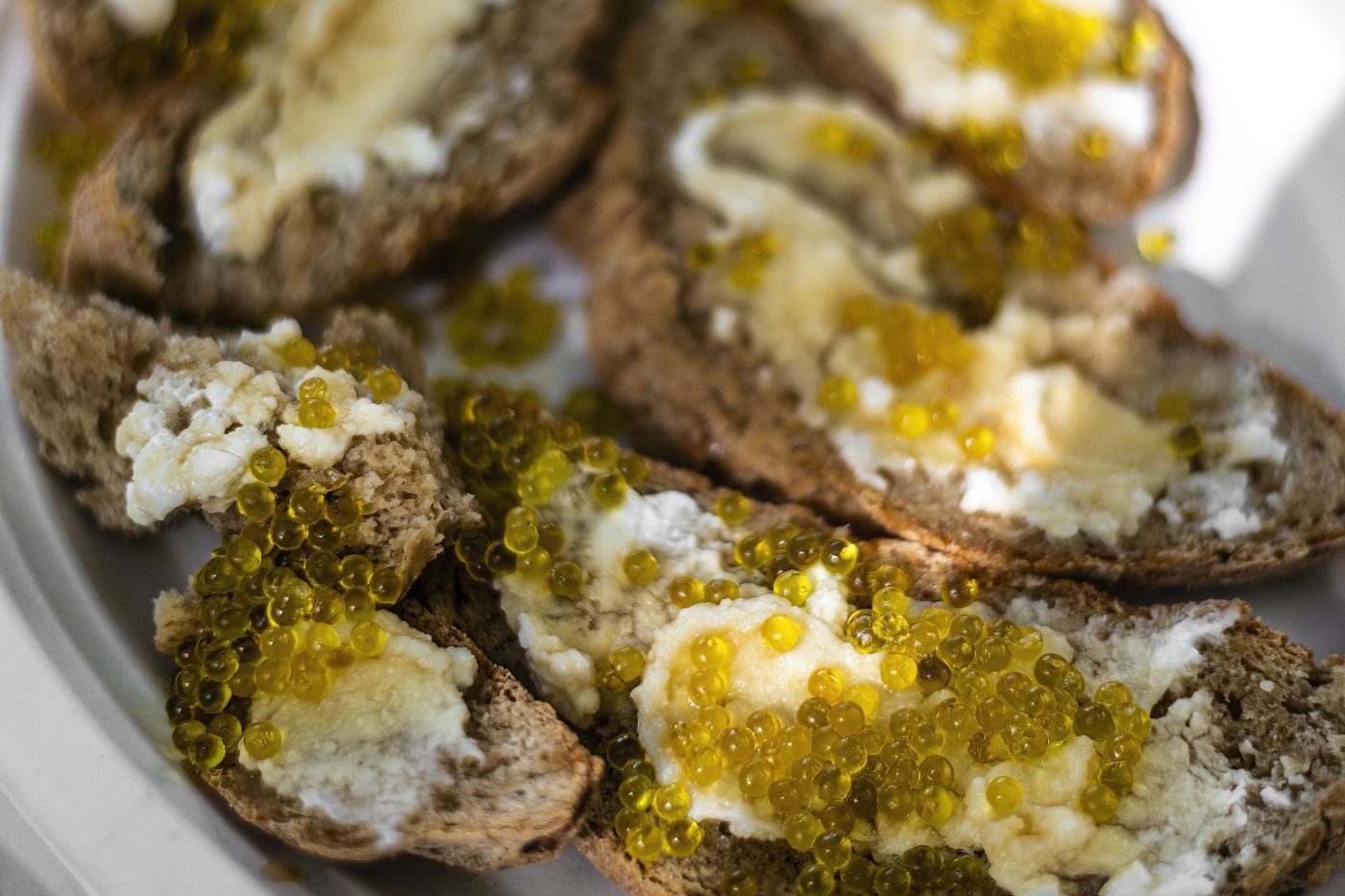
West of Toplou, 15km along a coastal road around the Bay of Sitia, Diamanti Daskalaki, co-owner of Sitia’s Kafe Cafe, is making nerates, local cheese pies. With her knuckle, she pounds a moist dough of flour, salt, olive oil and water into a circle and spreads over xygalo soft cream cheese. She deftly pulls the sides into the centre, flattens the pie and lightly browns it in a heavy-based pan. ’We eat nerates as a meal any time and shepherds carry them with them when they take out their animals. Two shepherds we know make the cheeses – the xygalo as well as myzithra [fresh or salt- dried whey cheese] and graviera [hard, nutty sheep’s cheese] – that we use in our café dishes, because we like to provide food as if you are in our home,’ she says.
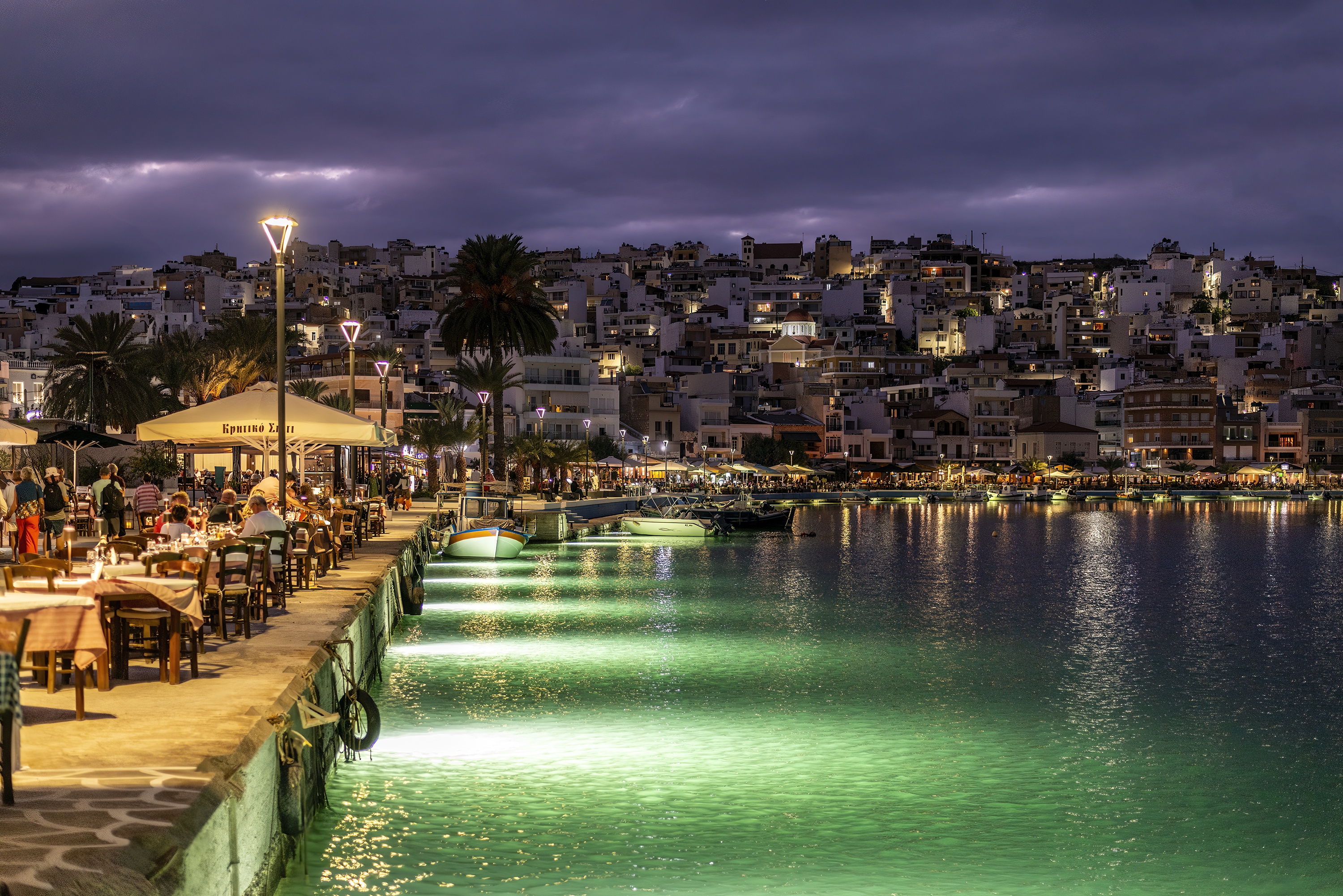
This centuries-old custom of xenia – offering hospitality to friend, guest and stranger alike – is very evident in Lasithi and its Roman-era port-city, Sitia, overlooked by a Venetian fortress, the last remnant of an enormous castle. These fortifications didn’t stop the pirate Barbarossa sacking Sitia in 1538, nor the Ottomans conquering the island in the mid-17th century; today, its long, attractive, harbour-front is lined with cheerful cafés, tavernas and restaurants. From Sitia, the road south traverses a steep-sided valley where tiny churches perch and stone mitato (shepherds’ summer dwellings) meld with the landscape, before reaching the south coast and the sparkling Libyan Sea.
’We were born in the kitchen,’ smiles Alexis Tzortzakis, owner of Pelagos restaurant, near Ierapetra. Fifty years ago, there were no paved roads nor electricity here; evening light was the gift of the moon and stars.’ Yet intrepid travellers found their way to this area’s appealing villages and glorious, wild beaches. ’We’ve always made good use of the wonderful abundance of nature and we love to cook,’ explains Alexis, as he places on the table a salad of smoked tuna with valeriana (valerian), green lentils, kritimo (sea fennel or rock samphire), paximathi (twice-baked barley bread) and tiny wild artichokes.
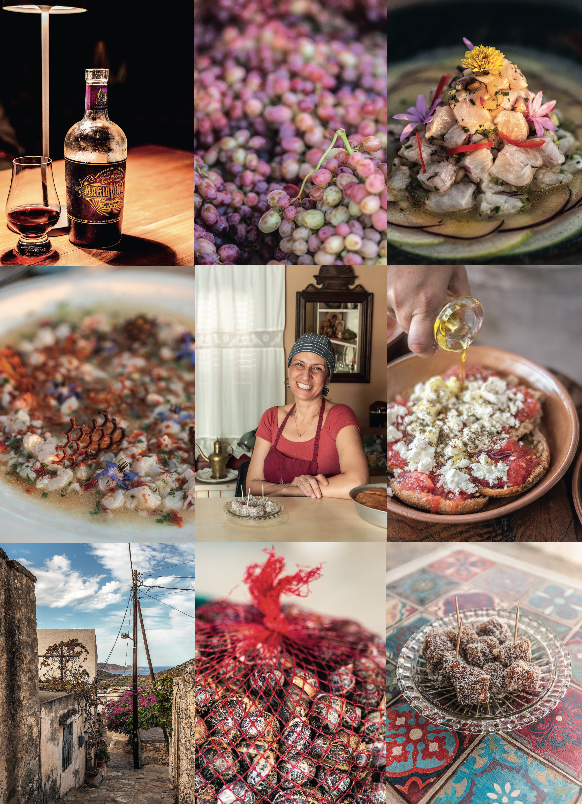
’We value our small producers,’ he says. ’A small women’s co-operative provides us with these wild artichokes, preserved under their family-produced olive oil; they know the best places to find them. We respect our sea, too: we only land rofos (grouper) larger than 1.5kg, and we’re happy to catch the invasive, destructive lionfish as, fortuitously, it’s good to eat – we marinate it in agouritha (underripe grape juice) to make ceviche.’ Ierapetra is a microcosm of the story of Crete. Local Minoan settlements traded with ancient Egypt; it’s the site of a large, Levant- and North African-trading Dorian city (circa 5th-century BC); and it was a busy Roman and, later, Byzantine port for many agricultural products. Its town layout and fortress are Venetian and the centuries-long Ottoman occupation has left a small neighbourhood of labyrinthine lanes and secluded courtyards.
On Saturday mornings, the town square and surrounding streets are filled with stalls selling the plentiful local produce: superb tomatoes and figs that crop twice a year, seasonal horta, okra, aubergines, peppers, walnuts, olives, citrus, pomegranates, quince and small, deliciously sweet bananas grown by Nikolaos Angelakis in Ligaras, near Sitia. He has around 5,000 trees and sells all his organically grown bananas, which are at their best from February to June, locally.
The small but lively town of Aghios Nikolaos and the cobalt-blue waters of Mirabello Bay are a 45-minute drive north across the island. To the west, and invisible from the coast, the vast 840m-high Lasithi Plateau, once home to 10,000 windmills, lies in the mountains: on one of these, Dikti, there’s a deep cave considered by ancient Cretans to be the birthplace of Zeus. The historic village of Kritsa rests on the eastern slopes of the plateau; and nearby Lato, the site of a once-thriving Dorian city-state, has spectacular views over the bay. On the plateau’s steep northern slope, the 400m-high village of Mesa (meaning ’inside’) Mouliana, winemaker Yannis Kaparou understands the value of this antique landscape.
’We grow tempranillo, an adaptable, early-harvest grape, aglianico, a varietal known to the ancient Greeks, and liatiko grapes on new vines from old stock, as many of the village vines have been abandoned,’ he says. ’I grew up in Sitia, but we spent our summers here, in our family house. Old people would always offer a visitor cheese – kephalotyri and anthotyro [“blossom” cheese, named for the shapes made when the milk is heated] – as well as olives, preserved in olive oil with lemon or dried and stored in brine, and tomatoes, paximathia biscuits and a glass of wine. The sounds of birdsong and music were never far away.’
There’s a magnificent view of the north coast and glittering Aegean from the 500m-high vineyard: ’Birds love it here, and it’s home to badgers and hares – as they don’t eat the grapes, they become part of our vineyard world. When I was a kid, my job was to lead the working donkey up the rocky track from the village to the vines,’ he reminisces. ’At the time, I’d much rather have been playing basketball with my mates. But today I realise what a good life I had, and how much we now need to work with our land, not against it.’ Food and Travel travelled courtesy of Region of Crete and the Municipality of Sitia incrediblecrete.gr sitia.gr
This article first appeared in the May 2025 issue of Food and Travel magazine. To subscribe today, click here.
Where to stay
Coriva Beach Family-owned hotel and bungalows set among mature gardensleadingdowntoablue-flagbeach.Localproduceandseafood is prized in the hotel’s beach-side restaurant – look out for handmade lobster ravioli. Open April-October. Doubles from £102, including breakfast. Koutsounari, Ierapetra, +30 28420 61263, corivabeach.gr
Daios Cove Modern, luxurious resort set in a secluded cove 15 minutes south of Aghios Nikolaos. Handsome buildings and villas are architect- designed to blend into the rugged, mountainous landscape. Suites have sea views, some a private pool. Learn the secrets of Cretan and Greek cooking in the on-site culinary school. Open April-early November. Doubles from £247, including breakfast. Vathi, Aghios Nikolaos, +30 28418 88019, daioscovecrete.com
Sitia Beach City Resort & Spa Sitia town’s long, sandy beach is just across a quiet street, and the lively harbour-promenade and town centre a convenient, five-minute walk away from this 161-room resort hotel. Its three floors surround one of the pools, and there’s a games area, tennis court, gardens, terrace bar as well as a small library. Information is available for local excursions, bike hire and water sports. Breakfast is a buffet, with a few dishes à la carte, including a local speciality dish of courgettes, eggs and cheese. Open April-October. Doubles from £79, including breakfast. Konstantinou Karamanli, Sitia, +30 28430 28821, sitiabeach.com
Travel Information
Eastern Crete, or Lasithi, lies in the eastern Mediterranean Sea and has a population of approx. 78,000. The town of Sitia and its environs comprise a Unesco Global Geopark, one of two in Crete. Within the geopark there is a Local Quality Pact between its producers, traders, restaurants and wineries. Currency is the Euro and the language is Greek, although English is widely spoken. Time is two hours ahead of GMT.
GETTING THERE
Aegean Airlines fly all year from London Heathrow to Crete’s capital, Heraklion, via Athens, and less often to Sitia; and there are frequent charter flights to Heraklion in summer. From there, Sitia is a two-hour drive. en.aegeanair.com
Ferries, operated by a number of different companies, sail daily between Athens and Heraklion, and twice weekly to Sitia, with a crossing time of around nine hours.
GETTING AROUND
Buses travel daily between towns and less frequently between villages. Its best to hire a car if you intend to explore the back roads and beaches. cretecars.com
RESOURCES
Greek National Tourism Organisation has lots of advice. visitgreece.gr
Incredible Crete is the official tourism website of the Region of Crete incrediblecrete.gr
Visit Sitia is packed with information on the history, architecture, local customs, foods and activities. visitsitia.gr
Sitia Geopark is an excellent source of information on the geography, geology, culture and produce of eastern Crete. sitia-geopark.gr
Nikos Kazantzakis Another great way to gain insight into the culture is via the novels of the Cretan-born author of Zorba the Greek among many others.
Where to eat
Prices are per person for two courses with 1/2 carafe of wine, unless otherwise stated.
Da Giorgio An ideal spot to people-watch on the harbour promenade. Georgia Paspalarakis cooks the good food and her son, Giannis, serves it. Try rooster with Cretan pasta, skioufichta, oven-baked aubergines with tomatoes, kolokythoanthi gemisti (stuffed courgette blossoms), and wine from a short, well-priced list that includes Toplou Rosé Liatiko. From £19.50. Konstantinou Karamanli 14, Sitia, +30 28430 25500
Hiona This award-winning fish restaurant is perched on an isolated, rocky shoreline a few km east of Palekastro. Third-generation owner Kostas Amanakis and chef Giorgos Xipolitakis source locally for seasonal salads, vegetables and cheeses and practise fish-sustainability. Dishes may include small cheese or horta greens, pies, octopus carpaccio, anchovies, grilled sardines, saffron orzo with crayfish, cuttlefish-ink risotto, kakavia fish soup, pan-fried or grilled sea bream or sea bass. For a sweet finish, there’s local ice cream. The wine list includes local beers and spirits alongside Cretan and Greek wines. Booking recommended. From £21. Hiona Beach, Palekastro, Sitia, +30 28430 61228, hiona.gr
Inodion Dimitris and Georgia Garefalakis, and their sons Michalis and Alexandros, source nearby for their busy kitchen. Mezes include snails sautéed with vinegar and rosemary, feta from the oven, marinated anchovies, kephtedes (meatballs); mains of grilled pork tenderloin, traditional sausages, octopus with fava (split-pea mash), and kakavia fish soup. For dessert, try galaktoboureko custard pie or small cheese pies with honey. Drinks include white Toplou Thrapsathiri and Cretan Notos Rousanne, micobrewed beers and tsigouthia (produced from the remnants of winemaking). From £20. Eleftheriou Venizelou 157, Sitia, +30 2843 026 166, inodion.gr
Kafe Cafe Popular and engaging café-bar on the waterfront. Fine, local ingredients are in the Cretan, Greek, English and continental breakfast choices, all-day dishes of cheese pies and fish soup, homemade cheesecake, sandwiches and crèpes. Good coffee, well-made cocktails, local beers and wines. Cretan breakfast from £8. Konstantinou Karamanli 6, Sitia, +30 2843 025131, kafe-cafe.gr
Meraki In their harbourside restaurant, owners Nikos Garefalakis and Venia Frangouli serve traditional mezes of staka, a delicacy made with sheep’s milk, feta saganaki (fried in a pan), fava, grilled pork or chicken fillet, liver; and seafood dishes of squid, shrimp and sardines. Or check the day’s specials.A short, well-chosen wine list includes the well-regarded Hatzimichalis and Macedonian Alpha Malagouzia. Beers, tsigouthia and ouzo too. From £19.30. Eleftheriou Venizelou 151, Sitia, +30 2843 023460
Nostos Seasonal, traditional dishes in a beachside taverna on a small, beautiful bay. Mezes include tsatziki, taramosalata, fava, melitzanosalata (aubergine purée), xygalo cream cheese; salads, beetroot and horta, an elegant version of dakos bread salad with tomato, cheese, rocket and capers; and herby marinated pork apaki. Mains include oven-baked dishes, grills – such as prawns with pesto, octopus, fish of the day, pork chops – and barley risotto with seasonal vegetables or mushrooms. Fresh juices and mountain tea are served alongside Cretan wines, beers, tsigouthia and ouzo.From £20. Kato Zakros, Lasithi, +30 2843 026890
Vai Palm Beach Inspired by the proximity of Zakros archaeological site, some dishes here incorporate flavours of the past. Try their xygalo cream cheese with Sitia table olives, paximathia bread with unripe olives marinated in vinegar from Toplou monastery, fried graviera sheeps’ cheese with locally- made rose-petal glyko (in syrup), wheat-and-milk staple xinochondros with aubergines and sun-dried grilled octopus with Greek oregano and olive oil. There’s lamb with horta or fish of the day too, followed by delicious baklava with ice cream. Expect a range of Cretan, Greek and international wines, local beers and spirits, coffee and tea to wash it all down. From £23.
Vai, Lasithi, +30 28430 61129 vai-restaurant.gr
Food Glossary
- Apaki
- Lean salted pork, marinated in herbs and olive oil and slowly smoked. Traditionally, it was made at Christmas, when the family pig was slaughtered
- Dakos
- A salad made with paximathia (twice-baked barley bread), tomatoes, cheese, olives and olive oil; it’s based on the meal shepherds would take with them to the mountains
- Galaktoboureko
- Literally, ’milk pie’, this large pie with a thick custard between layers of filo is cut into slices
- Galotyri
- Salty, sheep’s cheese that is cured for one month in small wicker baskets
- Glyka
- Small fruits – figs, quince, bergamot, lemon, oranges, cherries, pear, citrus blossom – and, sometimes, tiny vegetables such as aubergines and tomatoes – preserved in a thick syrup; traditionally served with Greek coffee and a glass of water, but also very good with ice cream, rice pudding and cakes
- Kakavia
- Traditional fish soup, made by poaching a whole fish with potatoes, herbs and olive oil, and served with lemon wedges Petimezi
- Petimezi
- Grape syrup, used as a flavourful, nutritious sweetener in cakes, cookies and sauces – it takes 125kg grapes and eight hours of simmering to make 8kg syrup
- Skioufichta
- Handmade pasta local to Crete; made with olive oil and served alone or as an accompaniment to other dishes, with grated myzithra cheese
- Staka
- This Cretan delicacy consists of sheep’s milk heated with wheat and salt until its butter separates. It is then served warm, with paximathia or eggs, or used to cook omelettes
- Xinochondros
- Wheat mixed with milk or yoghurt, dried in the sun and stored for winter. Traditionally, it’s cooked with snails or aubergines or turned it into a hearty, healthy soup
- Xochlioi
- Snails, a well-loved food in Crete, where there are many varieties and, it is said, more than 100 ways to cook them
- Xygalo
- Traditionally made in Lasithi, this has a Sitia PDO. Fresh, soft, cream cheese made from sheep’s or goats’ milk or a mixture of the two; mostly made in February when milk is most plentiful
- Xyinomyzithra
- Whey cheese made from goats’ or sheep’s milk and lightly salted; serve alone, with dakos (see above) or as a filling in pies
- Yiaourti
- Yoghurt, but not the yoghurt you find in supermarkets – Cretan yoghurt, made with sheep’s milk, is thick and creamy, and often has a ’skin’ on top. Serve with rich Cretan honey



Get Premium access to all the latest content online
Subscribe and view full print editions online... Subscribe