
It’s not just about crystal-clear waters – leaving the airport to head towards the island’s south-western coast, shimmering ribbons of sugarcane can be seen stretching towards the horizon. Every now and then, flashes of unrefined brick villages, handpainted shop signs, brightly coloured temples and sculpted Hindu deities appear through the taxi window.
The visual tension you feel on arrival reflects a layered history. A splash of green in the Indian Ocean, off Africa’s south-eastern coast, Mauritius is a tiny island just slightly larger than Greater London – yet it carries an enormous cultural weight. An outpost of the continent with its own, clear identity.
Mauritius first appeared on European maps in the early 1500s, thanks to the Portuguese. It was later colonised in turn by the Dutch, the French and the British, and large numbers of Chinese and Indian labourers were brought to the island to work on its sugar plantations. Here, history isn’t something you read but something you see: in the temples, in the faces, in the language. Locals jump effortlessly from English to French, then to Mauritian Creole, a blend of both, with a musical cadence of its own.
And then, of course, there’s the food – or, even better, the produce. Erupted from a hotspot in the oceanic crust of the African plate, Mauritius is blessed with a rich volcanic soil and several unique microclimatic zones. These make the island exceptionally rich in flavours and ingredients.
First stop: the Central Plateau, known as ‘the Highlands’ of Mauritius. A velvet sweep of tea bushes undulates across slopes at nearly 500m above sea level, mist drifting through the valleys and sun hiding behind dark clouds. In the fields, women wrapped in long plastic aprons work are undisturbed by the light drizzle, picking the youngest leaves and dropping them into baskets.
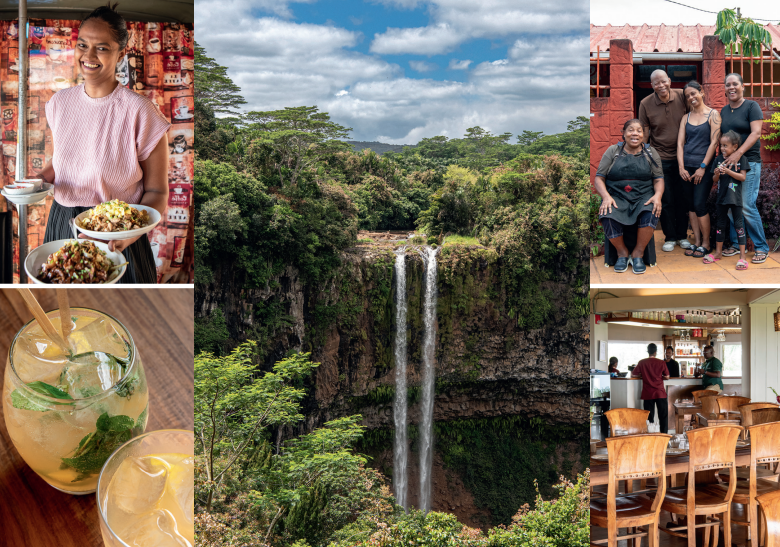
Founded in 1892, Le Domaine de Bois Chéri is the first and largest tea producer in the country. ‘The plantation covers 250 hectares. Roughly 150 workers tend the tea fields, most of them women. Plucking starts well before sunrise, as early as 5am,’ explains Yovina, our guide, stepping into the withering room. After a 24-48-hour rest, depending on the season, the leaves take different paths: black tea is fully oxidised for a robust, astringent brew; green tea is processed without fermentation, to preserve its delicate flavour and healthy properties. White tea, on the other hand, is the most delicate – plucked only between January and March, and left to wither naturally under the sun, untouched by machines or heat. They can all be tasted at the estate chalet overlooking the plantation and a quiet crater lake. Sit outside, on the wooden terrace, surrounded by the occasional flutter of wings – chickens roam freely, strutting between chairs. Step away for a short walk and you might even spot a gentle deer wandering the estate, or a troupe of monkeys in the trees nearby.
The highlands of south-western Mauritius are home to more ventures that are reshaping the island’s relationship with land, taste and time. A 30-minute drive across dramatic gorges blanketed in tropical green takes you to Chamarel, where a boutique coffee plantation is producing high-quality, pesticide-free artisan coffee – at a mere 280m above sea level, far lower than the elevation this crop typically requires. ‘Coffee usually grows at over 1,000m,’ explains Shawn, guiding the way through the 12ha estate. ‘Our island’s unusual topography, climate and rich volcanic soil make it possible here, and it’s quite exceptional.’
Besides K7, a Kenyan-origin variety known for its resilience and subtle aroma, Chamarel also grow liberica, a rare type of coffee, originally from Liberia but now mainly cultivated in Bali. A distinctive bean with smoky, bold, almost leathery notes, it accounts for about 2 per cent of their production.
Walking through the plantation, you’re immediately struck by the diversity of plant life. Bright splashes of colour catch the eye among the green: red and pink ginger flowers cascading downwards in wild tropical elegance. Towering endemic trees rise like columns, while vanilla vines twist sensuously around their base – thick, glossy leaves clinging to bark in search of dappled sun. ‘Palm and banana trees have been planted strategically to protect the coffee plants from the sun and wind. By increasing shade and retaining soil moisture, we help our trees cope with rising temperatures,’ says Shawn.
Venture deeper and you’ll find cacao pods ripening on low-hanging branches, deep red and weighty, a promise of future pleasure. This isn’t just a plantation – it’s a living, breathing ecosystem where tropical crops thrive in the embrace of native forest. ‘That’s what agroforestry is,’ Shawn smiles
Handpicked with almost monastic patience, each coffee cherry is fermented, dried and roasted on site. The result is a low-yield, high-intensity process that favours quality over volume, echoing the plantation’s deep-rooted commitment to biodiversity and sustainability. That commitment is shaping the future of the estate: practices include composting spent coffee grounds, phasing out chemical inputs, replanting endemic trees and experimenting with new coffee varieties in order to face the challenge of climate change.
The road curves towards nearby L’Alchimiste, the restaurant within La Rhumerie de Chamarel, where the taste of local cuisine comes with the scent of sugarcane and rum. The setting is simple and open, surrounded by pineapple and cane fields, with the distillery’s copper stills gleaming just beyond the veranda. The braised pork marinated in Chamarel rum is indulgent yet balanced – the rum’s mellow sweetness melting into the rich meat, lifted by an earthy truffle sauce and the freshness of seasonal greens. But it’s the dessert that lingers in the memory. A tropical take on a classic baba au rhum – soaked to the core and surrounded by a veritable pool of Chamarel Premium Rum Gold – it feels more like the ultimate grown-up dessert soup than a delicate sponge. A spoonful turns into a tropical fête in your mouth, and yes, it’s absolutely divine.
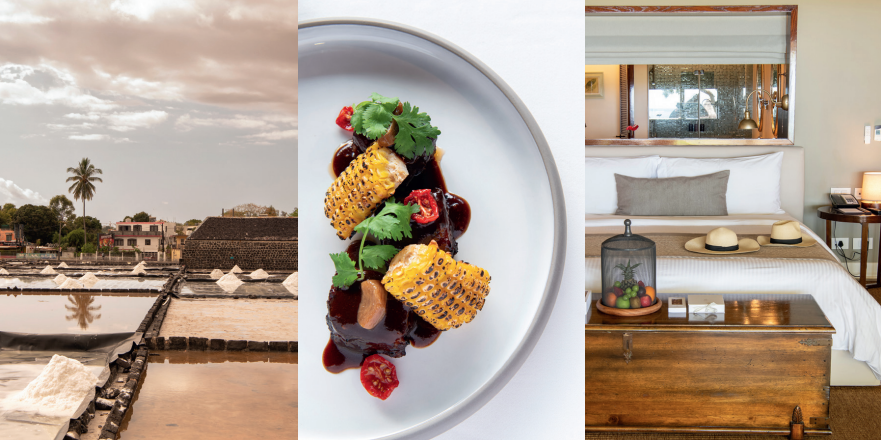
Volcanic soil may feed the roots, but it’s creativity that feeds the vision. At nearby Takamaka Boutique Winery, Alexander Oxenham makes wine from Mauritius’s most iconic fruit, lychees: not only fragrant and juicy, but surprisingly muscat-like.
In Alexander’s family, rewriting the rules of tropical winemaking had been a dream passed down through three generations. His grandfather made wine from imported dry grapes and his father experimented with concentrated juice shipped from Europe and South Africa. But instead of looking outwards, Alexander – Mauritius’s first certified oenologist – decided to look inward, to the abundant lychees, hand-selected from the island’s best growers. It wasn’t easy. Adapting traditional techniques to the delicate nature of his country’s most popular fruit took him more than 15 years of trials, resilience and perseverance, from selecting the most aromatic varieties like Tai So, to mastering gentle fermentation under precise temperature control.
Today, Takamaka craft five elegant rosé and white wines, some dry and fresh, others barrel-aged and complex – surprisingly food-friendly and perfect with Mauritian spices and seafood dishes. They’ve been enthusiastically embraced by top chefs, sommeliers and luxury hotels both on the island and abroad, including Michelin-starred restaurants in France, the UK and Italy. Beyond innovation lies sustainability. The estate composts organic matter for the soil, collects rainwater to clean tanks, uses low-intervention vinification and recycles bottles.
Back at sea level, the scene shifts. The misty highlands give way to the warm embrace of salt air and those crystal-clear waters. The southern coast of Mauritius is home to one of the island’s most iconic addresses, The St Regis Le Morne Resort. Framed by a long curve of white shoreline and the dramatic outline of Le Morne’s basaltic cliff, it feels more luxurious outpost than hotel.
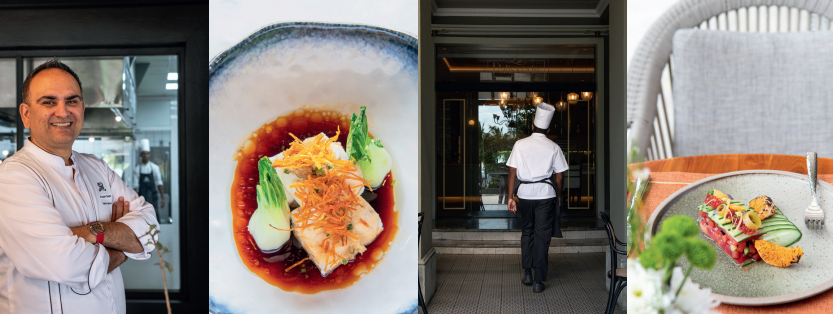
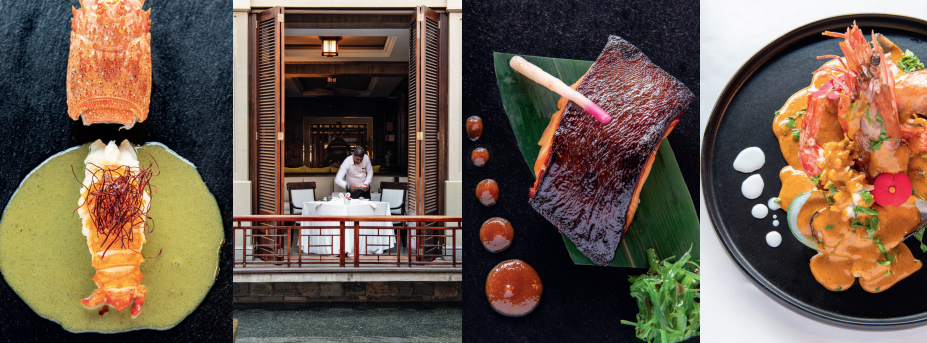
Five on-site restaurants offer everything from Indian to Pan-Asian and Japanese – all delivered with a focus on culinary excellence. ‘You have a beautiful view; your senses are awakened. We want to give a matching experience to your taste buds,’ says culinary director Anupam Gulati.
International flair notwithstanding, the focus is on locally sourced ingredients, the kitchens working closely with local farmers and fishers. This is especially true when it comes to seafood: sea bass, tilapia, crab, tuna and plenty of lobster. Then there are the Mauritian classics: savoury cassava stew with saffron and lentils, chicken and prawn curry, Creole baby chicken.
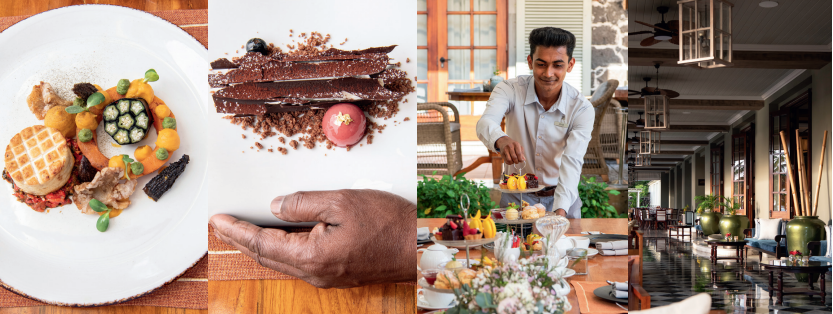
‘Mauritian cuisine is a melting pot – quite literally. It’s close to that of India, my home country: fragrant with spices from turmeric to coriander, although not quite as fiery,’ laughs Anupam.
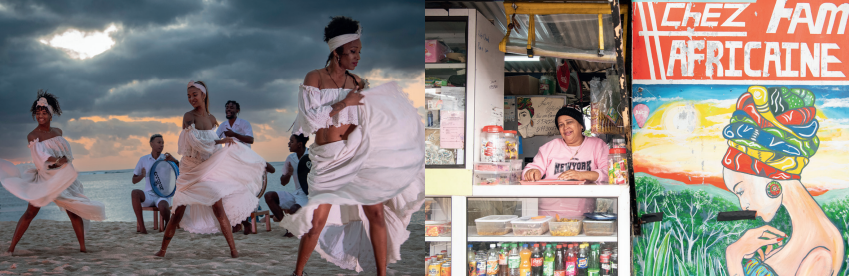
A short drive along the southern coast, past the sleepy village of Baie du Cap, Chez François’s beach shack sells some of the island’s best boulettes – steamed dumplings – and mine frite noodles, lovingly cooked by Lucie in big bubbling pots and sold at small prices. Picnic tables add to the laid-back charm and the ocean view does the rest, revealing the best Mauritian food isn’t always where you expect it to be. Tasty, unpretentious dishes are often to be found from street vendors or in table d’hôte restaurants, family-run outlets where you might end up eating in someone’s living room.
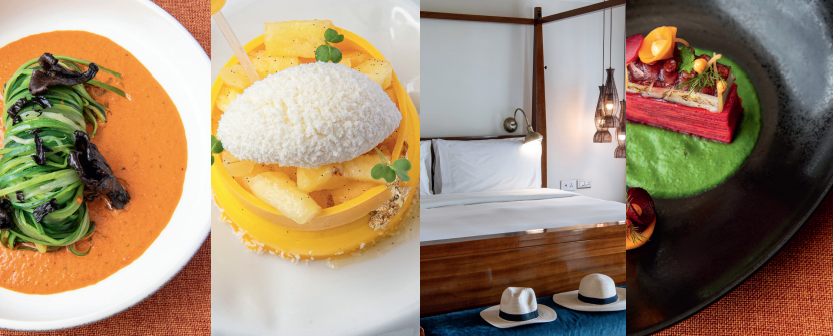
A little further, a repurposed bus permanently parked just steps from the beach houses Bus Snack, where around 30 diners can squeeze in for home-style, heartwarming food. The handwritten menu is tacked on to a poster at the entrance. The catch of the day is brought in by fishermen who dock just across the road and vegetables come from the family garden. Everything is made from scratch, from the homemade pickles to fragrant, robust curries, including a red octopus version and a local favourite made with venison. The restaurant started with Seeya Begue’s father, who was gifted the bus and turned it into a kitchen on wheels. Today, she runs it with her two siblings, cooking in the tiny galley built into one end of the vehicle. It’s the kind of place that doesn’t need to claim zero-kilometre dining – it simply is.
Heading north along the west coast, you’ll reach the quiet village of Tamarin, where the last surviving salt pans stretch out among the village’s mismatched houses. Once there were six salt pans but when Mauritius began importing salt, citing cost effectiveness, closures followed. Traditionally, the harvest has been led by women, who continue to carry out the entire process manually, with woven baskets balanced on their heads, glinting white under the sun. The salt is used locally – for cooking, cosmetics and even pools. None is exported.
The salt pans are more than just a remnant of the past. They speak of heritage, manual labour, women’s craftsmanship and a vanishing tradition. Slowly fading from the map, they endure not in scale, but in meaning. When we arrive in the early afternoon, the long working day is already over – only Elodie is still there, walking barefoot across the white mounds of salt, the silence broken only by the crunch of crystals underfoot. An image that is a world away from the postcard Mauritius of honeymoon brochures, but that seems to sum up the truest essence of the island: quiet, textured and absolutely real.
This article first appeared in the February 2026 issue of Food and Travel Magazine. To subscribe, click here.
Where to stay
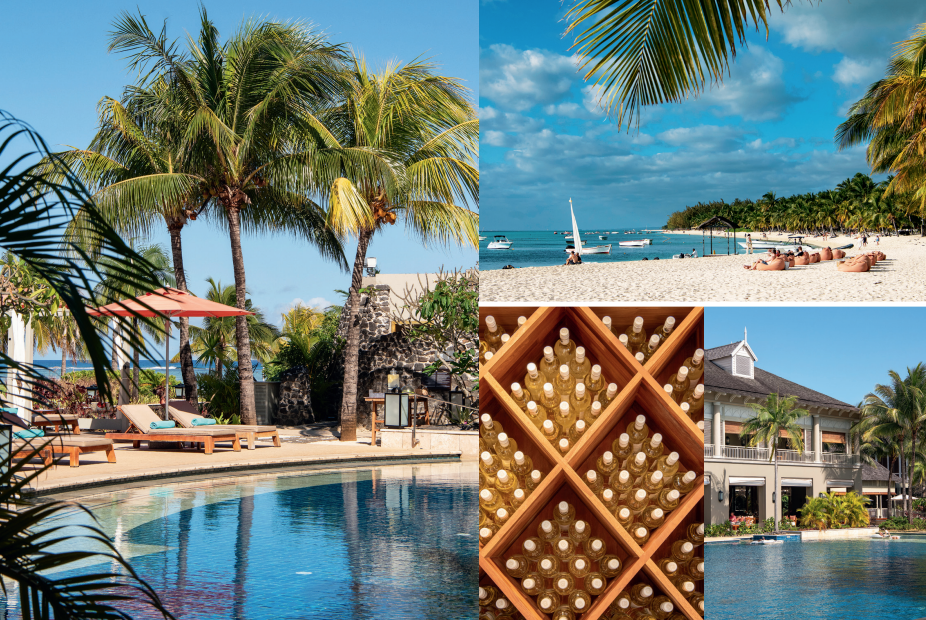
The St Regis Le Morne Resort Set on the island’s most spectacular sugar-white beach and with the Unesco-listed Le Morne Brabant mountain as a dramatic backdrop, this exclusive address delivers tropical serenity at its most refined. All 172 suites and villas come with butler service, expansive bathrooms boasting soaking tubs, and private terraces framed by palm trees opening straight on to white sand. Days here can be as active or relaxed as you like, with options from horse riding and spa treatments to stargazing on the beach. Flavours take centre stage, starting with an epicurean breakfast buffet that’s as refined as it is indulgent – highlighted by a newly expanded pâtisserie section that could rival the finest French maisons – and continuing with five restaurants: inventive Indian plates are served at Indya, Creole flavours are cooked up with flair at Le Manoir, Floating Market is inspired by Asia, beach grill The Boathouse serves the freshest catch of the day and Atsuko offers inventive Japanese plates. Don’t miss an Île Mary cocktail at the colonial-style bar – this spiced take on the iconic Bloody Mary is made with pure cane rum infused with curry leaves, mango vinegar and masala air. Prepared tableside and served like a story, it’s more than a drink: it’s a ritual. Doubles (Junior Suite King) from £585, including breakfast (minimum 2 nights). Coastal Road, Le Morne Peninsula, Le Morne, +230 403 9000, marriott.com/mruxm
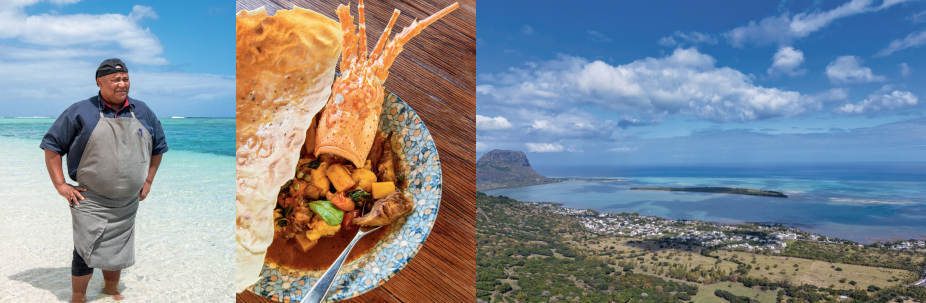
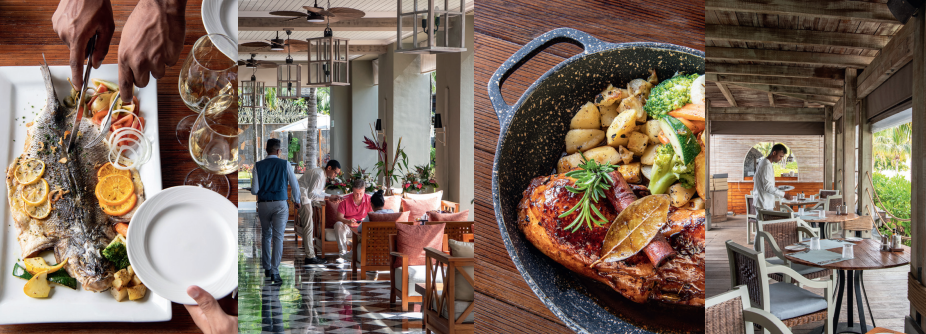
Le Méridien Ile Maurice Just a short drive from the capital, Port Louis, along the north-west coast, Le Méridien Ile Maurice is the perfect Left: Aerial view of Le Morne Beach. Opposite page, clockwise from top left: The Boathouse chef, Louis Patrice Polimont; his Catalan-style lobster; expansive view of the coast from Chamarel; tables at The Boathouse; Le Morne Beach; St Regis opens on to the sands; lychee wines, Takamaka; relax between sea and pool; grilled sea bass, The Boathouse; The St Regis bar; whole baby chicken choice for families or intergenerational groups looking to spend quality time together. The Kids and Teens Club here is more than just a playground – it’s a whole set of experiences: think science labs, art studios, gaming lounges and even DJ workshops. There are mocktail-making classes for little ones, storytelling nights that unfold around the fire, family yoga, cooking sessions and treasure hunts, all designed to pull everyone away from their screens. Parents can recharge in the sleek spa or take a culinary journey across the property’s five restaurants. Beyond the resort, head off on an electric bike tour or book into food tastings that offer a window into local life. Doubles from £220. Village Hall Lane, Pointe aux Piments, +230 204 3333, marriott.com
Westin Turtle Bay Resort and Spa Located on the north-west side of the island, the 190-key Westin Turtle Bay Resort & Spa is a calm oasis that puts wellness at the heart of the experience. The focus is on balance – from the high-spec gym and beachside sunrise yoga sessions to kombucha-stocked minibars and nourishing plant-based menus. It’s all set up so you can get hands-on too: harvest vegetables from the hotel’s own greenhouse and join a cooking class in the garden; or unwind in the brilliant spa with a cleansing facial or a salt scrub. Even the in-room amenities – from bath bombs to sleep sprays – feel geared to restoration. Dining options are plentiful: choose from menus across six restaurants and bars, with a strong lean towards local flavours and contemporary Asian cooking. Doubles from £220. Balaclava, Turtle Bay, +230 204 1400, marriott.com
Travel Information
East of Madagascar in the Indian Ocean, Mauritius also encompasses the islands of Rodrigues, Agaléga, St Brandon and the Chagos. Official languages are English and French, but Mauritanian Creole is the lingua franca. Currency is the Mauritian Rupee (MUR), and time is GMT+4.
GETTING THERE
Air Mauritius offer four direct flights per week from London Gatwick to Mauritius. airmauritius.com Emirates fly daily from London Heathrow to Mauritius with a stopover in Dubai. emirates.com GETTING AROUND Car hire To get to more remote sights, pick up a car at the airport; buses are extensive but tend to be less direct. sixt.co.uk, europcar.co.uk
RESOURCES
Mauritius Now is the official tourism website, full of advice on where to go and how to plan your trip. mauritiusnow.com
Where to eat
Prices are per person for a three-course meal, excluding drinks, unless otherwise stated.
Bus Snack This 30-seat diner housed in a vintage bus permanently parked steps from the beach at St Martin has been serving honest, home-made cuisine to locals and in-the-know travellers for the past 32 years, with dishes, including a rich crab soup and fresh octopus salad, prepared in the galley at one end of the bus. Don’t miss the signature boat noodles crowned with a runny fried egg bursting like sunshine across your plate. Strictly first-come, first-served, so arrive early to join the line of customers. From £10. B9, St Martin, +230 5934 1673
Chez François This bright blue food stall is announced by the queue that forms under the filao trees by the public beach of Bel Ombre. Mardocey François and his wife Lucie dish up steaming bowls of mine frite and mine bouille topped with octopus, chicken or beef, plus an array of boulettes – fish, lamb, chicken, seafood, even beef – all cooked in bubbling pots and served with a smile. No frills, no filters – just flavour, ocean air and a glimpse into what Mauritian food culture really looks like when it’s left to speak for itself. Dishes from £2. Bel Ombre public beach, (F9WX+8WV), St Martin, +230 593 67146
Femme Africaine This cheerful roadside shack in Baie du Cap is a local favourite – kids come running for the sugary snacks out front, adults stop for the roti. Three fillings are prepared by Marie Precilla at home just across the road, who delivers the warm, thin flatbreads wrapped in paper and kindness. Dishes from £1.50. Royal Road, Baie du Cap
L’Alchimiste La Rhumerie de Chamarel distillery’s restaurant pays homage to Mauritius’s culinary heritage. Seafood is well represented – grilled lobster comes with crustacean sauce, rice and seasonal vegetables and a vegetarian section features dishes like paneer with butter masala and rice. Start with salade de thon à la Mauricienne – a spicy tuna salad – and continue with le cochon, pork braised in Chamarelspiced rum and served with truffle sauce. Special mention to the cocktail list: each drink beautifully crafted with house rums. From £30. Royal Road, Chamarel, +230 483 4980, rhumeriedechamarel.com/en/le-restaurant
Le Bois Chéri Restaurant The glass-walled restaurant of Le Domaine de Bois Chéri, on the edge of a crater lake, offers sweeping views of lush landscape, tea bushes stretching to the horizon and the occasional appearance of deer or wild boar. Several dishes are infused with the estate’s own teas – black-tea-stuffed poultry, prawns delicately perfumed with vanilla tea or squid stewed in coconut tea – with the use of vanilla and rum from Saint Aubin, Bois Chéri’s sister estate. Try the banana flambeé or fondant au chocolat, both drenched in local soul – and rum. From £20. Le Domaine de Bois Chéri, +230 5252 1892, groupe-saintaubin.com
Palais De Barbizon It doesn’t get more authentic than this family-run table d’hôte restaurant in the laid-back village of Chamarel. Rico will greet you with warmth in what looks like a private dining room, while Marie-Ange, a devoted cook for decades, will deliver straight, honest food. No menu – just one generous plate of the day, typically composed of rice, local vegetables and meat or fish, depending on what’s fresh at the market or in the garden. The signature banana flambée is simple, flaming and unforgettable. Plate and dessert £13. H9FR+R65, Chamarel, +230 5495 1690
Takamaka Boutique Winery Opened in 2017, Mauritius’s only winery is rewriting the rules for winemaking in the tropics, with wine made exclusively from lychees. The fruit comes from the island’s best orchards in the north, grown by smallholder farmers and hand-selected for ripeness and aroma. A collection of whites and rosés, some aged in oak, others vibrant and floral, are unmistakably tropical. Come for a guided tour (from £7) and stay for lunch. Lunch from £12. Plaine Bonnefin, Mare aux Vacoas, Vacoas-Phoenix, +230 5442 8371, takamakawinery.com
Food Glossary
- Biryani
- A richly spiced, layered rice dish with meat and potatoes, often cooked in big family pots
- Bol renversé
- An ‘upside-down’ bowl of stir-fried vegetables, meat and rice, topped with a runny fried egg
- Boulettes
- Dumplings made with meat, fish or shrimp, typically served in broth
- Cotomili
- Fresh coriander leaves, used as garnish or in chutneys
- Gâteau piment
- Yellow split pea (dhal) fritters with cumin, onion and dried chilli
- Dhal puri
- Thin flatbreads stuffed with yellow split peas. Usually eaten as a wrap with taro leaf stew, chutney, pickled vegetables and a punch of heat. Mauritius’s street food staple
- Halim
- Slow-cooked mixed lentil soup thickened with oats, often flavoured with meat and mild spices
- Mazavaroo
- Fiery red chilli and dried shrimp paste – a must-have condiment at every table
- Mine bouille
- Boiled noodles served with a topping, such as minced meat, and topped with onions
- Mine frite
- Stir-fried noodles with soy, vegetables and sometimes meat or shrimp
- Pima
- The creole word for chilli; in all shapes, sizes and levels of heat
- Roti
- Simple flatbread, often served with curry or chutney
- Rougaille
- A Creole-style tomato sauce with plum tomato, onion, ginger, garlic, curry leaves and coriander, typically paired with grilled fish or ladled over rice
- Satini
- An uncooked chutney made with tomato, onion, chilli and coriander, typically used as a condiment
- Vindaye
- Octopus or fish stew made with mustard seeds, turmeric, onion, chilli and a splash of vinegar
Get Premium access to all the latest content online
Subscribe and view full print editions online... Subscribe