
The day begins with the scent of coffee emanating from Nat’s café, on a narrow backstreet of Chiang Mai’s old town. Owner Natthawut Jaikla has just roasted a small batch of beans, grown on the misty slopes up north. Their earthy aroma is irresistible, although it’s not the kind of place where you linger: just a bench inside, another one outside. No fussing over menus – iced or warm drip coffee are your only choices. Area 27 is the name of the place and it turns out to be one of the most interesting venues of Chiang Mai’s thriving coffee scene – and it’s literally a shack.
Also, you’re lucky if you find it open, as Nat has other things to do. ‘Coffee is my passion, but I am a sculptor,’ he says with a smile, nodding at the artwork scattered around the space. He opens for two hours in the morning, making this more like a ritual than a café.
Such is the beauty – and unpretentiousness – of Thailand, a country where Michelin-starred street food rubs shoulders with 7-Elevens. The north, in particular, feels like a world of its own. Once the independent kingdom of Lanna, ‘the land of a million rice fields’ was shaped over centuries of tribal influences and isolation, thus acquiring its unique identity. Drifting out of the old town, towards the Ping River, the city’s distinctive chaos is soon apparent – overhead wires, temple pinnacles, sputtering tuk-tuks, diesel-soaked air. Chef Pramkamon ‘Bas’ Suantong weaves through the morning traffic on his Vespa, grinning as he arrives at Mueang Mai market. Once shaped by jungle-foraged ingredients, Lanna cuisine is now rooted in daily trips to the market. ‘Twice a day, actually. Morning and night, as produce arrives at different times,’ he says.
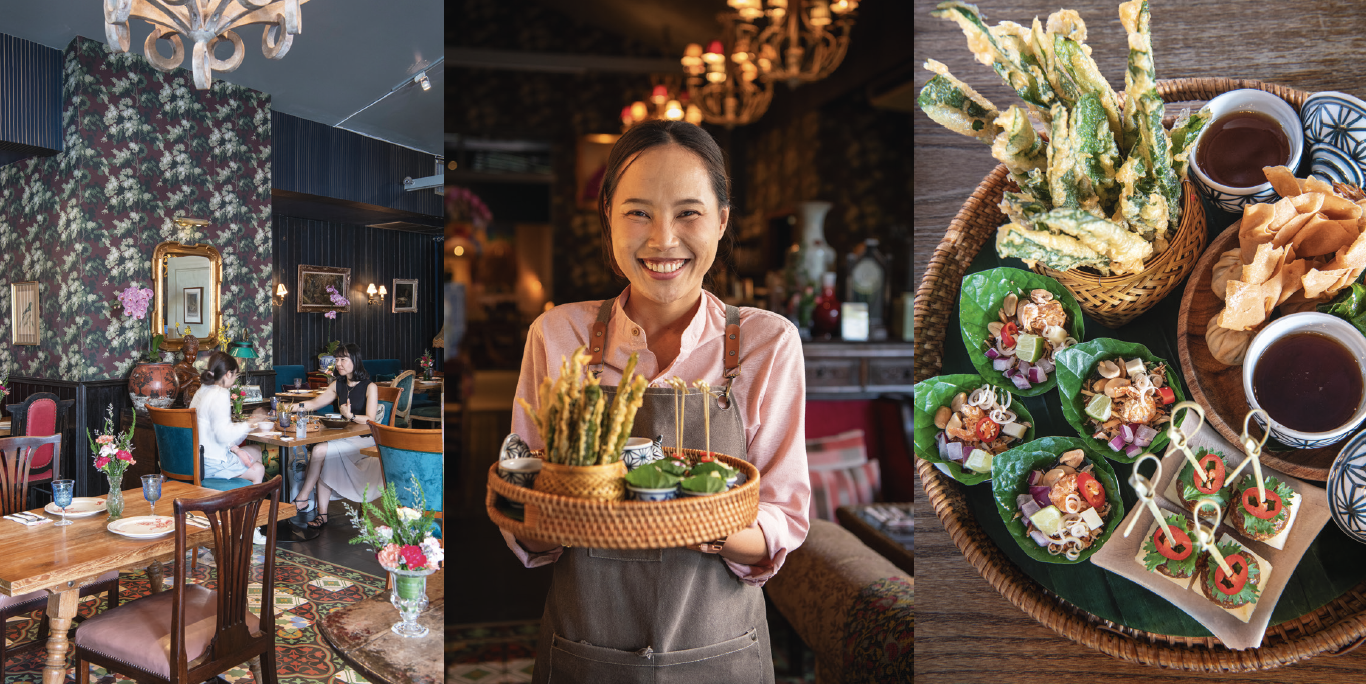
Everything is deeply regional, deeply alive. Stalls overflow with catfish, eel and tilapia still flapping in buckets. Pyramids of curry paste gleam like jewels. Shrimp paste comes in tied-up plastic bags. ‘The white one is from the river,’ Bas explains. ‘The darker – and saltier – comes from the sea.’ There’s turmeric in two colours: yellow for curries, white to eat fresh; and basil in endless variations, including red, white and holy. There are lotus stems in delicate hues of pink and red, which are crunchy and taste subtly sweet, almost like a water chestnut. And, oh, live frogs crammed in net baskets, waiting for their culinary fate. Elegant Kiti Panit is only a short ride away. Once Chiang Mai’s first department store, the 19th-century teak mansion was brought back to life thanks to a meticulous restoration of its carved ceilings, stairs and wooden panels. Still owned by the same Chinese family who built it, it reopened as a restaurant six years ago, with Bas at the helm since day one.
The smells and flavours of the market take a different shape on the table. Makwaen for citrus spark, coriander for freshness, fermented soy for umami. It’s Northern Thailand on a plate, a balancing act of savoury, bitter and tart, earthy and herbal, always authentic in taste, yet modern in presentation and techniques. Bas describes it as ‘Lanna cuisine told with modern tools’, which translates to sous-vide, slow cooking and a touch of smoke.
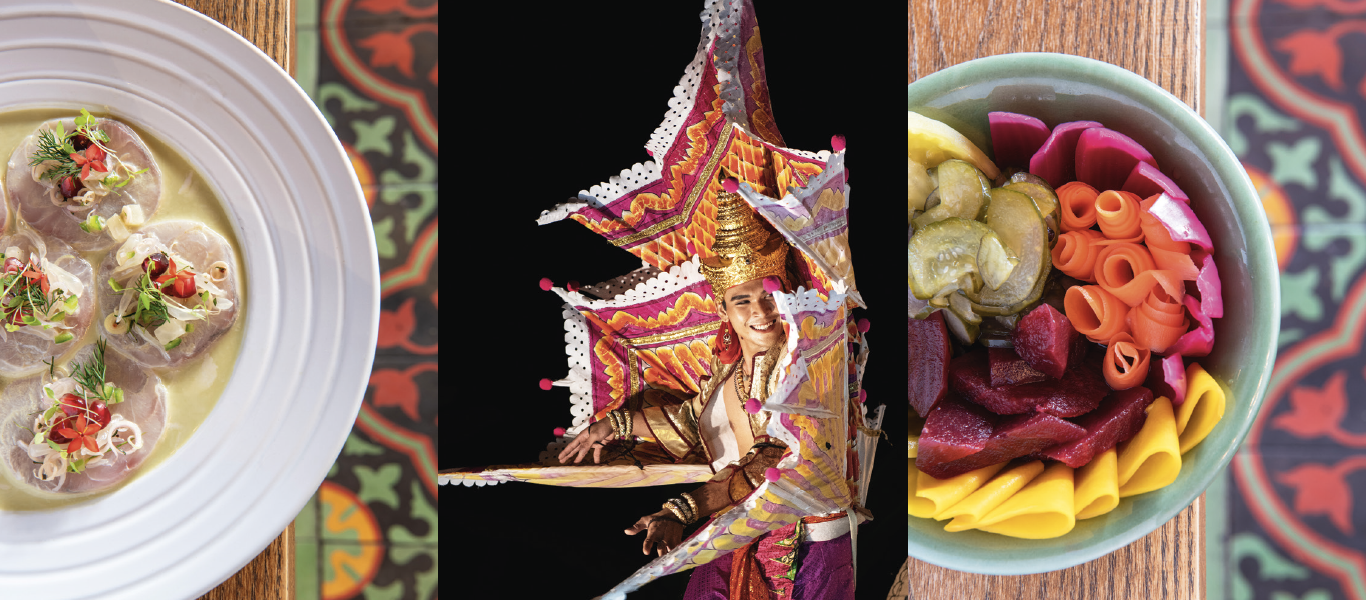
On the other side of the city, Chef Phanuphol ‘Black’ Bulsuwan opened a small Japanese-style eatery, Blackitch, with a bold vision: drawing on tribal wisdom and passing it on to his guests through food, thus shedding light on ingredients often unfamiliar even to Thais. A former civil engineer, Black eventually traded blueprints for fermentation jars. His philosophy of ‘holistic, localised, artisanal cuisine’ is rooted in Thailand’s overlooked indigenous food-ways and endangered seasonal ingredients.
‘Thai cuisine is a diverse mosaic. Every region is a universe,’ he says. His menus, which change every two to three months, are inspired by his foraging trips, family memories and 77 provinces’ worth of culinary exploration. It’s all about ingredients – some ancient, some obscure, like those rare wild mushrooms that he forages himself. ‘If you stop eating certain foods, they disappear. And then the wisdom behind them fades away too,’ he says.
Fermentation is the pulse of the place. The shelves on the ground floor groan under the weight of glass jars filled with preserved delicacies. ‘We ferment from leftovers,’ says Black. ‘We reduce waste, but we also add depth, giving those rare ingredients a second life. And, this year, for the first time, our menu revolves entirely around lost northern recipes. A project made possible thanks to a collaboration with researchers from Chiang Mai University. Some dishes had only one person left who still remembered how to cook them, so it was time to act.’
His take on khao soy, the iconic northern noodle curry, recalls a lesser-known version made without coconut milk; infused with foresty notes, smoky pork leg and fermented fish skin, it is unlike any other. The tea-leaf salad – a nod to Burmese lahpet thoke – is paired with raw fish and crushed peanuts, layered with umami and crunch. Then there’s the unmissable sai oua, a pork and river fish sausage, brightened by makrut lime and lemongrass: fiery, fragrant and impossible to forget.
Northern sausages are also where Sai Thammapunya’s own culinary story begins. She grew up watching her parents sell food at the local market. ‘I loved my mum’s recipes so much, I wanted to share them with the world,’ she recalls. After graduating, she launched her sausage business online with nothing but a Facebook page, a cooler full of grilled sai oua, and a few thousand baht. The sausages were vacuum-packed, kept on ice and delivered by bus across Thailand. The idea worked – and caught on fast. Sai first opened a seven-table restaurant near Chiang Mai University and then moved everything to her family’s farm in the outskirts of the city. This is how Kinlum Kindee, a no-frills open-air restaurant surrounded by vegetable gardens, was born.
‘Pen, my mum, is in the kitchen. I’m just the mind behind the idea,’ Sai laughs. This is where the most curious palates come to discover true local flavours such as tum ma keua yao kai ped tom – where roasted aubergines are mashed with grilled salty fish and shrimp paste – or the spicy and sour green Taro river fish soup. ‘This isn’t food from just one culture,’ Sai explains. ‘Lanna cuisine is a blend of many small tribal communities. Some dishes, like hung lay curry, even come from Burma.’ For Sai, this interwoven heritage is the secret to its charm – a cuisine shaped by diversity, rooted in the mountains and carried forward with pride. The name Kinlum Kindee comes from the Lanna expression for ‘enjoy eating’, and here, with crunchy salads picked metres away, bright butterfly pea sticky rice and smoky grilled field crab innards cooked with egg yolk (buu-ong), joy is very much on the menu.
The refined tranquillity of the Four Seasons Resort Chiang Mai is only a short drive north – a haven of five-star bliss surrounded by vivid rice paddies and farmers in conical hats. Behind the picture-perfect setting, the food is fiercely local too. ‘My credo is simple,’ says Alvin Dela Cruz, the newly appointed executive chef. ‘If we can’t grow it, we’ll source it locally.’ From fragrant herbs to blistering chillies, ingredients are used with an open-minded approach to experimentation. Take his bread, created with local baker Yanisa: a spiced sourdough laced with chilli and sticky rice. ‘It makes sense here. It tastes of where we are,’ says Alvin. His culinary obsession? Pumpkin. ‘I did ten years of pumpkin festivals in California, where I come from, so I can probably name every variety,’ he laughs. ‘Here, I’ve found one just like the Mantovana squash from Italy – thick-skinned, super-yellow, amazing for roasting.’
In many travellers’ minds, Chiang Mai and Chiang Rai are often an inseparable pair, two distinct souls of Northern Thailand that should be experienced in tandem. And those who want to make the four hour drive north to Chiang Rai will be led into a different dimension – one of silence, wilderness and untamed beauty.
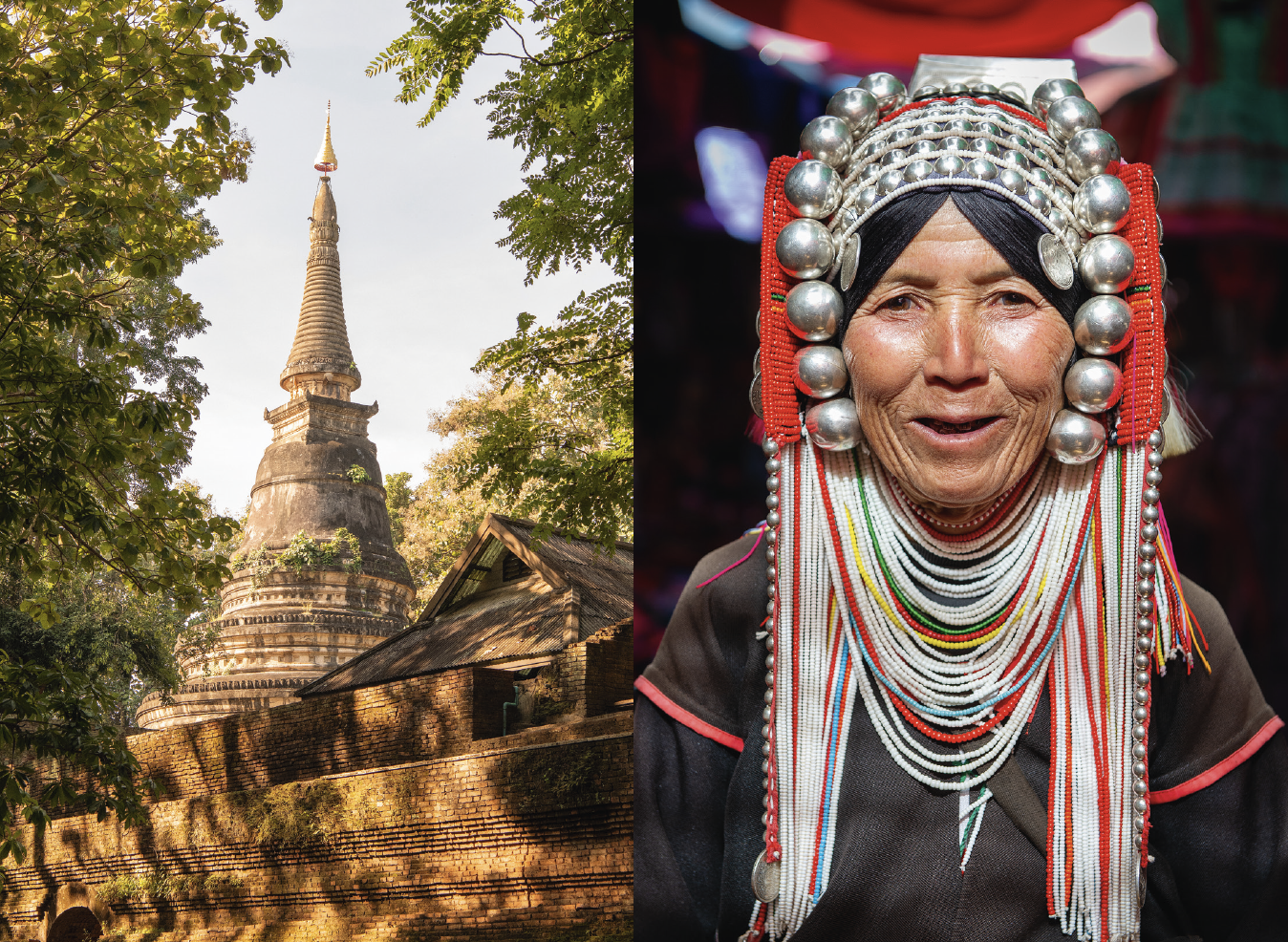
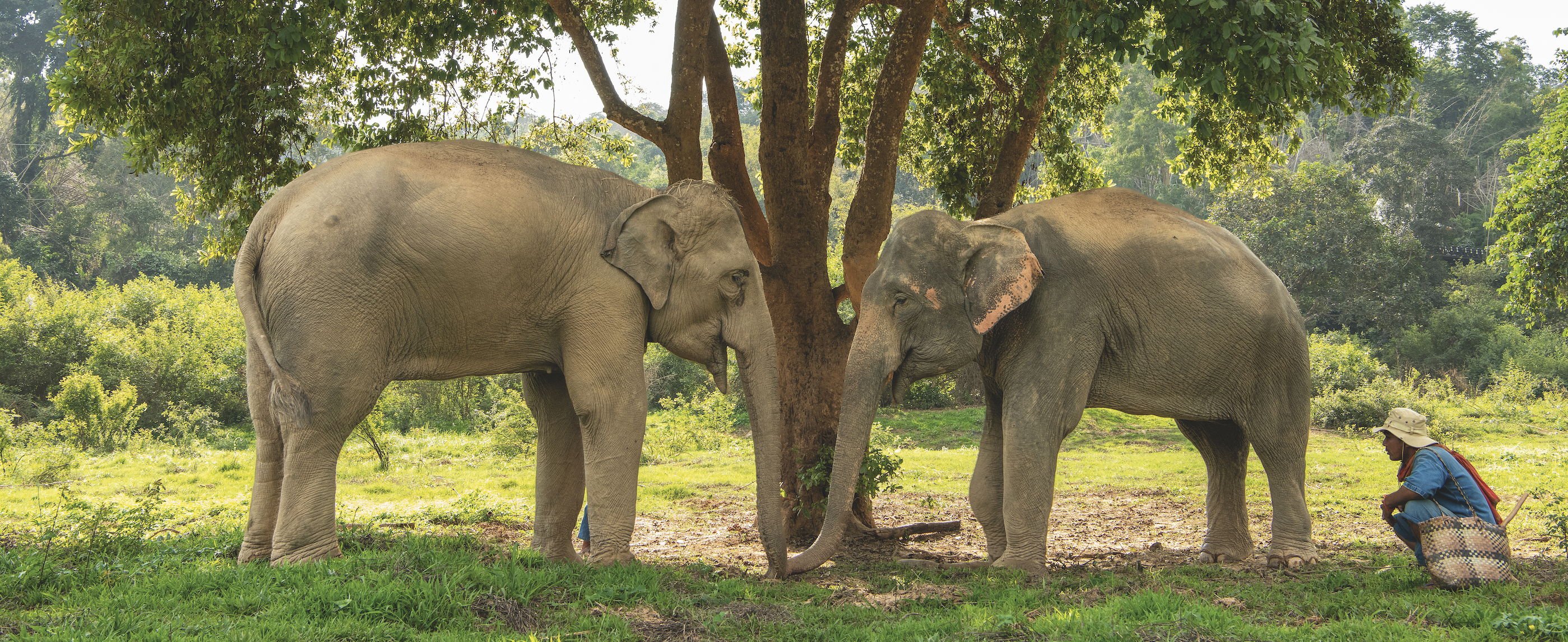
At the fabled Golden Triangle, rivers converge. The quiet Ruak slips into the broad Mekong, drawing a natural border between Thailand, Myanmar and Laos. The jungle sets the rhythm, the river dictates the pace and the quiet, deliberate step of elephants marks the passing of time. The word ‘triangle’ is literal here, and ‘gold’ refers to the opium trade that once flourished in the area. Today, coffee, tea, tobacco and cannabis (now legal) have replaced the poppies, with the royal family playing a key role in encouraging this agricultural shift, by supporting not only crop growing, but also tribal craft, from ceramics to weaving.
Here, in the elegant hush of luxury jungle hideaways, street food stalls and family-run kitchens take a step back and the focus shifts to immersive experiences. Think khan tok dinners around low, round trays laden with soups, curries and sticky rice, but also encounters with those who truly inhabit these lands – from the mahouts who live in symbiosis with their elephants to Boon Namprom, a fisherman who meets guests for an early morning fishing trip from the Four Seasons Tented Camp Golden Triangle.
The long-tail boat glides along the bronze surface of the Ruak. Boon fled Myanmar with his family three decades ago and settled on the quieter Thai shore, where he now divides his time between tending cornfields and casting nets. Wading chest-deep among the muddy reeds, Boon demonstrates his skill in setting traditional bamboo traps along the riverbank.
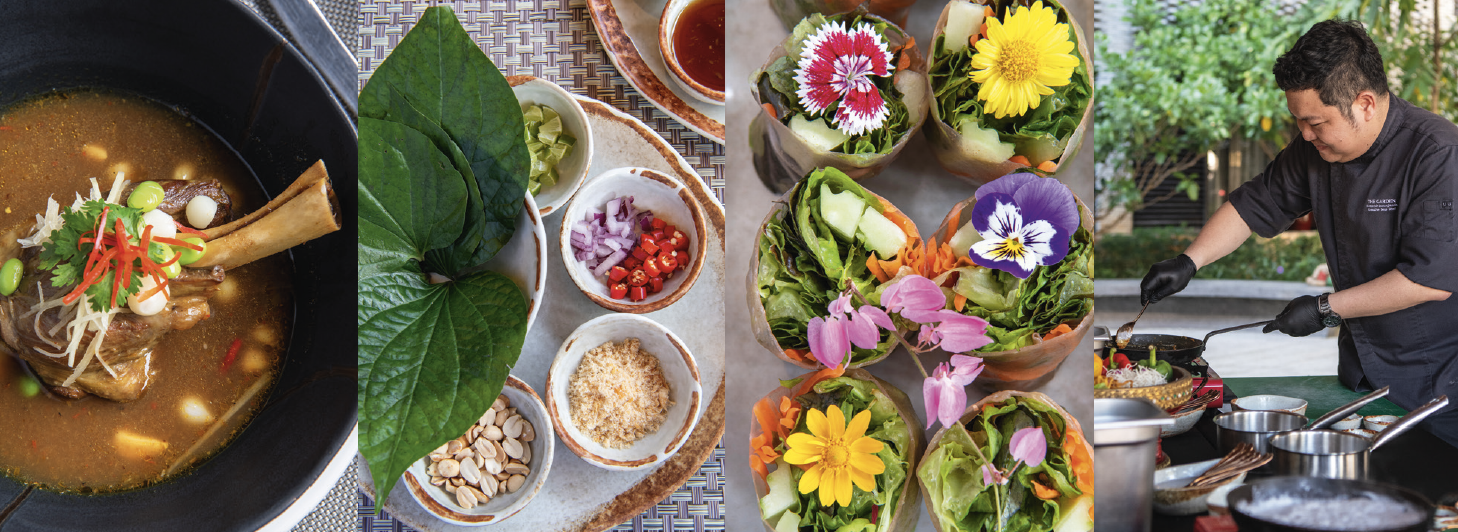
A good day will usually yield around 5kg of fish, earning the fisherman roughly 300 baht at the local Sob Ruak market. The work is hard, uncertain, dictated by the mood of the river – but it’s also backed up by knowledge that has been passed down through generations, a rhythm as enduring as the current. The experience, part of the Four Seasons’ ‘cultural immersion’ programme is a gentle reminder that even in the most luxurious corners of the world, authenticity lives just downstream.
The wonder continues at the nearby Anantara Golden Triangle, which is elevated, quite literally, into the treetops. Dining at Canopy, the resort’s new capsule suspended 52m above the jungle, is one of those once-in-a-lifetime experiences. It begins at dawn, in near silence. Breakfast arrives in traditional Pinto tiffins: light, elegant, infused with local flavours. A thick blanket of mist clings to the mountains, softening every edge and blurring the outlines of the world below. As the light gently brightens, the forest stirs into life; birds call from unseen perches and the silhouettes of elephants begin to emerge from the haze, moving slowly across the clearing. It’s a moment that feels almost outside of time, where nature, ritual and wonder align in perfect balance. A final crescendo in a journey defined by slowness and quiet awe.
This article first appeared in the Reader Awards 2025 issue of Food and Travel Magazine. To subscribe, click here.
Where to stay
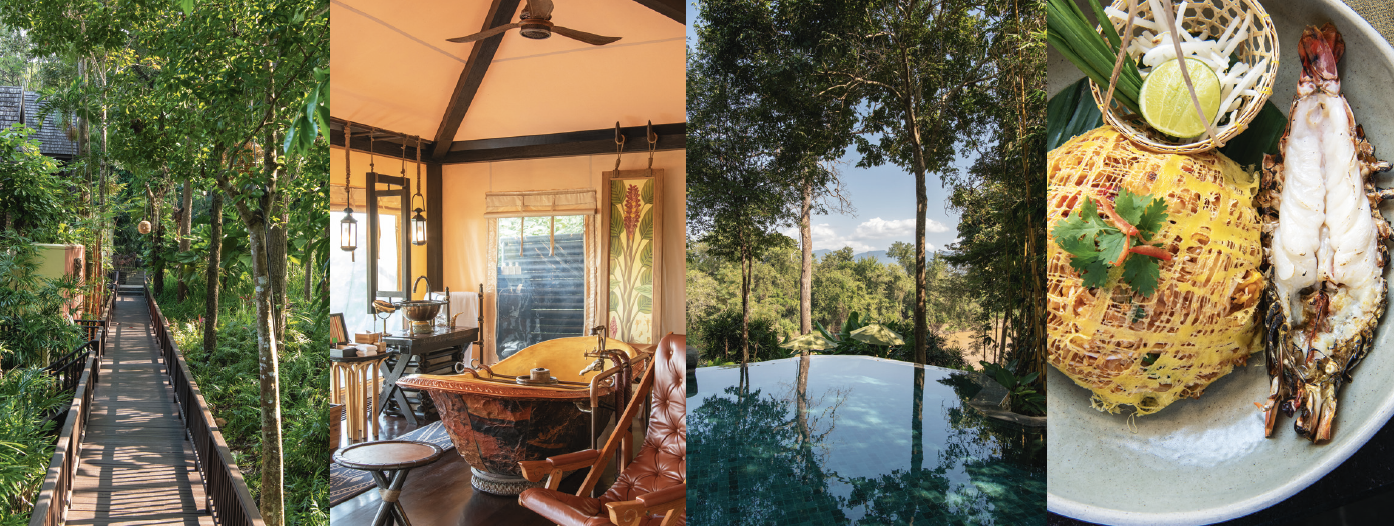
137 Pillars House Chiang Mai Set in the former headquarters of the Borneo Trading Company (1889–1958), this heritage gem in the arty Wat Gate district oozes colonial charm with a modern touch: wraparound verandas, hand-crafted teak furniture, lush gardens and a dreamy 25m infinity pool tucked below a brick garden wall, plus some of the city’s most serene suites. In-house dining options offer both Western and Thai/ Asian menus, with classics like the delicious Tom Kha Gai soup or river prawn Pad Thai. At sundown, make for the gentlemen’s-club allure of Jack Bain’s Bar. Doubles from £615. 2 Soi 1, Nawatgate Road, Tambon Watgate, Muang Chiang Mai, +66 53 247788, 137pillarshotels.com
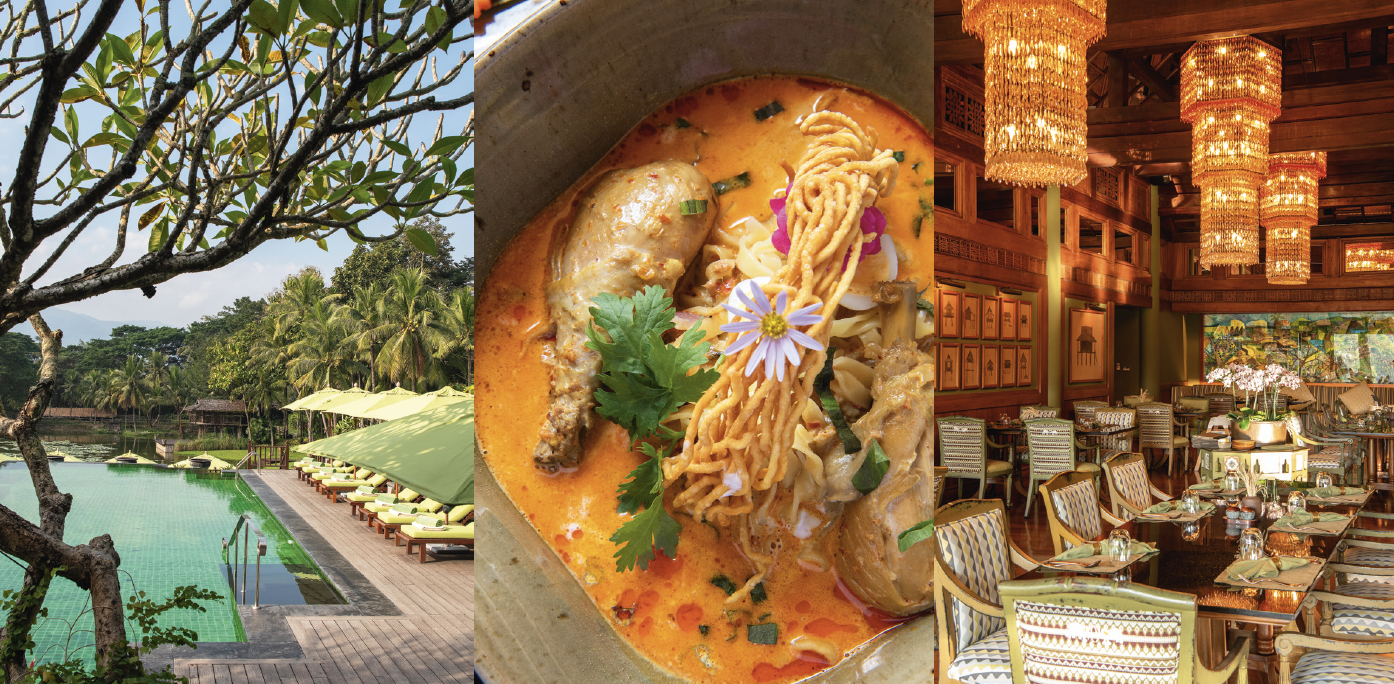
Aleenta Retreat Chiang Mai Built like a village, this award-winning property on the fringe of Doi Suthep mountain combines four 200-yearold teak villas with contemporary architecture, resulting in warm-toned interiors, handmade Lanna tiles and Egyptian cotton bedding with handstitched embroidery. Two wellness activities per guest are included and the Ayurah Spa near the central pool is the hotel’s beating heart. Plastic is eschewed, from the deluxe balcony rooms to two-storey residences with private courtyard and plunge pool, with room amenities made from cornstarch or wood. The sustainable approach continues at The Garden restaurant, which uses organic, locally sourced ingredients and supports small producers – book into a cooking class with chef Komkrich ‘Arm’ Issarajinda to delve deeper. Headed by expert mixologist Phoomkit ‘Pom’ Muenyong, 1892 bar is a destination in itself, to sip on Thai-inspired cocktails like the lemongrass caipirinha. Doubles from £182. 189 Soi Ban Mai Lang Mo 18, Suthep, Muang Chiang Mai District, Chiang Mai, +66 52 090333, aleenta.com/chiang-mai
Anantara Golden Triangle Elephant Camp & Resort Two Michelin keys aren’t awarded lightly and everything here is designed to pamper, from the hilltop setting overlooking the Mekong to the sweeping views of Myanmar and Laos from its infinity pool, and a lavish breakfast at Sala Mae Nam restaurant. But the 20 elephants in the sanctuary are the main draw: guests can join them on their morning walks or spend a once-in-a-lifetime night inside a transparent ‘bubble’ room with uninterrupted views of the gentle giants. Doubles from £955, including breakfast. 229 Moo 1, Chiang Saen, Chiang Rai, +66 53 784084, anantara.com
Four Seasons Resort Chiang Mai Lush gardens, paddies and forested hills surround this haven in the Mae Rim Valley, maintained by a team of 40 gardeners and a bunch of water buffalo. Accommodation is in Lanna-style villas and pavilions, and a farm provides produce for two restaurants, North and Rim Tai Kitchen. Guests can join farming rituals, plant rice or set off on meditative nature walks. Doubles from £876. 502 Moo 1, Mae Rim-Samoeng Old Road, Chiang Mai, +66 53 298181, fourseasons.com/chiangmai
Four Seasons Tented Camp Golden Triangle A dreamlike glamping escape ten minutes by boat from the Golden Triangle, with 14 opulent tents housing brass bathtubs, hand-loomed textiles, teak furniture and leather loungers. Mornings may begin by feeding the camp’s elephants cucumbers and sugarcane or joining in a bathing ritual in the river. Opt for the ‘My Elephant & I’ experience for an intimate, educational jungle encounter. Doubles from £2,602 (minimum two nights), including meals. 499 Moo1 T Vieng, Chiang Saen District, Chiang Rai, +66 53 910200, fourseasons.com/goldentriangle
Meliã Chiang Mai Spanish hospitality meets Thai kindness at this 260-key urban hotel towering over Chiang Mai’s Ping river and Night Bazaar. Upgrade to The Level for private check-in/check-out and unlimited access to the 21st-floor Level Lounge, with breakfast, afternoon tea, cocktails and snacks served all day. Doubles from £154. 46, 48 Charoenprathet Road, Chang Khlan Mueang, Chiang Mai, +66 52 090699, melia.com
Travel Information
Chiang Mai and Chiang Rai are in the northernmost part of Thailand, close to the border with Myanmar and Laos. The average flight time from London to Chiang Mai, via Bangkok, is 14-15 hours. Regular buses and taxis run between Chiang Mai and Chiang Rai, with the journey taking 4-5 hours. Thailand is seven hours ahead of GMT. The currency is the Thai Baht. Central Thai is the national language of Thailand, with a regional dialect, Northern Thai, also spoken in Chiang Mai and Chiang Rai.
GETTING THERE
EVA Air and Thai Airways both offer flights from London Heathrow to Chiang Mai via Bangkok. evaair.com thaiairways.com
RESOURCES
Amazing Thailand is the official website of the Tourism Authority of Thailand, with information and advice to help you plan your trip, including a section dedicated to the Northern region, with useful details of what to see and do and where to stay in Chiang Mai and Chiang Rai. tourismthailand.org
Where to eat
Prices are per person for a three-course meal, excluding drinks, unless otherwise stated
Area 27 Owner Nat roasts local beans and serves hand-drip brews at this cult spot for coffee purists. Open 8.30-10.30am. Coffee £1.40. Rachadamnoen, PraPokKlao Soi 5 Mueang, Chiang Mai Blackitch An ever-evolving tasting menu draws on produce from all 77 Thai provinces, with fermentation as a recurring theme. The coconut-free take on khao soy is unforgettable, revealing flavours long left behind. 11-course tasting menu £60. 27/1 Nimmanhemin Soi 7, Suthep, Chiang Mai, +66 93 6956464, blackitch.com
Ginger Farm Kitchen This family-friendly spot in Chiang Mai’s Saraphi district pairs rustic interiors with wide windows and lush views. Chef Aree’s Northern Thai dishes include deeply aromatic curries and spicy aubergine salads. What began as a single concept has grown into a 25-branch success story. The on-site farm, home to rescued buffaloes and horses, is a hit with kids. From £11.70. 34/1 Moo 12, Hang Khawe Soi 9, Thawangtan, Saraphi 50140, +66 52 080928, gingerfarmkitchen.com
The House by Ginger A retro-chic restaurant and bar in a beautifully preserved 1937 Thai heritage home – all velvet sofas, vintage music and colonial flair. The menu uses premium ingredients like New Zealand beef and herbs picked at the owners’ Ginger Farm (see above). The mixed appetiser platter is a must. From £18.30. 199 Mun Mueang Road, Si Phum, Mueang Chiang Mai, +66 53 287681, thehousebygingercm.com
Kinlum Kindee A true farm-to-table spot, with produce picked just metres away. Expect plastic tablecloths and bold, spicy, sour flavours. First-timers should try the sawasdee jao platter of local specialities such as house-made sai oua sausage. From £18.30. Kinlum Kindee, 172 Mueang Len, Amphoe San Sai, Chiang Mai, +66 82 6563941, kinlumkindee.com
Kiti Panit Traditional Lanna recipes are reimagined by Pramkamon ‘Bas’ Suantong in a beautifully restored 1888 teakwood mansion. Coriander salad with grilled chicken and rich, slow-cooked hung lay curry bursting with northern spices are highlights. From £16.40. 19 Tha Phae Road, Chiang Mai, +66 80 1917996, kitipanit.com
Mai Restaurant and Bar and Mai The Sky Bar The 21st and 22nd floors of Meliá Chiang Mai are home to a fine-dining restaurant (dinner only) and bar respectively. Expect jaw-dropping views, sleek interiors and impeccable presentation. Under chef Suksand ‘Billy’ Chutinthratip, the restaurant kitchen follows a zero-waste ethos, with delicious desserts repurposing local surplus. Upstairs in the bar, fragrant signature, lychee-and-vodka cocktail Mai the Sky is as uplifting as the view across to the Ping river and mountain-top Doi Suthep temple. Dinner from £22.70; cocktails from £5. 46, 48 Charoenprathet Road, Chang Khlan Mueang, Chiang Mai, +66 52 090699, melia.com
Roti Pa Day A humble Chiang Mai pancake stall that draws daily crowds. Eggfree dough is sizzled in coconut oil until crisp and chewy, then topped with your pick from about 20 options – condensed milk is a classic. The women behind the counter move at lightning speed – no wonder they’ve earned a Michelin Bib Gourmand four years running. Rotis from 55p. In front of Wat Mahawan, Thapae Road Soi 4, Chang Moi, Mueang Chiang Mai, Chiang Mai
Samsarn The newest addition to Anantara Golden Triangle offers an elegant take on the flavours of Thailand, Laos and Myanmar. Chef Pisit ‘Jino’ Jinopong draws on decades of experience across Asia in finessed Northern Thai curries, with creative use of Laotian herbs and Burmese spices and an emphasis on fire and fermentation: expect a sensory journey through the cuisine of the Golden Triangle in an intimate jungle setting. Dinner only; booking essential. 7-course tasting menu £84 (vegetarian, £65). 229 Moo 1, Chiang Saen, Chiang Rai, +66 53 784084, anantara.com
Food Glossary
- Buu ong
- Field crab innards cooked with egg yolk — smoky, rich and usually grilled. A rustic delicacy from the rice fields
- Hung lay curry
- A Burmese-influenced Northern Thai pork curry, slow-cooked with tamarind, garlic and spices. Rich, sweet-savoury, coconut-free
- Khan
- An assortment of northern finger food in small bowls, designed for sharing
- Khan tok
- A traditional meal eaten seated on cushions around a tok or low round table
- Khao soi gai
- A mildly spicy coconut soup with flat egg noodles and a choice of meat, topped with crisp fried noodles and chopped coriander
- Lahpet thoke
- Burmese salad made from fermented tea leaves. Chiang Mai versions often include local twists such as raw fish and peanuts
- Larb
- A heavily seasoned, hand-minced meat salad – raw or cooked – garnished with freshly chopped herbs. Common in both Thailand and Laos, it has many regional variations
- Makwaen
- A mini star-anise-like peppercorn from the same family as Sichuan pepper, with a distinctive orange-like scent
- Nam phrik
- Spicy dipping sauces, typically served with vegetables, meat or fish
- Pinto
- A Thai lunch box made of three metal or bamboo containers, stacked and held together by a frame, traditionally used to carry meals outside the home
- Sai oua
- Spicy pork sausage infused with a mix of aromatic local herbs andspices, typical of Northern Thailand
Get Premium access to all the latest content online
Subscribe and view full print editions online... Subscribe