Petra SS 2321533795

The Call of the Desert - Africa- Asia- South America

Step into an arid wilderness, where shifting sands, endless skies and deep-rooted traditions converge. Rod Mackenzie explores adventures to be had in some of the world’s most extraordinary desert landscapes

This article was taken from the May 2025 issue of Food and Travel. To subscribe today, click here.

TRACING ANCIENT EMPIRES EASTERN DESERT, JORDAN

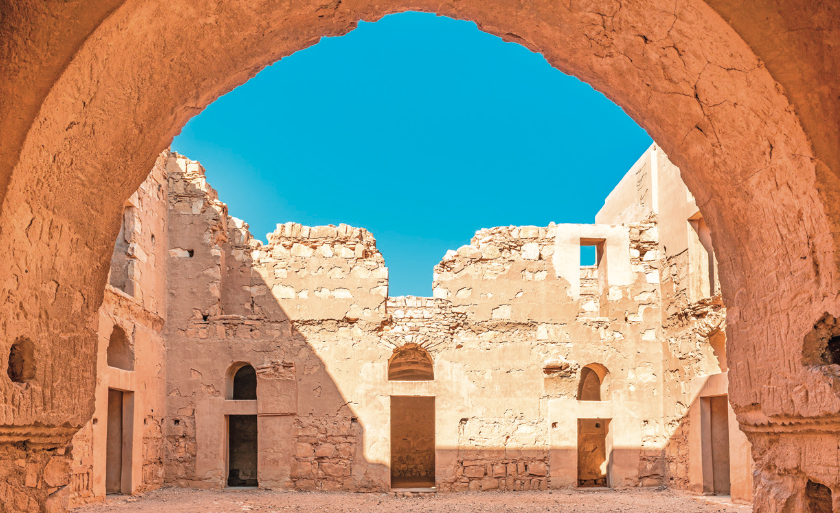
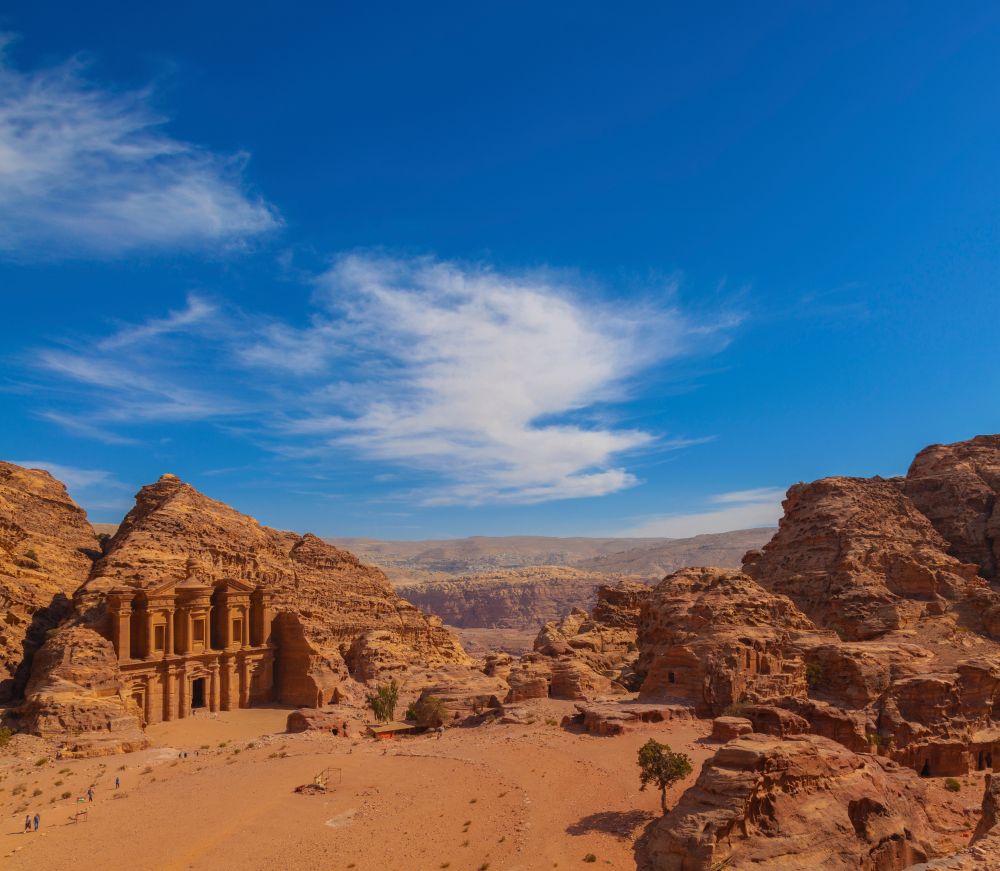
Jordan has long been a crossroads for pilgrims, traders and armies, its history etched into canyons, carved into cliffs and layered beneath the sands. Before you encounter the area’s most famous draw, the iconic rose-red city of Petra, venture deeper into the heart of the desert to discover some of the kingdom’s lesser-known yet equally captivating landmarks – the Umayyad Desert Castles. Spread across the barren expanse of Jordan’s eastern desert, these atmospheric fortresses and palaces tell the story of the early Islamic era and offer a fascinating glimpse into the history that shaped the region.

Qasr Azraq, built from dark basalt stone, is an imposing fortress that once served as both a military outpost and royal residence. Its remote location is a testament to its strategic importance. Qasr Amra, a Unesco World Heritage Site, is famed for the stunning frescoes that decorate its walls – an uncommon sight in Islamic art. This pleasure palace, with its well-preserved bathhouse and water systems, provides an intimate look at the leisure activities of the Umayyad rulers. Meanwhile, Qasr Kharanah – one of the most striking desert castles – stands out with its fortress-like architecture and its mysterious function, either as a caravanserai or a military post hidden in the desert.

Led by expert archaeologist Nick Jackson, who has directed excavations across the Eastern Mediterranean, Andante Travels’ Jordan: Petra and the Desert Fortresses tour brings this history to life. With Nick’s extensive knowledge of the region, you will uncover the rich cultural layers of these sites, the Roman town of Jerash and the treasure of Petra itself. Known for its monumental rock-cut architecture, the city’s ancient tombs and temples are a testament to the ingenuity of the Nabataeans, who carved their settlement into the cliffs over 2,000 years ago.

Screenshot 2025 06 11 at 17 06 14

Travel Details

andantetravels.co.uk

LOST CIVILISATION ON THE SILK ROAD TAKLAMAKAN DESERT, CHINA

Readers captivated by The British Museum’s recent Silk Roads exhibition will find themselves drawn to north-west China’s Taklamakan Desert – a forbidding sea of sand that once formed part of the northern route of the Silk Road. Despite the implied peril of its name – said to mean ‘go in and you won’t come out’ in Uyghur – traders and pilgrims braved its barren landscape for centuries, linking great civilisations.

Dunhuang, the last outpost before the desert, remains a gateway to this storied past. The Mogao Caves, with their exquisite Buddhist murals and statues, have withstood over a millennium in the dry desert air. Nearby, the Singing Sand Dunes – named for the dramatic, roaring sound of the sands in strong winds – rise like giant frozen waves, while the jade-green Crescent Lake offers an improbable oasis against the endless golden hues. At sunset, as the dunes glow dark yellow, it’s easy to imagine the impressive sight of the caravans that once regularly made their way across the sun-blasted terrain.

South of the desert’s heart lies the Turpan Depression, one of the lowest and hottest places on earth, defying its arid surroundings with lush vineyards sustained by the ancient karez irrigation system. Looming over this oasis, the Flaming Mountains glow blood-red at midday – the mythical land of the Monkey King, in the Chinese classic Journey to the West.

Further west, Kuqa was once a thriving Buddhist kingdom. The Kizil Thousand Buddha Caves, carved into sandstone cliffs, hold frescoes depicting monks, celestial musicians and stories drawn from Indian and Persian traditions – fragments that provide insight into a vanished world.

At the Silk Road’s westernmost edge, Kashgar remains its most evocative city. Its Sunday Market is one of the largest in Central Asia: a riot of colour and sound, where Uyghur traders barter over carpets, spices and livestock. As dusk falls, the scent of cumin and lamb skewers fills the air, a reminder that Kashgar is still pulsing with Silk Road spirit.

RIDING THE SANDS OF THE SAHARA SAHARA DESERT, MOROCCO

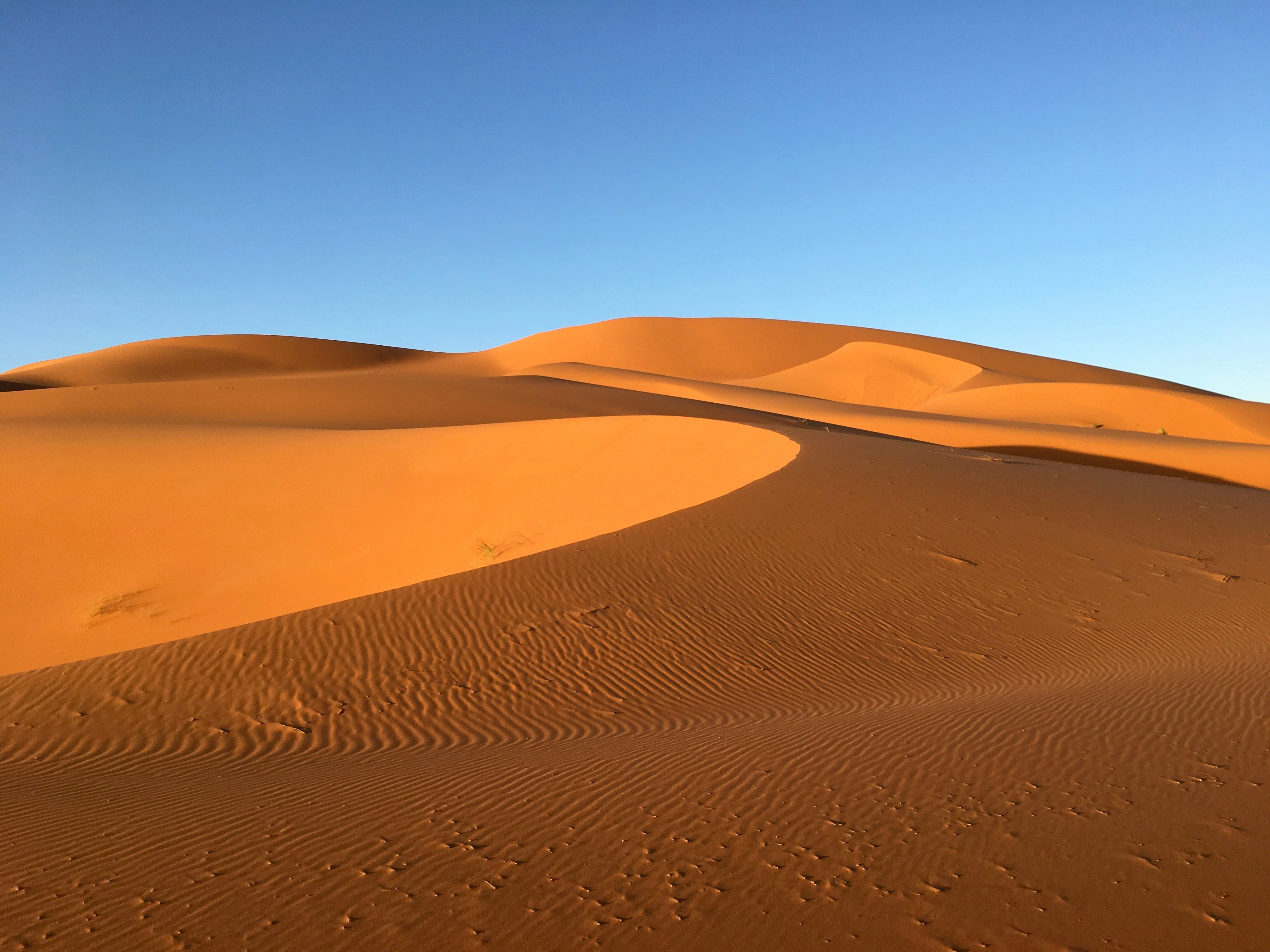
The Sahara, the world’s largest hot desert, has fascinated explorers for centuries. Riding on horseback through Morocco’s stretch of this vast wilderness offers a rare sense of freedom, a way to experience the landscape as nomads have for centuries. Unlike travelling by vehicle, horses move quietly across the dunes, rocky plateaux and dry riverbeds, allowing for a deeper connection with the desert’s rhythms.

Equus Journeys’ Horses, Dunes and Nomads trail ride takes small groups on a six-day trek through some of the most striking and remote parts of the Moroccan Sahara, far from the usual tourist routes. The Barb and Arab-Barb horses, sure-footed and hardy, are perfectly suited to the demands of the terrain, covering long distances with ease. The route takes in the Chouiref Plateau, a striking stretch of open desert, before heading into the rolling dunes of Erg Chebbi, the highest in Morocco. The ride is paced to the landscape, with long, steady canters across firm ground alternating with slower sections where horses pick their way through softer sand and rockier stretches.

The rewards, however, are exceptional: the exhilaration of galloping beneath endless skies, the opportunity to be awed by solitude, coming into contact with no other travellers, except the occasional passing Berber nomad.

Despite the demands of the ride, there is no rough camping. Evenings are spent in cosy desert inns and riads such as Riad Nomad, perched above the Gorges of Foum Mharech, and the Ouzina Rimal inn, nestled deep in the dunes of Erg Ouzina. Here, riders can unwind with a traditional Moroccan meal and a bed, drifting off to the hush of shifting sands.

Mark kuiper 2 BM Sj x N008 unsplash

Travel Details

equus-journeys.com

RAJASTAN'S CAMEL SPECTACLE THAR DESERT, INDIA

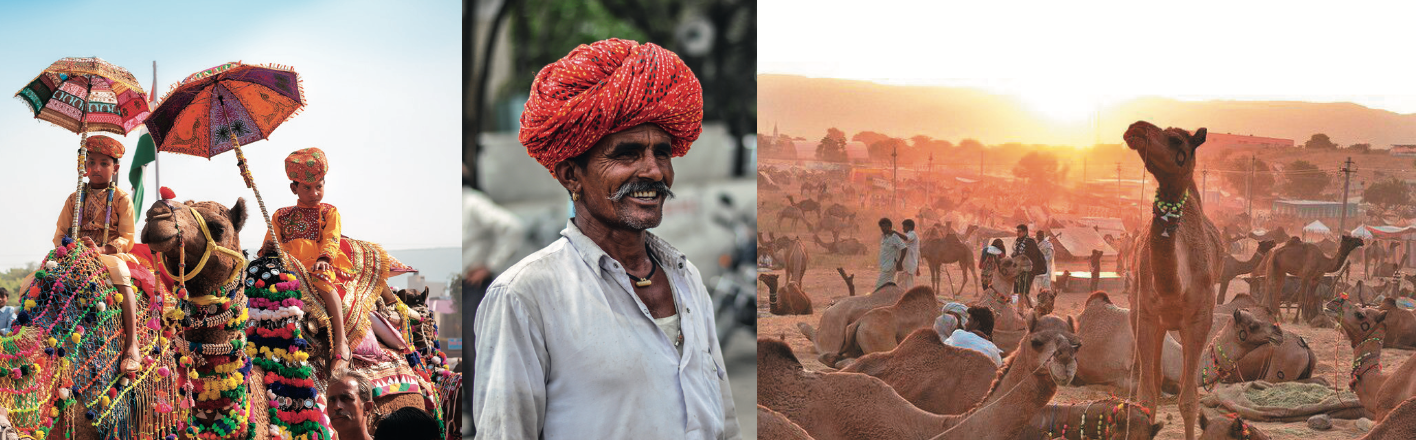
Rajasthan’s desert heartland comes alive each November as Pushkar, a small town on the edge of the Thar Desert, transforms into the stage for one of India’s most spectacular gatherings – the Pushkar Camel Fair. Under the full moon of Kartik Purnima (5 November 2025), thousands of Rabari herders converge on the town, leading camels adorned with painted motifs and beaded necklaces into an enormous trading ground. The air vibrates with the lively bartering of livestock, while festival-goers take in the surreal spectacle of camel races, fire dancers and the pageantry of a camel beauty contest. At the heart of it all, pilgrims gather at Pushkar’s sacred lake, its waters flickering with the glow of temple lamps, offering prayers beneath the desert sky.

Beyond the festival, the Thar Desert stretches across a boundless sea of rolling sand, sun-scorched plains and ancient trade routes. For centuries, camel caravans laden with spices and silks crossed this arid land, linking Rajasthan’s princely cities to the wider world. Today, Jaisalmer, Jodhpur and Bikaner serve as gateways to this evocative landscape. Camel safaris follow the ancient routes of long forgotten traders, while off-road 4x4 expeditions power across dunes, sending golden clouds of sand into the air. As the desert bathes in twilight, sunset rides create a cinematic spectacle with the saffron hues glowing in the fading light.

For those seeking a deeper desert experience, Rajasthan’s luxury tented camps provide a refined take on traditional nomadic life. At Suján The Serai, a private desert estate 40 minutes’ drive from Jaisalmer, guests retreat to Mughal-inspired tents with private plunge pools and enjoy candlelit dining beneath the stars. As night falls, the heat of the day softens into a cool breeze, the crackle of a campfire mingling with the haunting melodies of Manganiyar folk musicians.


IN THE FOOTSTEPS OF THE SAN KALAHARI DESERT, NAMIBIA

Namibia, one of the most remote and least populated places on earth, is a land of staggering beauty and ancient landscapes. This journey takes in both the Namib Desert – the world’s oldest at over 55 million years – where dunes the height of skyscrapers meet the Atlantic coast, and the Kalahari, a fossil desert that has sustained life for tens of thousands of years. It’s in the Kalahari, near the remote Tsumkwe area, where the experience deepens.

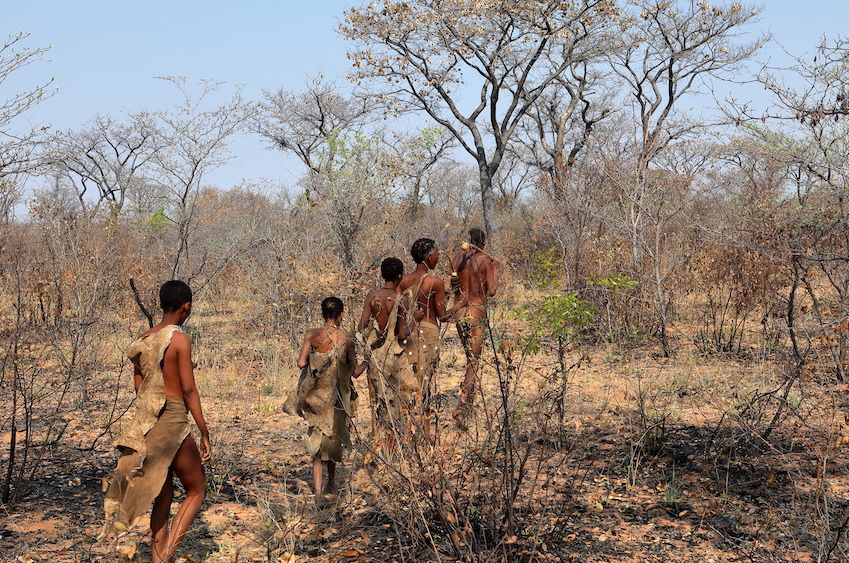
Here, the San Bushmen, one of the world’s oldest continuous cultures, still live in harmony with this arid land. A mobile camp, set up just for your group, provides an exclusive opportunity to immerse yourself in their world. With a translator by your side, you’ll walk with the San through the bush, learning survival skills honed over millennia – tracking animals, unearthing hidden water sources and foraging for edible plants. The terrain unfolds as quintessential, bone-dry African bush: an undulating swathe of ochre-coloured sand punctuated by clusters of camel thorn trees and resilient shrubs offering vital shade and sustenance. You’ll watch as fire is conjured from wood and friction, a skill as simple as it is essential for survival.

As night falls, you can sleep in a traditional grass hut within the village – an experience as raw and authentic as it gets. Meals on this journey draw from local traditions, featuring fresh vegetables, San-reared chickens, and game meats like eland and kudu. As the desert cools, the evening unfolds around the flickering campfire, where stories of ancestors and endurance are shared by your hosts.

Screenshot 2025 06 11 at 17 25 44

Travel Details

pelorustravel.com

STARGAZING IN SOUTH AMERICA ATACAMA DESERT, CHILE, AND THE BOLIVIAN ALTIPLANO

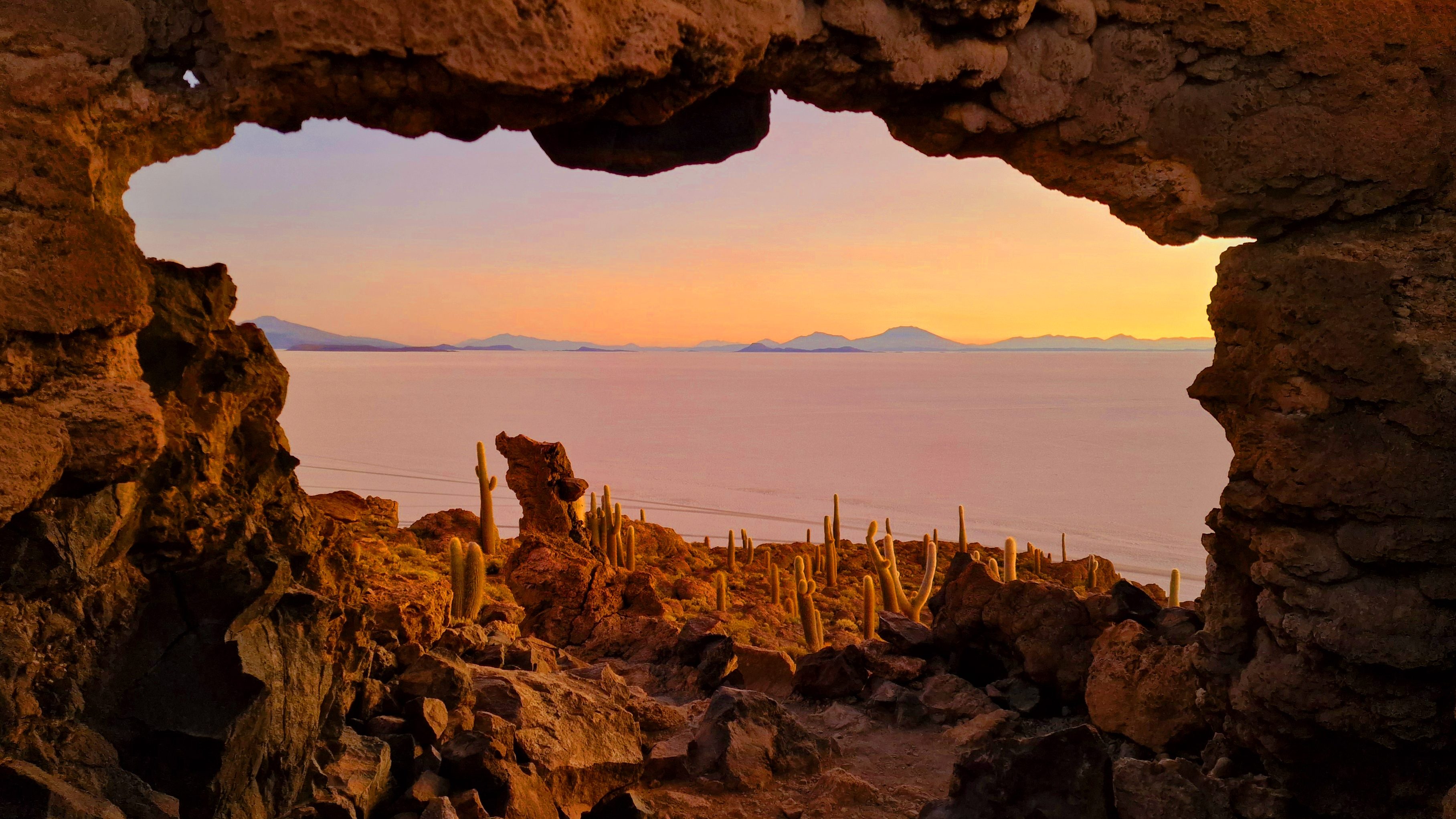
Stretching across northern Chile and into Bolivia, the Atacama Desert and Bolivian Altiplano are home to otherworldly landscapes. This is a land of far-reaching salt flats, towering volcanoes, wind-sculpted rock formations and lagoons. The extreme altitude, arid climate and lack of light pollution make the region not only one of the most visually dramatic, but also one of the best places in the world for astrophotography.

An immersive workshop held in this breathtaking landscape, led by renowned astrophotographer Ollie Taylor, is designed to take photographers from foundational techniques to advanced methods, including deep-sky imaging with trackers and longer focal lengths. By day, the journey explores some of the Atacama’s most iconic sights. Valle de la Luna, with its dunes and jagged ridges, resembles an alien world, while Valle Arcoiris showcases mineral-rich rock formations displaying vivid bands of red, orange and green. The geothermal field of El Tatio, with its steaming fumaroles and erupting geysers, presents an equally striking landscape at over 4,000m above sea level.

Crossing into Bolivia, the route ascends to Laguna Verde – a striking turquoise lake at 4,300m – before climbing higher still to traverse the Siloli Desert at 5,300m. Here, extraordinary rock formations rise from the barren landscape, sculpted over centuries by relentless winds. Laguna Colorada, one of the area’s most striking natural wonders, is home to thousands of Andean flamingos that stand motionless in its blood-red waters.

Under the region’s famously clear skies, photographers will be able to capture wide-field shots of the Milky Way, planets, nebulae, the Rho Ophiuchi cloud complex and the Magellanic Clouds, all set against dramatic foregrounds of volcanoes and salt flats. Further north, the Salar de Uyuni offers its own set of remarkable photographic opportunities, particularly when reflections from seasonal rains create a seamless mirror of the sky. The journey continues through the rock formations and canyons of Valle de Rocas before concluding at a remarkable salt hotel, perched on the edge of the white expanse of the world’s largest salt flat.

Get Premium access to all the latest content online

Subscribe and view full print editions online... Subscribe